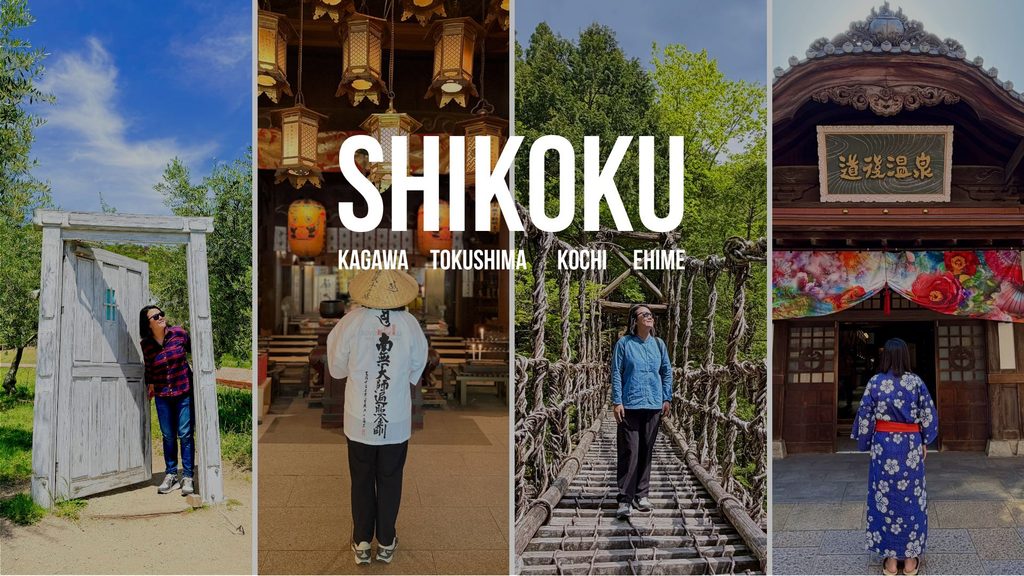
I first set foot in Shikoku in 2014, chasing the rhythm of Tokushima’s Awa Odori Festival. The lantern‑lit streets pulsed with dancers moving in mesmerizing lines, and the energy of the summer celebration lingered long after I left. That brief summer visit left me captivated.
This year, I returned for a full week to explore all four prefectures–Kagawa, Tokushima, Kochi, and Ehime. What I found was a Japan that feels authentic, uncrowded, and under-discovered.
Shikoku (四国, literally “four countries”) is Japan’s fourth largest island, lying southwest of Honshu, Japan main island. True to its name, it is divided into four prefectures, each with its own character–from Kagawa’s udon culture to Kochi’s samurai spirit.
Getting here is easier than many travellers realise. Shikoku is less than two hours from Osaka or Kyoto by train, with frequent domestic flights from major cities in Japan including Tokyo, Nagoya, and Fukuoka. Frequwent ferries and buses also link the island to Hiroshima and Kyushu, making it accessible from multiple regions.
The best way to experience Shikoku is with a combination of rail travel and rental car, weaving through cities, valleys, and coastlines. One week is the ideal timeframe, and every season brings its own rewards: cherry blossoms in spring, dynamic festivals in summer, stunning foliage in autumn, citrus harvests, and onsen in winter.
This is my detailed guide, with insider tips, to help you plan your Shikoku trip and explore another side of Japan.
Here’s a preview of Shikoku. Enjoy my video!
Kagawa
Kagawa Prefecture (香川県) is the official udon capital of Japan, and the title is earned rather than promotional. This is Japan’s smallest prefecture, yet it produces more udon than anywhere else in Japan, uses more wheat flour for noodles than any other region, and packs in more udon shops per capita than any other prefecture in the country.
Fun fact: There are more udon shops than convenience stalls in Kagawa.
Takamatsu
Takamatsu (高松市) is where most Shikoku trips begin. It is the region’s biggest port and train hub, so basing yourself here for a night or two before branching out to the islands or Kotohira makes your travel logistics simple.
JR Takamatsu Station itself is a central hub rather than a place to simply pass through. It is a modern terminal with an attached mall where you can shop and eat. It sits only a short walk from Takamatsu Port, where ferries depart for Naoshima, Shodoshima, and the other islands of the Seto Inland Sea.
Udon Capital
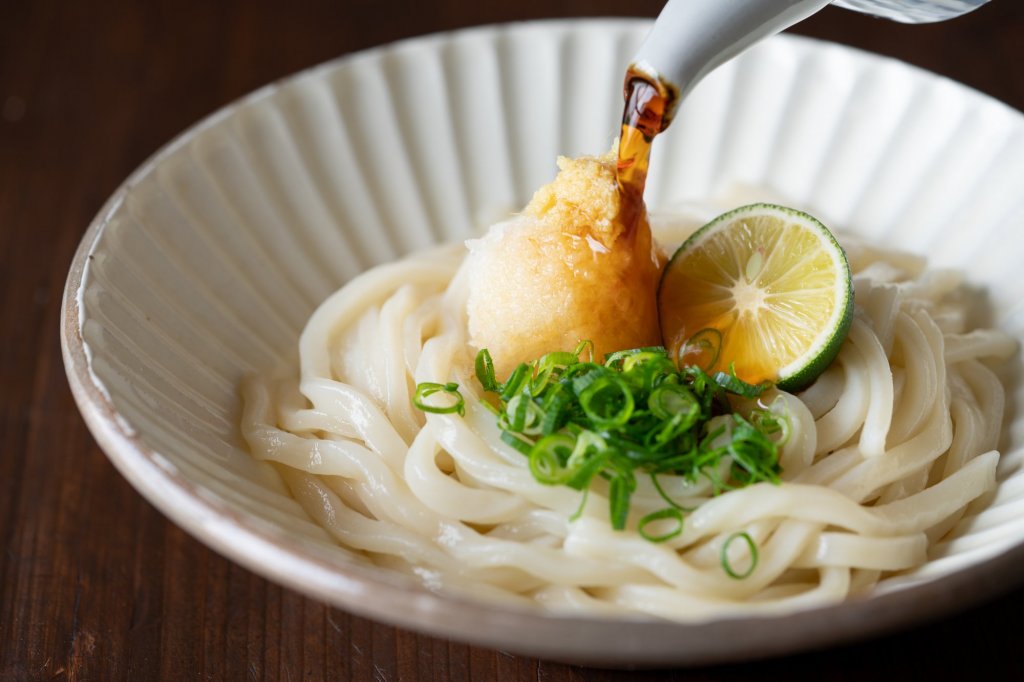
Kagawa is so devoted to Sanuki udon that locals rank shops the way other cities rank coffee. These are thick, chewy, wheat-based noodles served in a simple dashi broth, often at no-frills, self-service counters that have spent decades perfecting one dish.
Renting a bike or car and working through a self-guided udon trail in the countryside is an enjoyable way to spend a day. Don’t leave Kagawa without trying a variety of udon, from kama-age (hot noodles in broth) to zaru (cold, dipped) styles.
Ritsurin Garden
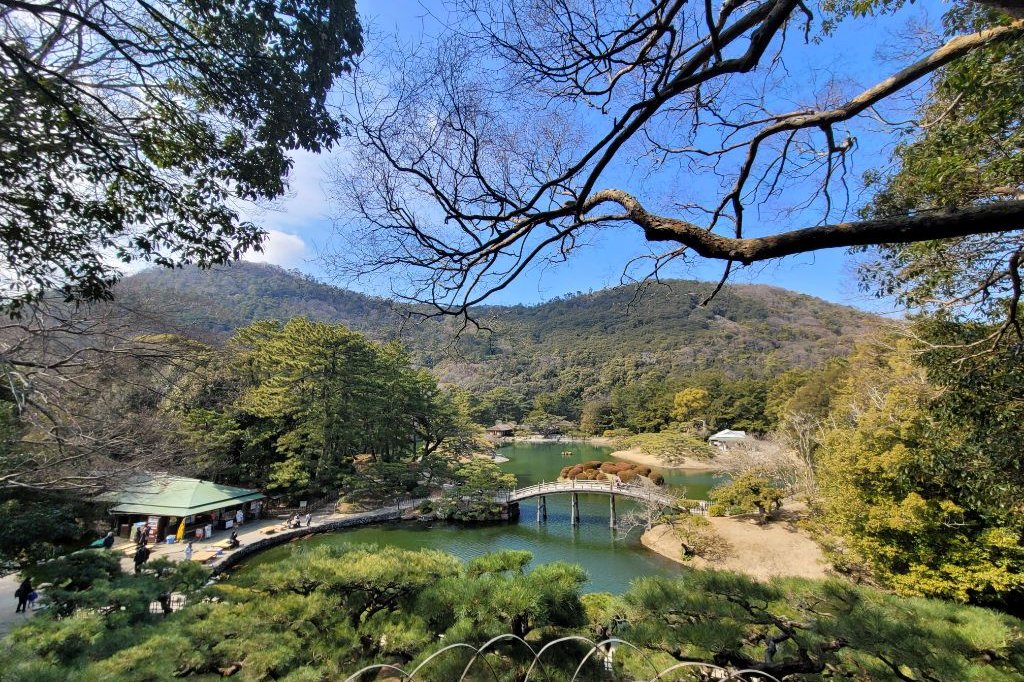
Often ranked among Japan’s most beautiful gardens, Ritsurin Garden took over a century to complete under the Matsudaira feudal lords. Step into 400 years of Edo-period landscaping at Ritsurin Garden, where six ponds and thirteen artificial hills unfold against the backdrop of Mount Shiun. Arrive early in the morning for the best light and the thinnest crowds.
Kotohira and Kotohiragu Shrine
Kotohira is a small town in Kagawa Prefecture, famous above all for Kotoshiragu Shrine, Shikoku’s most popular shrine. Formally known as Kotohira Shrine, Konpira-san is dedicated to seafaring and has one of Japan’s more demanding shrine approaches, 785 stone steps to the main shrine (1,368 if you continue to the inner shrine), rewarded with sweeping views over the Kagawa plains from the top.
Kotohira is also a hot spring town that has grown up right along the shrine approach. This means you can round off the climb with a proper soak before heading back.
Close by, the historic Kanamaru-za is Japan’s oldest surviving kabuki theatre, built in 1835 and still used for performances each spring, with its tatami seating, revolving stage and trapdoors open to visitors year-round.
Getting there is half the fun: the Kotoden Kotohira Line runs a charming little train from central Takamatsu straight to Kotohira. Its vintage carriage rattle past rice fields and small towns for around an hour. It makes Kotohira an easy, relaxing one-day or overnight trip from Takamatsu.
Island Hopping the Seto Inland Sea
No trip to Kagawa is complete without an island trip. Takamatsu is the gateway to island hopping trips. Ferries from Takamatsu Port scatter across the Seto Inland Sea to islands that blend rural Japan with world-class contemporary art.
Naoshima put Japanese contemporary art on the global map with Tadao Ando’s Benesse House and Chichu Art Museum, plus Yayoi Kusama’s giant yellow polka-dot pumpkin. The nearby Teshima and Inujima extend the same art-island idea with smaller crowds and are well worth the detour for outstanding, immersive artworks and stunning scenery.
The islands are a highlight every three years during the Setouchi Triennale, a major international art festival. I recommend adding at least one or two extra days into your Shikoku itinerary for the islands.
I enjoyed Shikoku’s art islands so much that I went back to experience the art circuit a few times. I visited islands first in 2014, returned again during the Setouchi Triennale in 2016, and I have been to Naoshima three times. Each visit revealed something new, from the art installations and architecture to the beautiful island landscapes and small cafés tucked away in the villages. If you enjoy contemporary art, I would definitely make time for the islands when visiting Shikoku.
Shodoshima
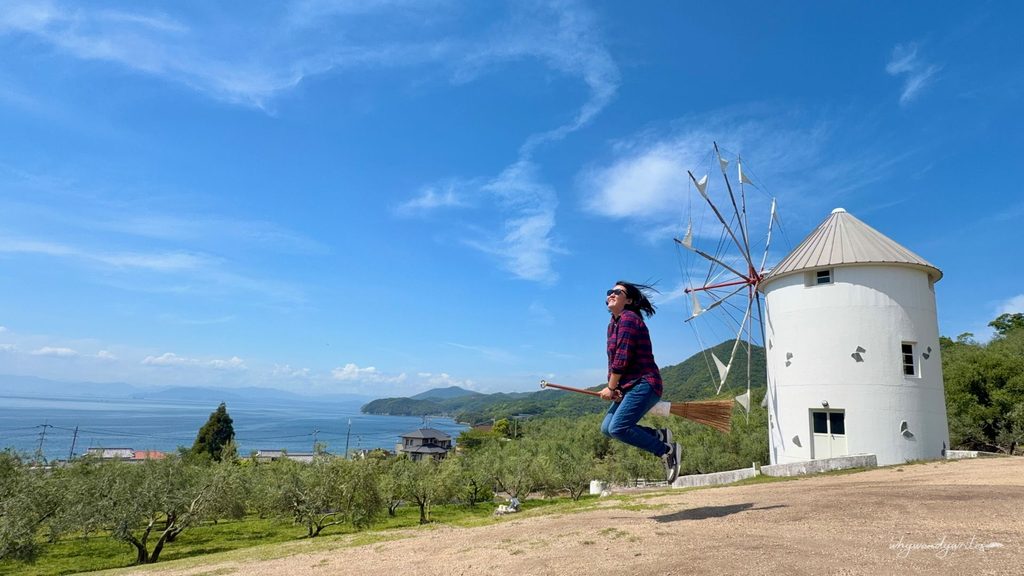
Shodoshima, known as Olive Island, is Japan’s leading olive-growing island, producing the great majority of the country’s domestic olive harvest thanks to a mild, dry, Mediterranean-style climate found nowhere else in Japan.
Shodoshima Olive Park, on the island’s southern coast, is the best place to see this side of the island up close, with olive groves, a Greek windmill, and a gift shop selling everything related to olives: olive oil, olive-flavoured somen noodles, olive ice cream, and even olive-infused healthcare products.
Fun fact: That beautiful white Greek-style windmill at Shodoshima Olive Park is not just there for the Mediterranean vibes. It was built as a symbol of friendship between Shodoshima and Milos, a Greek island that has a sister-island relationship with Shodoshima.
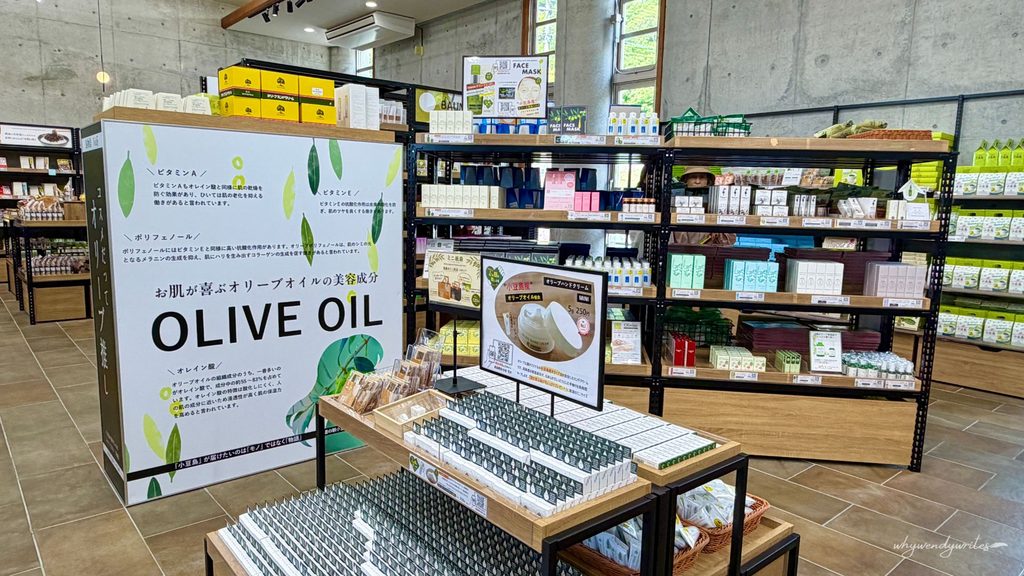
The Olive Park is a must-stop for Studio Ghibli fans too, since the 2014 live-action film of Kiki’s Delivery Service was shot in the area. The park has a free “broom rental” corner in the park building where you can borrow a broom and walk to the windmill for your iconic Kiki’s jumping shot.
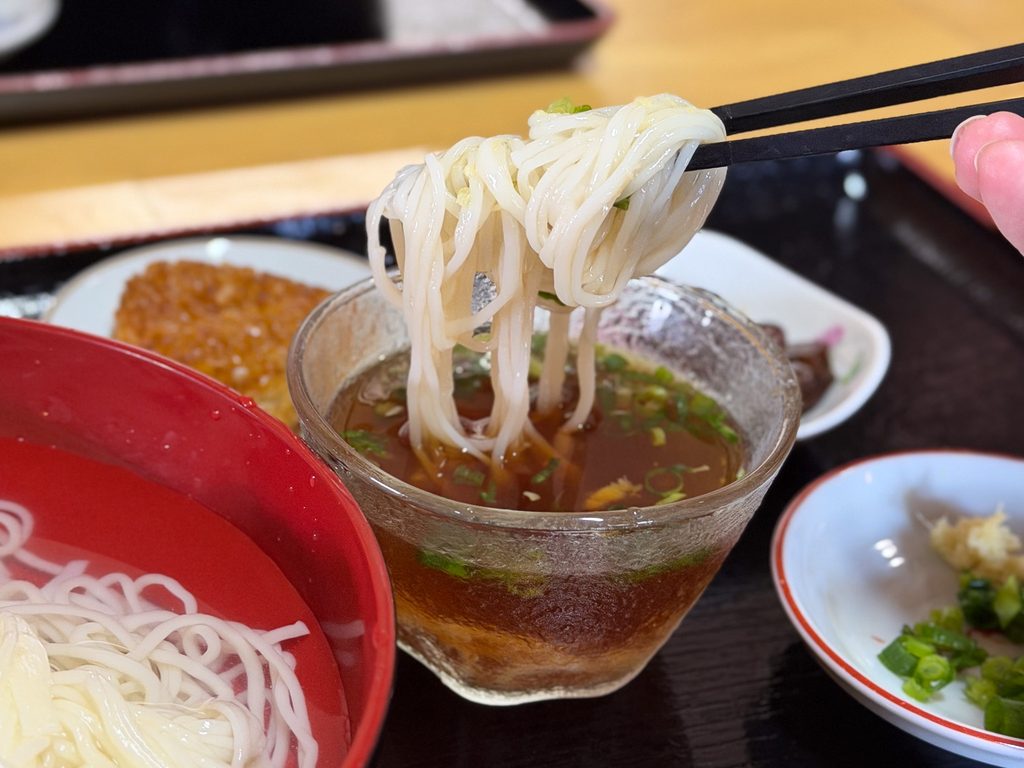
The island is equally well known for two much older, food-related crafts. Somen, a thin hand-stretched noodle, has been made here for around four hundred years using sesame oil in the stretching process and is still dried on wooden racks in the traditional way.
We tasted some of the best somen we have had in Japan here, and experienced a hands-on somen-making session at a local workshop where we gained real insight into this traditional craft. Book a somen-making session with Handmade Somen School (手延べそうめん学校) (3,500 yen per pax/experience) here.
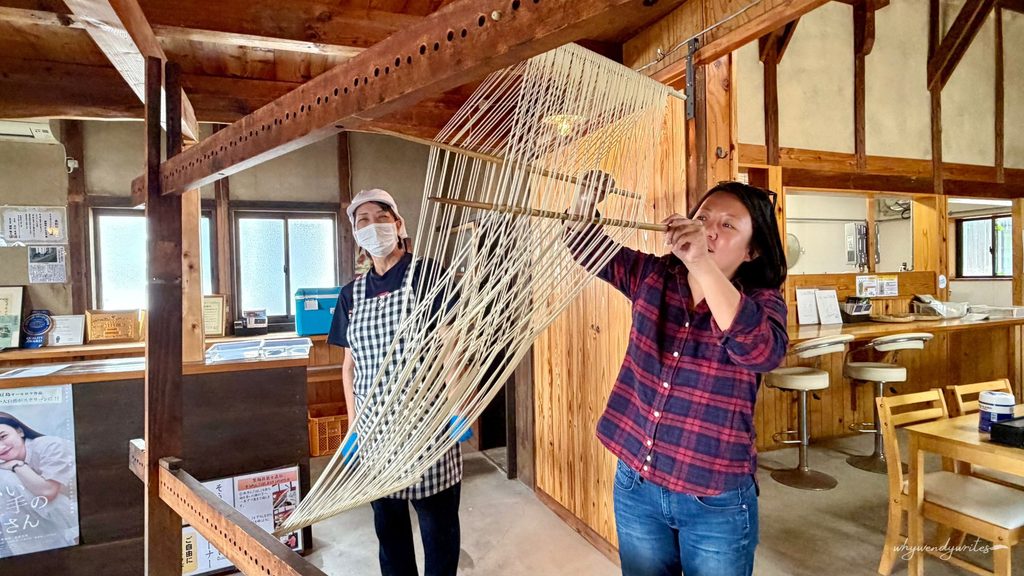
Watch my video showing my somen-making experience in Shodoshima!
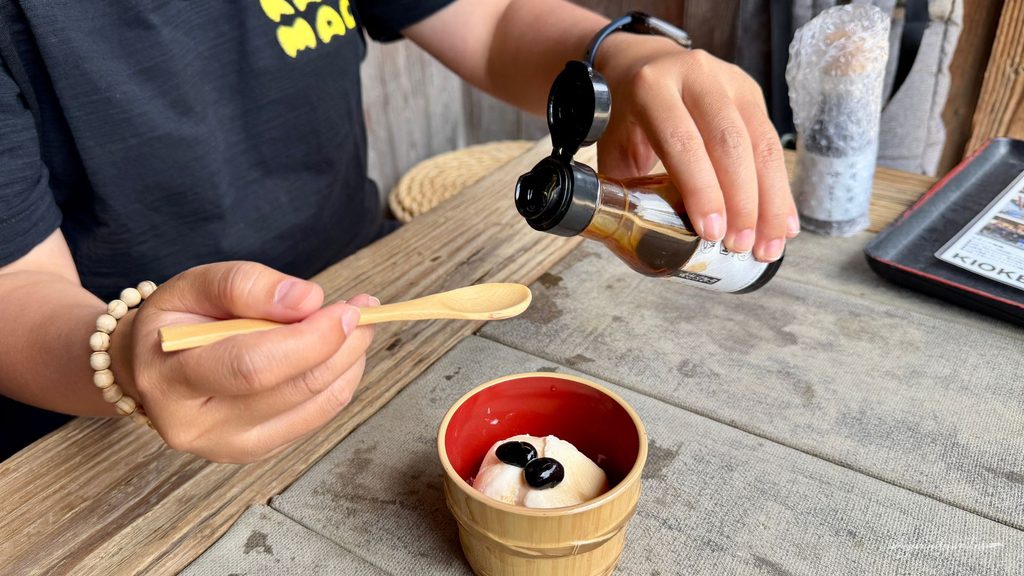
Soy sauce or soya sauce has just as long a history, brewed in wooden barrels at breweries clustered in an area known as Hishio no Sato, or Soy Sauce Village. Fewer than one per cent of Japan’s soy sauce is still brewed this way, in wooden kioke barrels. Shodoshima is thought to hold somewhere between a third of the roughly 3,000 kioke barrels still left in the country, making it a rare tradition to see kept alive.
Several producers such as Yamaroku (ヤマロク醤油) and Marukin (マルキン醤油) offer tours and free soy sauce tastings. A must-try is soy sauce soft serve ice cream.
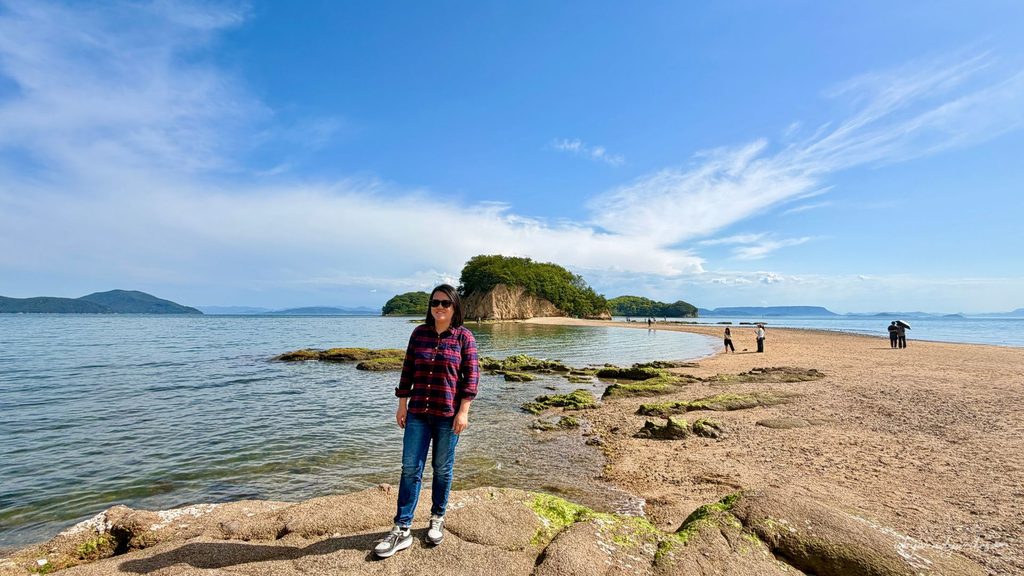
For scenery, Angel Road is a narrow sandbar that appears only at low tide, connecting Shodoshima to a small nearby island. A local tradition holds that if you cross it holding hands with someone special, your wish will come true.
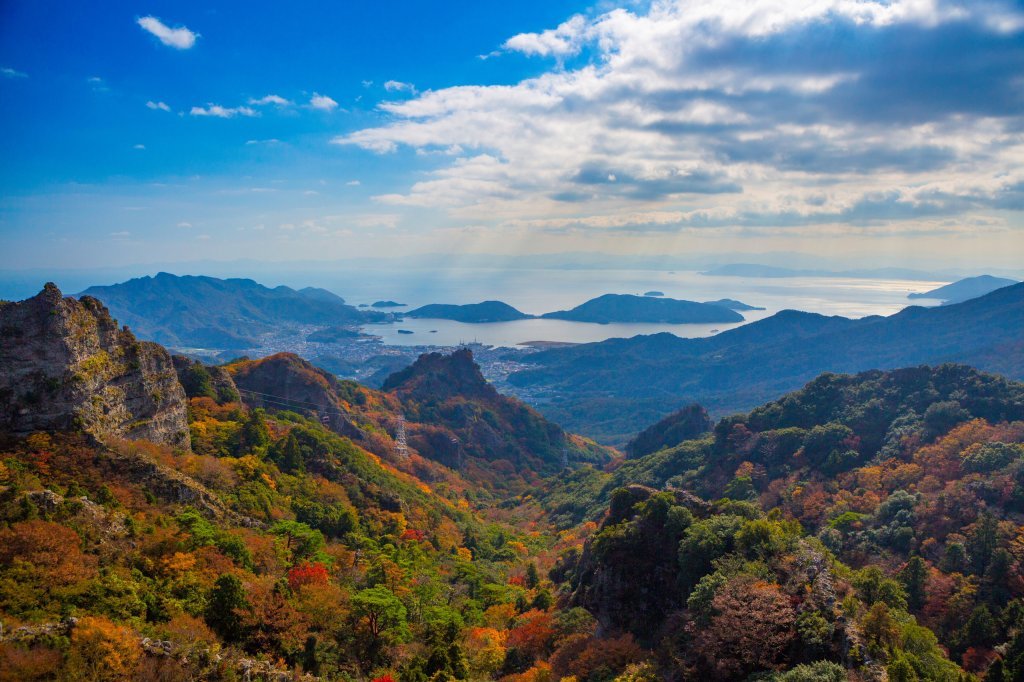
Further Inland, Kankakei Gorge is ranked among Japan’s three great gorges and is best seen from the ropeway that runs up over the terraced cliffs. During the autumn colour season when the maples turn the whole valley red, the gorge is a popular autumn viewing spot.
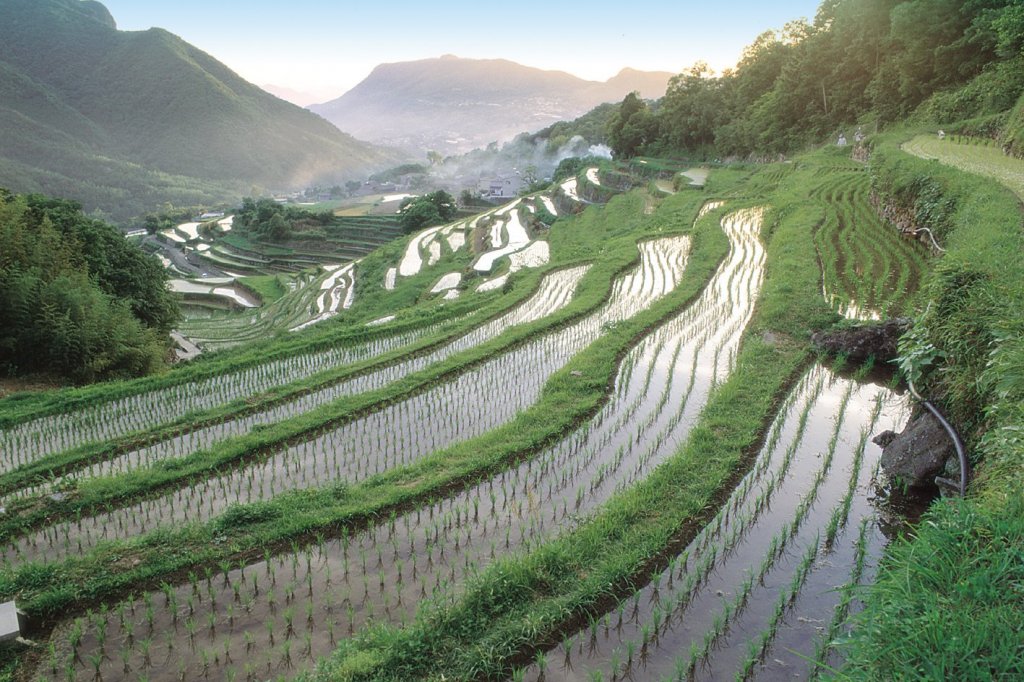
Nestled up against the mountains on the island are the Nakayama Senmaida, or “one thousand rice fields”, where several hundred terraced paddies are built into the surrounding hills. Considered one of Japan’s top 100 terraced landscapes, Nakayama Senmaida is worth a drive into the mountains.
In the nearby village stands an outdoor kabuki stage on which local kabuki plays have been performed since feudal times.
Sanuki Takamatsu Festival
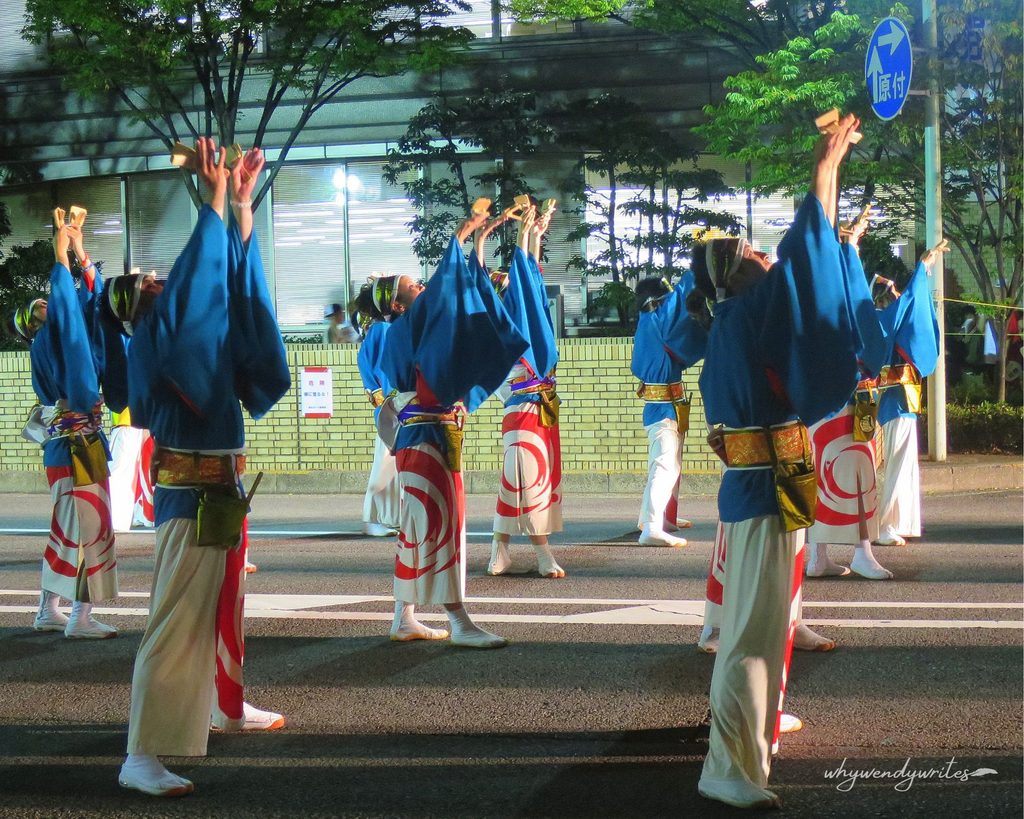
Held for three days from August 12 to August 14 every year, Sanuki Takamatsu Festival is Takamatsu’s biggest summer event. The festival mixes lively parades along the main street with stage events, food stalls.
On the second night, Dondon Takamatsu, a large fireworks display launched from Takamatsu Port. Compared with the better-known Awa Odori festival in Tokushima, it draws a smaller international crowd, which is exactly what makes it worth timing a Takamatsu visit around if your dates allow it.
Places in Kagawa I hope to visit next time: I would love to spend more time in Kotohira, stay at an onsen ryokan and explore more of the town around Kotohira-gu Shrine, as well as venture further west to visit Marugame Castle and explore the old castle town. I would also like to discover more of Kagawa’s Seto Inland Sea islands, including Megijima and Ogijima.
Klook.comUse my special Klook promo code WENDYKLOOK to enjoy 5% any Klook purchases (no min. spend; capped at USD $10).
Tokushima
Tokushima Prefecture (徳島県) is Shikoku’s geographic and spiritual gateway. It is the prefecture closest to Kansai. The Great Naruto Bridge (Onaruto Bridge) spans the Naruto Strait, linking Tokushima to Awaji Island. From there, the Akashi Kaikyo Bridge connects to Kobe. So travellers driving or coaching in from Osaka, Kyoto or Kobe reach Shikoku here first.
The locals jokingly told me that many people in Tokushima feel a strong connection to Kansai, particularly Osaka, which is just across the Seto Inland Sea. While Tokushima is officially part of Shikoku, its dialect and culture have strong Kansai influences, and the two regions have long been closely connected.
Tokushima also sits right next door to Kagawa, so it is easy to fold both into the same trip: the direct train covers the roughly 75-kilometre run from Takamatsu Station to Tokushima Station in about an hour to an hour and ten minutes, several times a day, and driving takes a similar hour to hour and fifteen minutes along the same route.
Spiritually, it is home to Temple 1 of the legendary 88-temple pilgrimage, the traditional starting point for anyone setting out on the o-henro.
Tokushima City
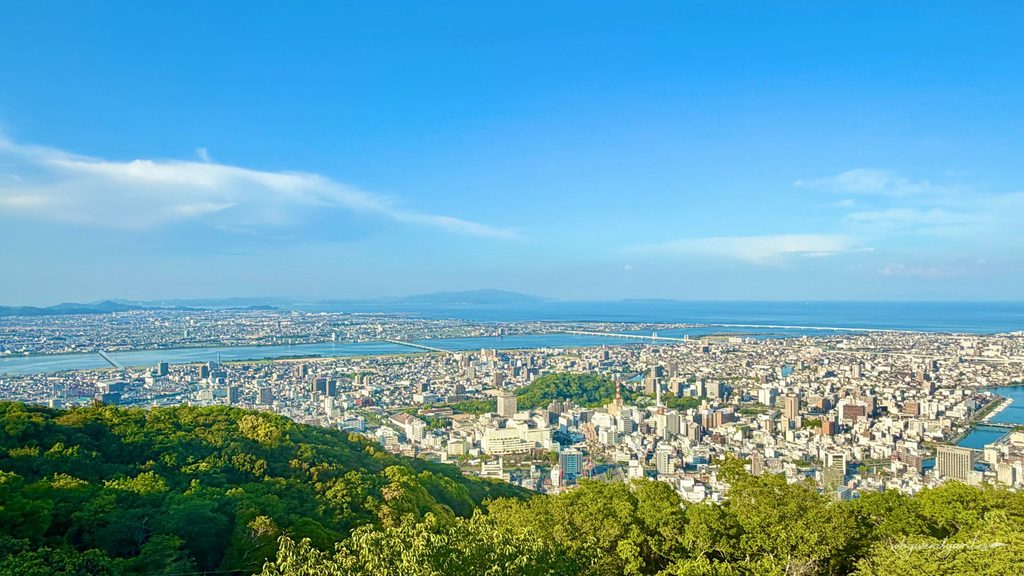
Tokushima City (徳島市) is the capital of Tokushima Prefecture. The city is small, walkable, and shaped almost entirely by one passion: Awa Odori, the traditional dance. It is a genuine joy simply to wander the streets and JR Tokushima Station itself, since the city leans fully into its identity, with dancer motifs, murals and Awa Odori imagery worked into everything from station signage to manhole covers and shopfronts.
Do not leave the city without a bowl of Tokushima ramen: a rich, dark, pork bone and soy broth topped with sweetly simmered pork belly and often a raw egg, a completely different style from the udon you have just left behind in Kagawa.
Awa Odori Festival
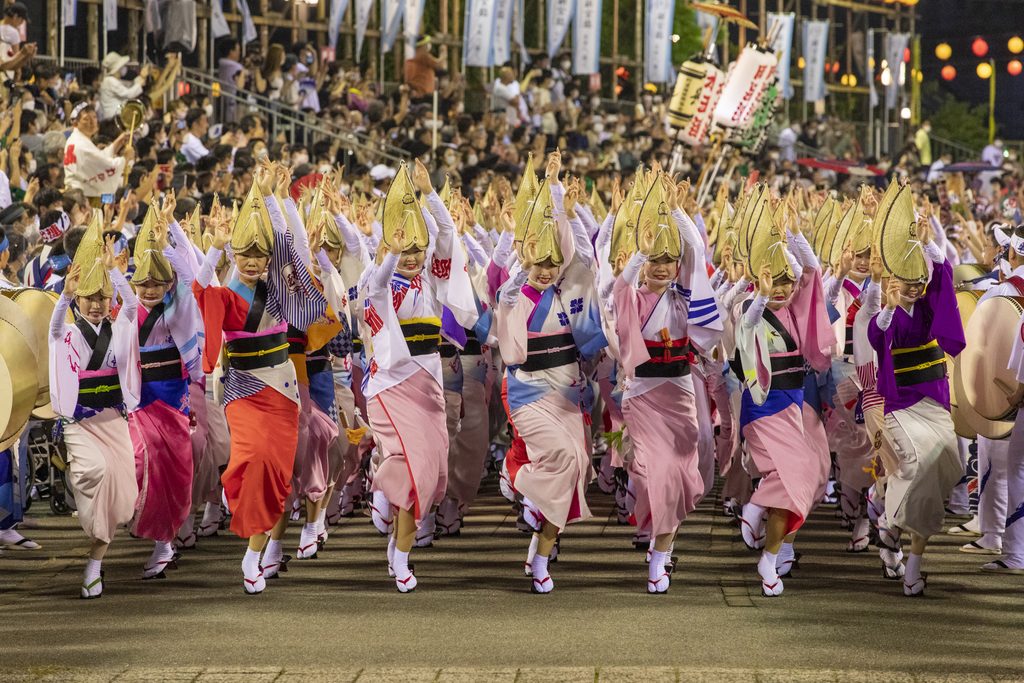
Awa Odori is one of Japan’s three great Bon dance festivals, alongside Gujo Odori in Gujo Hachiman, Gifu and Nishimonai Bon Odori in Akita. The festival’s massive scale backs that reputation up: with around 1.3 million visitors and participants over four days, it is the largest dance festival in Japan.
The tradition runs over 400 years deep, with the most widely told origin story crediting a 1586 celebration thrown by the feudal lord Hachisuka Iemasa to mark the completion of Tokushima Castle, when locals reportedly drank freely from his opened sake stores and danced through the streets in celebration.
That same open, join-in spirit is still alive today, captured in the chorus of Awa Yoshikono, a traditional Tokushima folk song sung throughout the festival: “the dancing fool and the watching fool are both fools, so you might as well dance.”
Held every year from August 12 to 15, hundreds of choreographed dance troupes known as ren parade nightly through the streets, and the atmosphere is genuinely electrifying. Visitors are often invited to join in rather than simply watch. I visited Shikoku in summer for the first time just to see this spectacle, and it is absolutely a bucket-list experience. If you can visit in summer, do not miss it.
Travel tip: Book Awa Odori Festival accommodation early, as hotels in Tokushima City sell out months ahead of festival week.
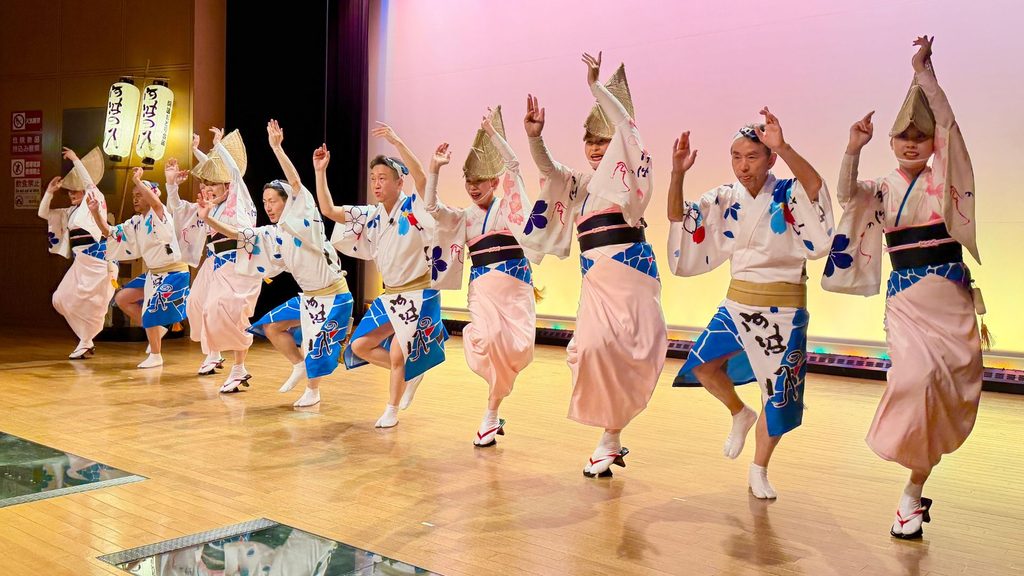
If you visit in other seasons, you can still experience and watch the Awa Odori dance live at Awa Odori Kaikan or Awa Odori Museum.
This dedicated dance hall sits a short ten-minute walk from JR Tokushima Station, at the foot of Mount Bizan. It stages live Awa Odori performances four times daily by its resident troupe, with an open invitation for visitors to get up and learn the steps themselves. We were genuinely entranced by the energy of the show, so entertaining it is easy to forget you are not at the festival itself.
A museum floor traces the dance’s roughly four-hundred-year history through costumes, photographs and footage.
Right at the top of the building is the base station for the Bizan Ropeway, which carries visitors up to the 280-metre summit of Mount Bizan for sweeping panoramic views over the city, the Yoshino River delta and, on a clear day, out towards Awaji Island and the Seto Inland Sea.
Naruto Whirlpools
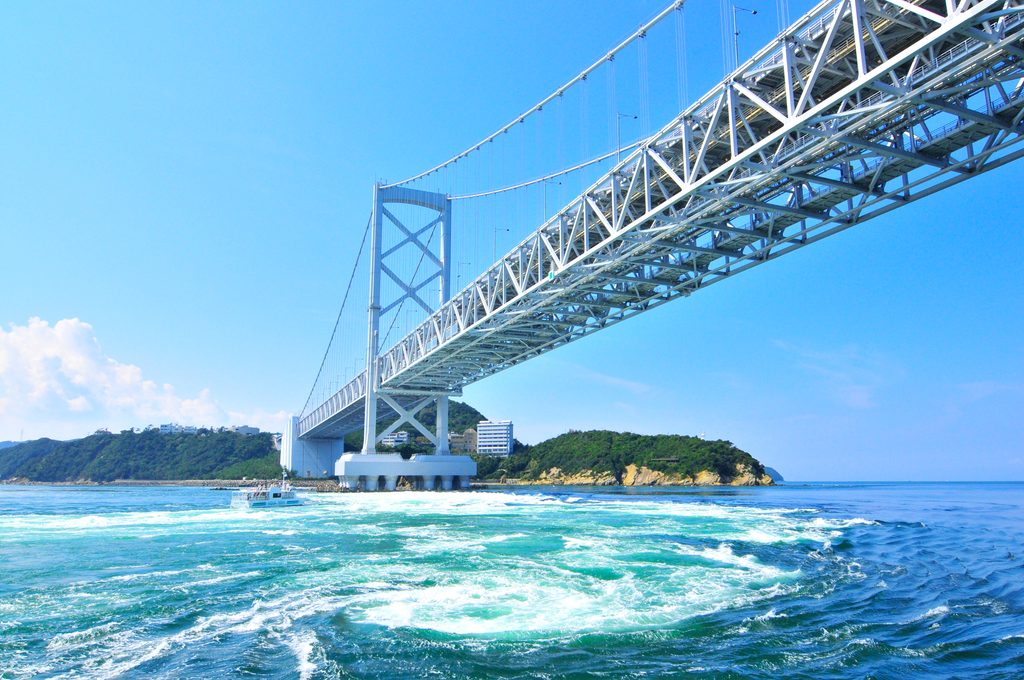
The Naruto whirlpools are the single most famous natural spectacle in Tokushima, and one of Shikoku’s most photographed sights.
The reason comes down to a fairly rare combination of geography: the narrow, oddly shaped Naruto Strait squeezes an enormous volume of water between the Seto Inland Sea and the open Pacific with every tide change. That bottleneck effect creates whirlpools reaching up to 20 metres across, said to be among the largest tidal whirlpools in the world. They appear roughly every six hours in step with the tide, so there is normally one window in the morning and another in the afternoon, each lasting an hour or two.
The Naruto Whirlpools are at their most spectacular during spring tides, which occur twice a month around the new and full moons when the Sun, Earth and Moon are aligned. The whirlpools can also be more impressive during the warmer months than in winter. Outside the peak tidal periods, the Naruto Strait can look surprisingly calm, so check the tide times before you visit and plan your trip around the strongest currents for the best chance of seeing the whirlpools.
There are two main ways to see them, suited to different kinds of traveller.
- From sightseeing boat: This is a more thrilling option. On the Shikoku side, you have two operators offering different ways to experience the Naruto Whirlpools. Uzushio Kisen runs a small, high-speed boat from Kameura Fishing Port, just behind the Otsuka Museum of Art, bringing you very close to the whirlpools. Uzushio Sightseeing Boat operates the larger Wonder Naruto and the smaller Aqua Eddy, which has an underwater observation room about one metre below the surface, giving you a completely different view of the swirling water. There are also sightseeing boats operating from the Awaji Island side of the Naruto Strait.
- From an observatory: Uzu-no-Michi is an enclosed, glass-floored walkway suspended beneath the Onaruto Bridge, with an observation room around 45 metres above the water where you can watch the whirlpools spin directly below your feet.
Shikoku 88 Temple Pilgrimage
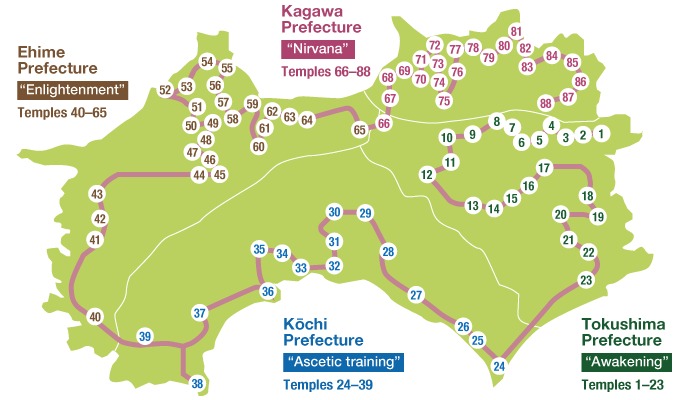
The Shikoku 88 Temple Pilgrimage (四国八十八ヶ所巡礼) , or o-henro (お遍路), is one of Japan’s oldest and most enduring pilgrimages. It is a roughly 1,200-kilometre circuit linking 88 temples all the way around the island, traditionally credited to the Heian-era Buddhist monk Kobo Daishi (Kukai), who is said to have trained at many of the sites himself around 1,200 years ago.
Some pilgrims strive to complete the full circuit of 88 temples over a few months. Most Japanese pilgrims complete it gradually over months or even years, visiting a handful of temples whenever they happen to be passing through Shikoku, in whichever order suits their travels.
The pilgrims themselves are called henro, or o-henro-san with the honorific, and they are instantly recognisable: white-clad, conical-hatted, staff in hand, moving quietly between temples along ordinary roads and mountain paths.
That staff carries real meaning. It is believed to represent Kobo Daishi himself, and both the staff and the pilgrim’s hat are inscribed with the phrase Dogyo Ninin, meaning “two travelling together,” a reminder that Kobo Daishi is thought to walk alongside every henro on the path, even today.
I found something genuinely calming, even quietly inspirational, about spotting them as I travelled around Shikoku. Whatever brought each of them to the path, there is a shared, unhurried devotion in the walking itself that is hard not to feel moved by, even as a passing visitor.
Interested to embark on the Shikoku 88 Temple pilgrimage? Check out this informative Henro website.
Ryozen-ji: Temple #1 of the Shikoku 88 Temple Pilgrimage
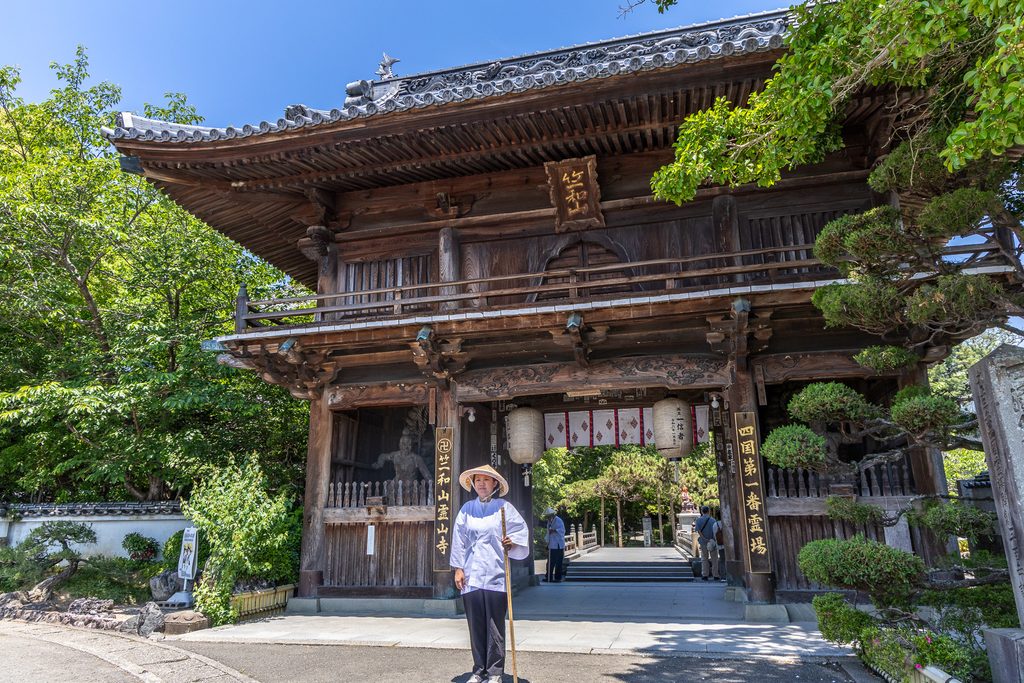
For pilgrims and curious travellers alike, Ryozen-ji is the traditional starting point of the pilgrimage. Even a short visit connects you to a tradition well over a thousand years old. You do not need to walk all 88 temples to appreciate this spirit of the pilgrimage.
Many visitors simply stop for the ritual and the atmosphere, and the temple shop sells full pilgrim gear including a pilgrim’s white vest (hakui) and stamp book (nokyocho), if you would like to start collecting temple stamps as a souvenir.
Step inside the main hall and look up: hundreds of lanterns hang from the ceiling, glowing softly beneath a striking painted dragon, and the effect is moving.
Iya Valley and Oboke Gorge
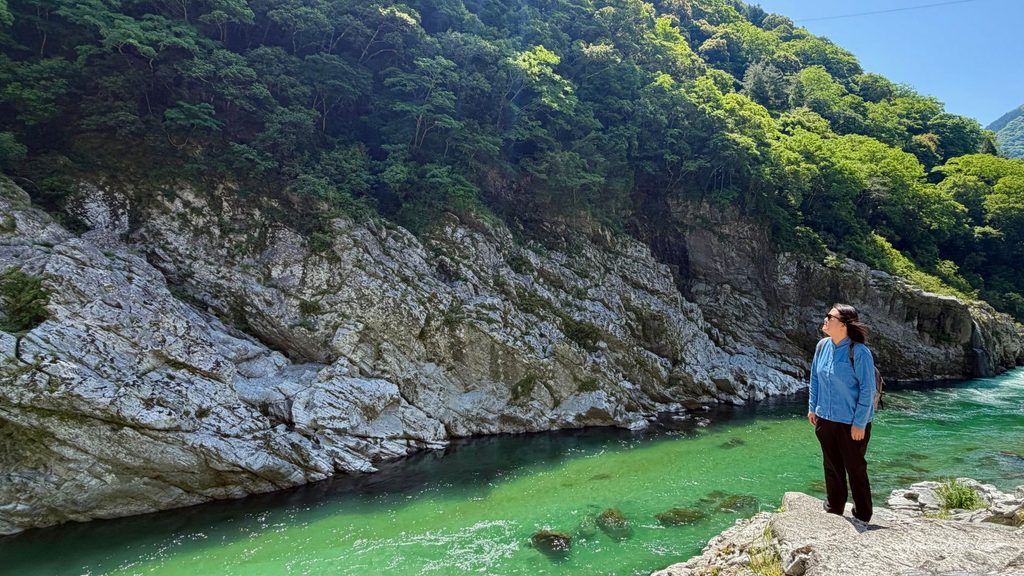
Dive deep into Tokushima’s Iya Valley, a remote, mist‑wrapped landscape that feels almost mythical. Hidden in the mountains of Shikoku, this dramatic region seems worlds away from modern Japan. Towering peaks, steep valleys, winding roads, and ancient villages combine to create an otherworldly setting, as if you have stepped into another Japan entirely.
I had heard about this valley for years before finally making the trip, and arriving here felt very special, like stepping into a place that time and the modern world had quietly passed over.
This is not a place to rush. Give it two or three days if you possibly can, and let yourself properly immerse in it; a valley this remote only gives up its rewards to those are able to slow down.
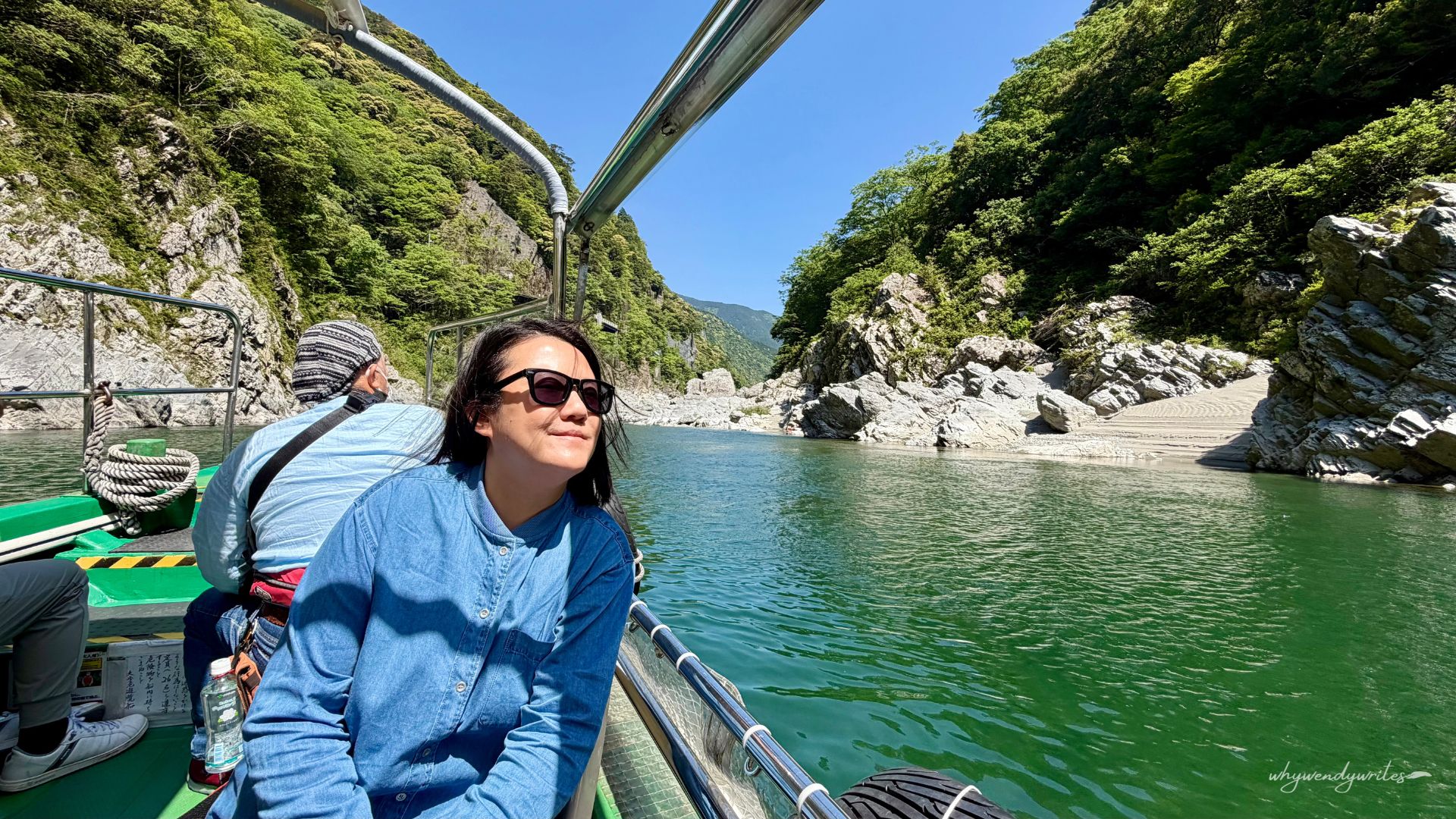
A sightseeing boat through Oboke Gorge is one of the most popular ways to experience this dramatic landscape. The ride takes you through a narrow canyon carved over millions of years into smooth emerald rock, with cliffs that are especially striking during the autumn foliage season.
The valley’s famous vine bridges are the other essential experience. Iya Kazurabashi Vine Bridge, the largest and most accessible, stretches 45 metres across the Iya River, suspended 14 metres above the water below. Woven from mountain vines and rebuilt using traditional techniques, it is one of only a handful of surviving bridges that once crossed the valley. According to local legend, they could be cut down to slow pursuing enemies.
I was fortunate to have a friend willing to drive me deep into the mountains to the Oku-Iya Kazurabashi Double Vine Bridges. Far more remote and atmospheric than the main Iya Kazurabashi, these twin vine bridges, also known as the Husband and Wife Bridges, feel hidden away in a forgotten corner of Shikoku.
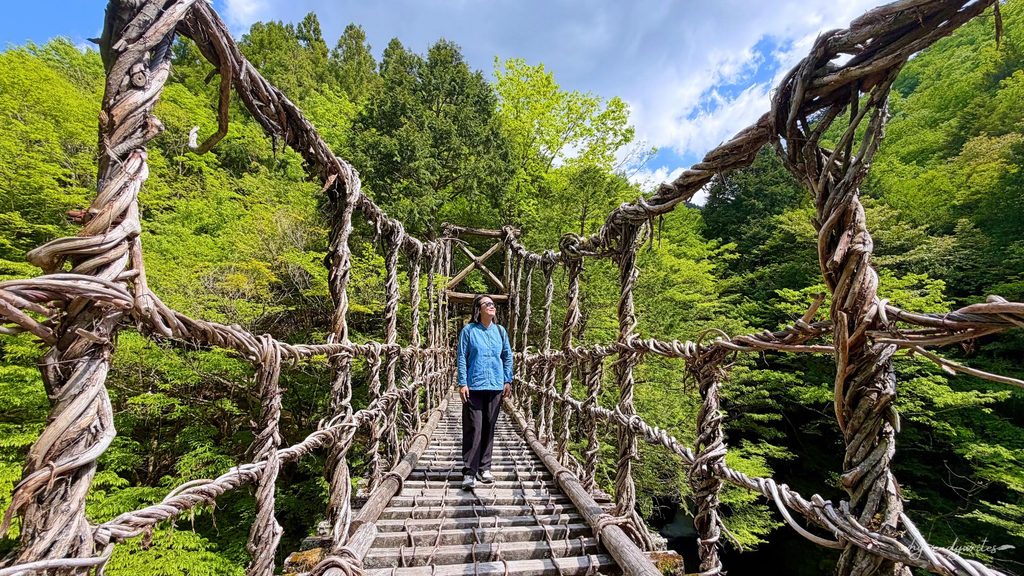
The longer and larger Husband Bridge (Otto no Hashi) spans 44 metres across while the smaller and slightly lower Wife Bridge (Tsuma no Hashi) crosses the river nearby.
Crossing them is both thrilling and unforgettable, with swaying vines, gaps between the wooden slats and forested valleys stretching in every direction. Surrounded by dense forest and far fewer visitors, they provide a glimpse of the valley at its most remote. For me, this was one of the most memorable experiences in Tokushima.
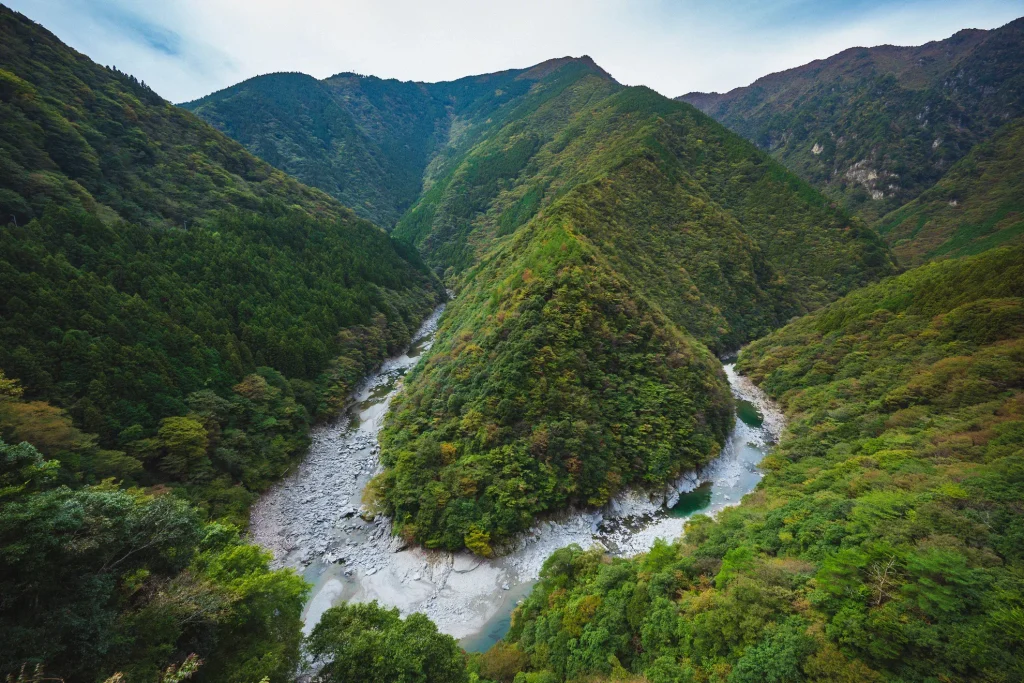
Further along the gorge road, stop at the Hi no Ji Valley Lookout, where the Iya River curves into a rare U-shaped bend resembling the Japanese character “hi”.
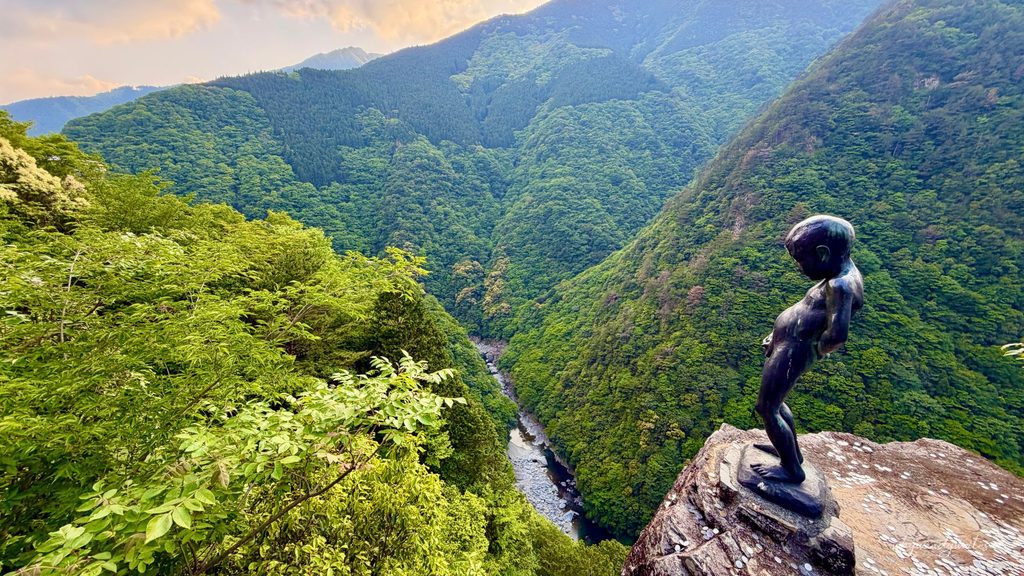
At this viewpoint stands the valley’s most unusual landmark: the Peeing Boy Statue, erected in 1968 to commemorate the local tradition of testing one’s courage at what was once considered the most dangerous section of the old Iya Kaido road.
What to eat in Iya Valley: Iya soba, a rustic buckwheat noodle unique to the region, and salt-grilled ayu, a delicate river fish caught in the clear waters of the Iya and Yoshino rivers. Both are served in simple family-run restaurants throughout the valley.
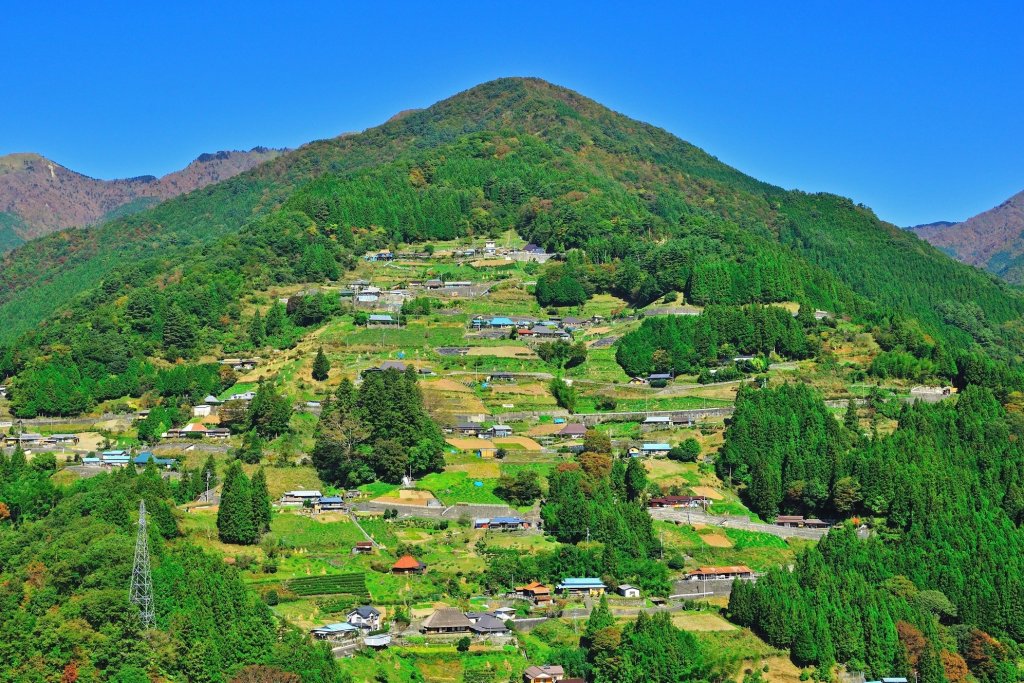
Ochiai Village is one of Iya Valley’s most atmospheric mountain settlements, with traditional thatched-roof farmhouses scattered dramatically along the steep slopes. The village reminded me of the famous thatched houses of Shirakawa-go, although the architecture here has its own distinct Iya character, shaped by the steep mountains and traditional farming lifestyle.
The houses are beautifully adapted to the landscape, with stone walls, terraced fields and narrow paths winding between them. What makes Ochiai particularly special is that you can actually spend the night here. A number of the restored thatched-roof farmhouses have been converted into private cottages, combining their traditional character with modern comforts such as kitchens, bathrooms and air conditioning.
A short detour in the mountains leads to Nagoro, better known as the Scarecrow Village. Once a thriving mountain community, the village’s population dwindled as younger residents moved away. In response, local artist Tsukimi Ayano began creating life-sized scarecrows modelled after former neighbours and family members.
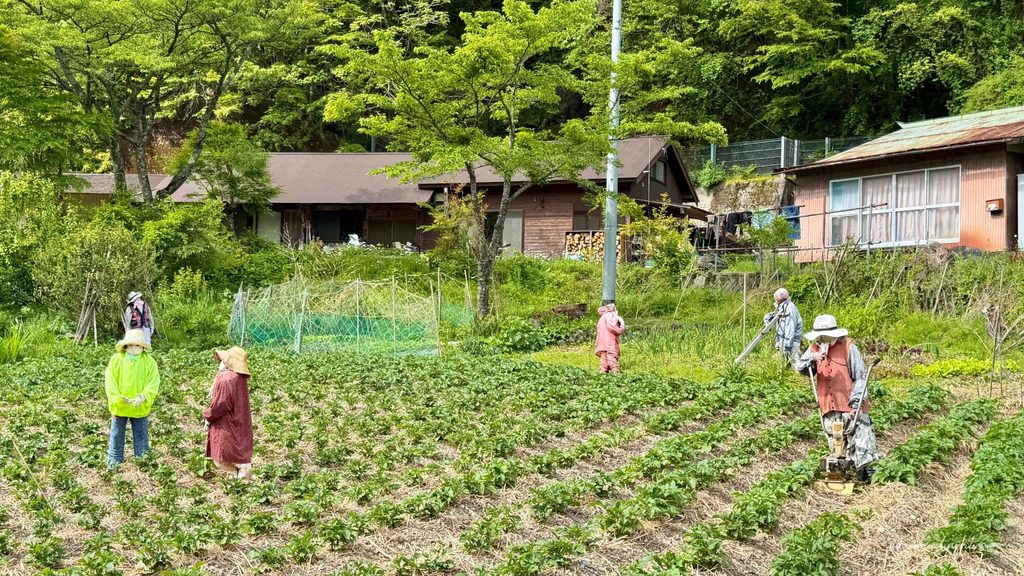
Today, hundreds of handmade figures sit in empty school halls, wait at bus stops and tend abandoned fields, outnumbering the handful of people who still live here. Equal parts moving and melancholic, Nagoro is a powerful reflection on rural depopulation and the fleeting nature of life.
The valley is also deeply woven into Japan’s folklore traditions. For centuries, the forests and gorges around Oboke and Iya have been associated with yokai, the supernatural creatures of Japanese legend.
The Michi-no-Eki Oboke visitor centre embraces this heritage with a small Yokai Museum showcasing stories and characters from local folklore. The area is even claimed as the birthplace of Konaki-jiji, a mysterious old-man spirit made famous through the manga and anime GeGeGe no Kitaro.
Michi-no-Eki Kurukuru Naruto
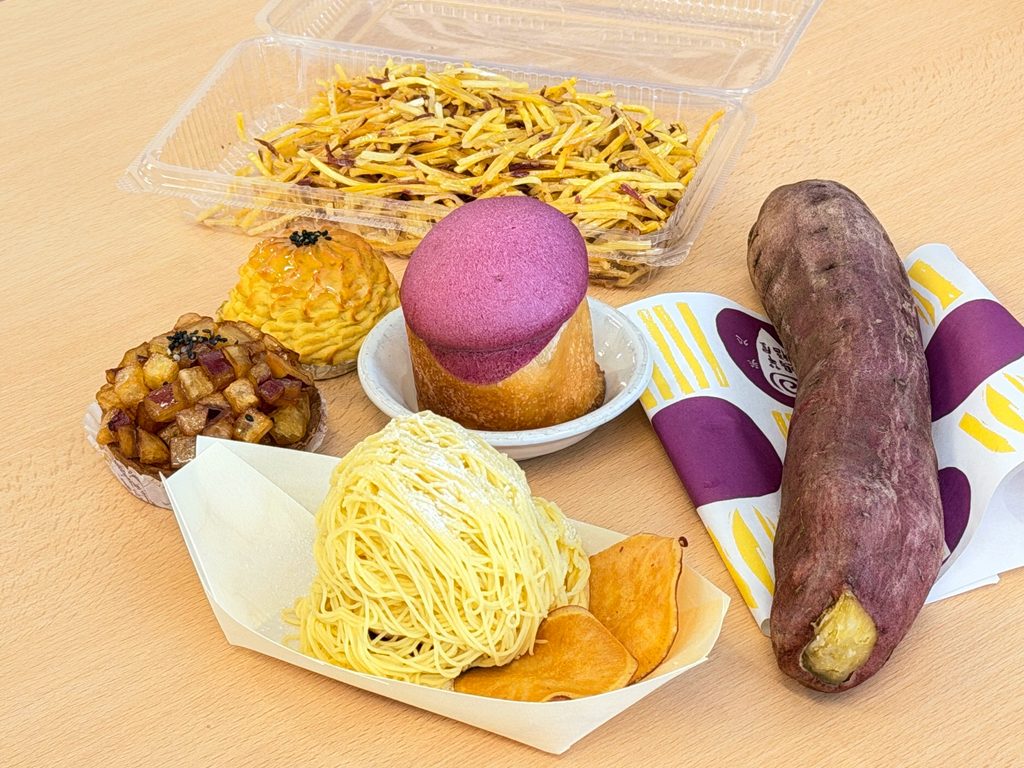
Michi-no-Eki Kurukuru Naruto or Roadside Station Kurukuru Naruto (道の駅くるくるなると) is one of Tokushima’s most popular roadside stations and a must-stop during your road trip.
The road station sells a dazzling variety of local products and souvenirs, alongside fresh seafood from the Naruto Strait, seasonal vegetables and souvenirs unique to Tokushima.
The real star is Naruto Kintoki, the region’s beloved, chestnut-sweet potato, sold here as ice cream, baked goods and every other form imaginable.
One of the highlights here is the rooftop, where visitors can relax with open views and a reservation-only zipline, its playful whirlpool-themed touches, down to swirl-patterned seafood bowls on the menu, adding to the lively atmosphere.
Places in Tokushima I hope to visit next time: I would love to spend more time in the Iya Valley, stay at an onsen surrounded by the mountains, walk the Yokai Trail, hike around the Oboke and Koboke Gorge, and venture further into Oku-Iya.. I would also love to explore the historic streets of Mima, see the unusual Awa Sand Pillars, and visit the Otsuka Museum of Art.
Kochi
Hemmed in by mountains on one side and flanked by the Pacific on the other, KKochi Prefecture (高知県) sits on Shikoku’s most remote corner. That isolation is precisely what has kept it so unspoilt. Rivers here run an impossible shade of blue, beaches stretch out empty, and the pace of life feels a notch slower and freer than anywhere else in Shikoku. Getting to Kochi takes a little more effort than the rest of the island. It repays that effort many times over.
The prefecture’s former name was Tosa, and Tosa’s most famous son, Sakamoto Ryoma, one of the key figures behind Japan’s transformation into a modern nation. Enjoy wide skies, superb seafood and a capital that feels more laid-back than anywhere else on the island.
Kochi City
Kochi City (高知市) is the capital of Kochi Prefecture, sitting on the southern coast of Shikoku. It is compact, easy-going city with a dose of southern charm, compact enough to explore almost entirely on foot and by bus.
Best way to explore Kochi City in one day
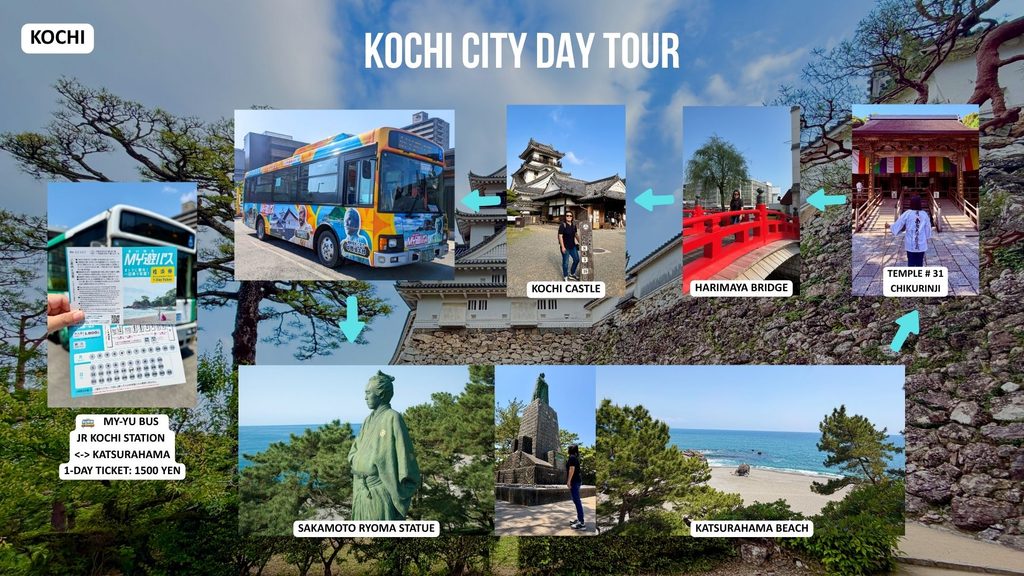
The MY-YU, or Myu-Myu, sightseeing loop bus links the castle, museums and key sights on a single hop-on-hop-off route running out as far as Katsurahama, making it by far the simplest way to see the city without a car.
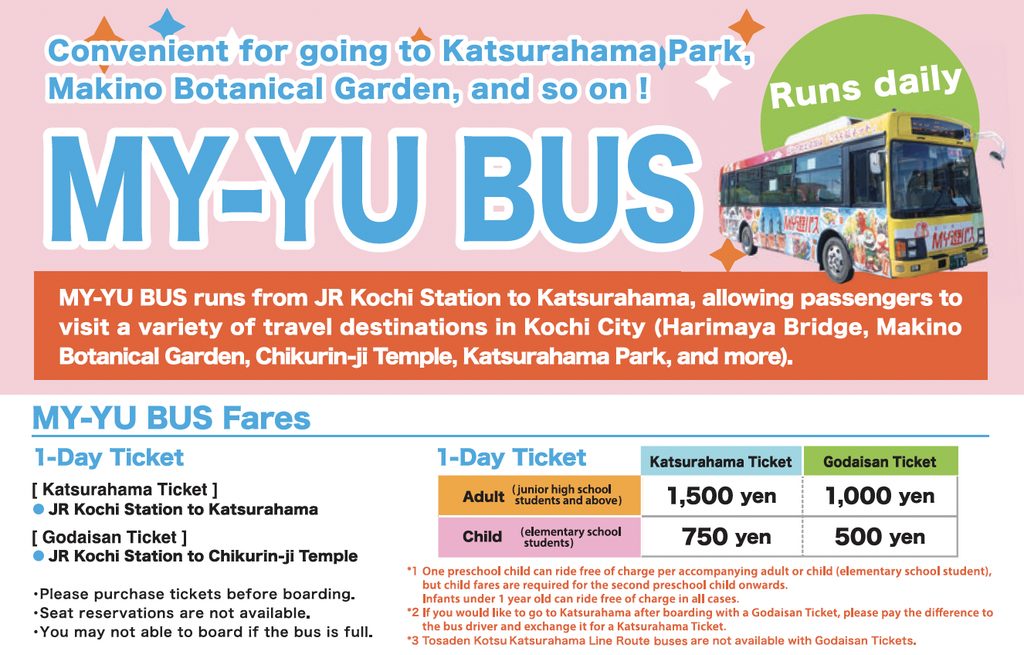
The day pass is worth it if you visit more than two attractions and includes discounted entry to partner attractions. More about MY-YU Kochi City Bus here.
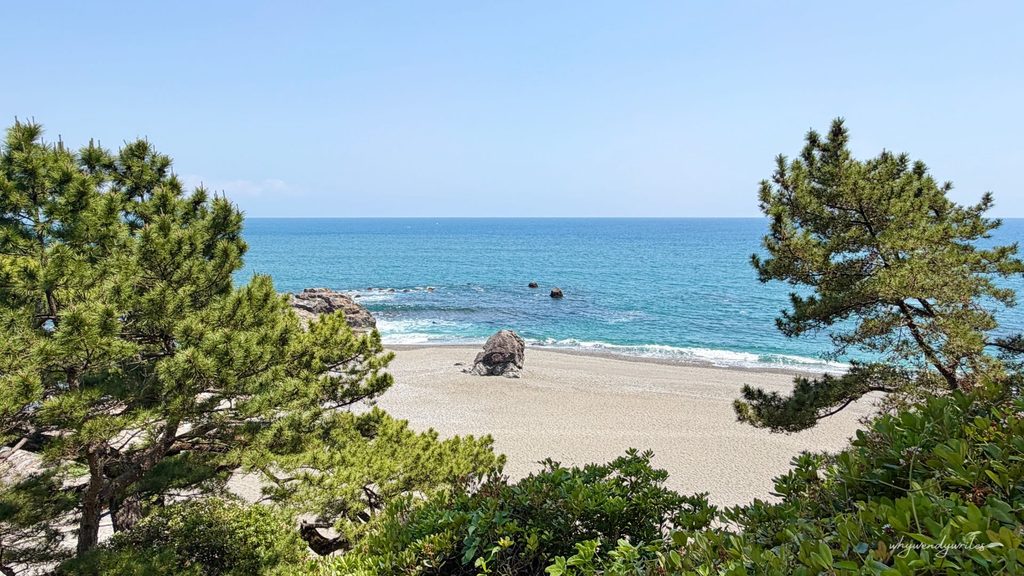
Start the day at Katsurahama Beach, a scenic, pine-fringed shoreline known less for swimming and more for its dramatic rock formations and the towering statue of Sakamoto Ryoma gazing out at the Pacific.
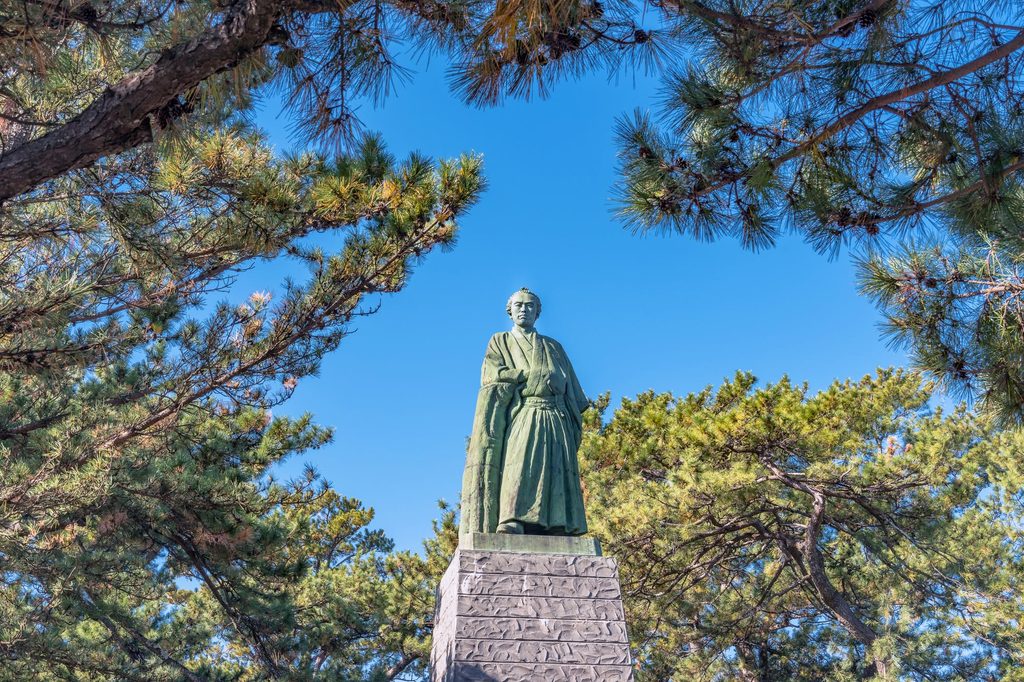
The Sakamoto Ryoma Memorial Museum nearby fills in the story of the famous samurai who helped bring the Edo period to a close and shape modern Japan. Go early, before the day trippers arrive and while the light off the water is at its best.
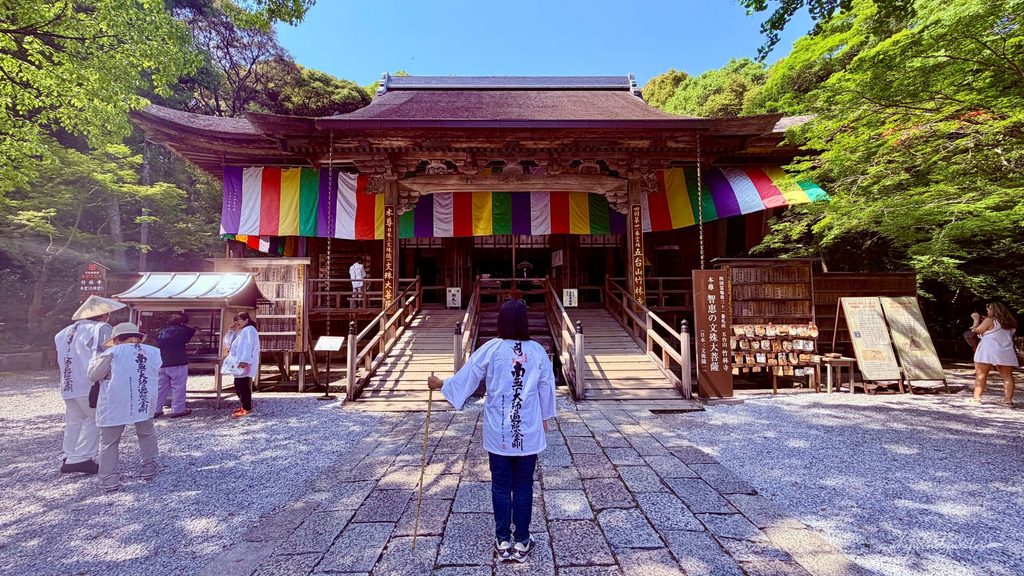
Heading back towards the city, stop at Chikurin-ji Temple, number 31 on the Shikoku 88 Temple pilgrimage, sitting on Mount Godaisan with a beautiful five-storey pagoda and one of the finest formal gardens in the region.
Back in the city centre, make your way to Harimaya Bridge, a small, arched red bridge that’s become one of Kochi’s most photographed sights. It owes its fame to an old Tosa folk song about a monk who broke his vow of celibacy to buy a hairpin for the woman he loved near this very spot, a tale still sung today in the Yosakoi festival.
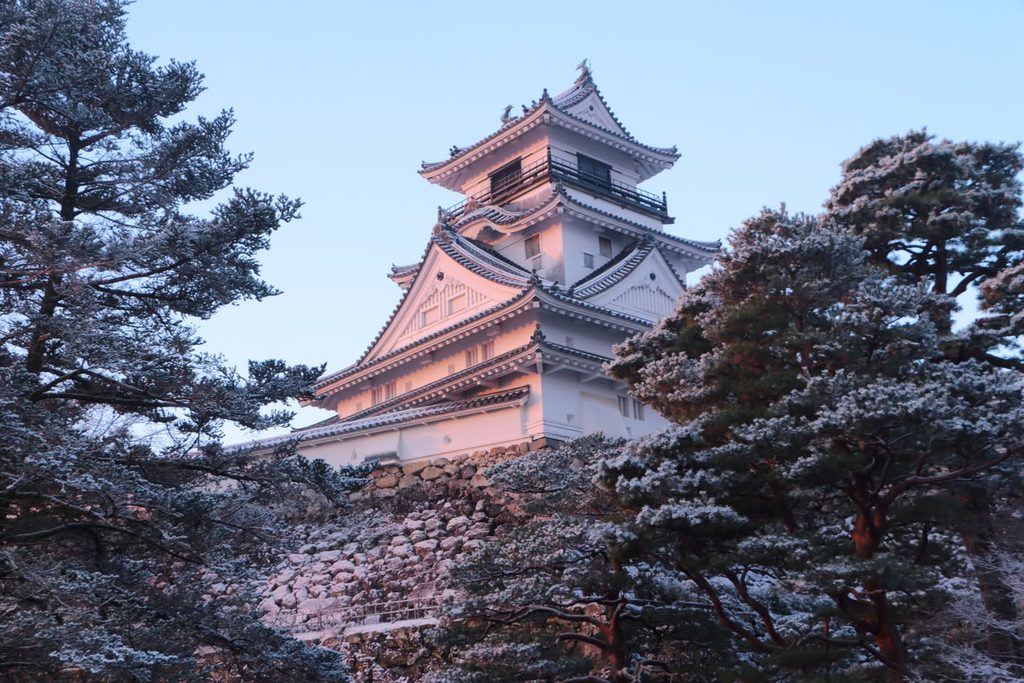
End the day at Kochi Castle, one of only twelve castles in Japan to retain its original Edo-period keep. Climb to the top for views over the city to the mountains beyond as the light softens, then wander the surrounding park, especially lovely under cherry blossom in spring.
Yosakoi
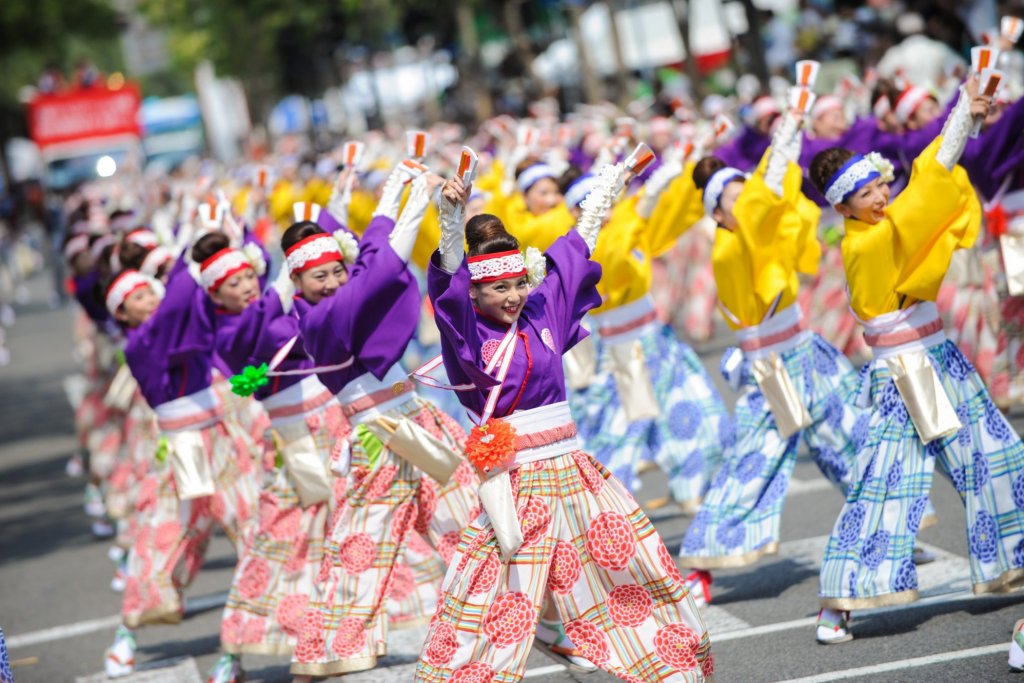
Yosakoi is Kochi’s most famous festival, a riot of colour, music and movement that takes over the city’s streets every August, and one of Shikoku’s top summer attractions.
Every year, from 9 to 12 August, teams of dancers, some numbering in the hundreds, perform energetic, fast-paced routines to music that blends traditional Japanese melodies with modern beats, each dancer wielding a pair of naruko, small wooden clappers that click out the rhythm as they move.
Hirome Market
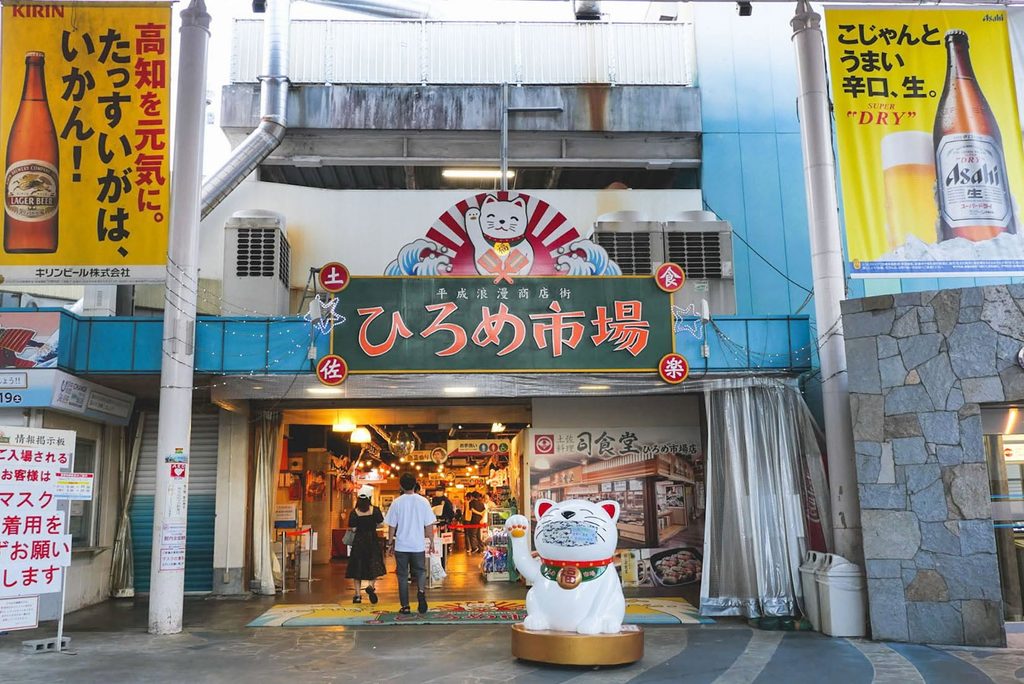
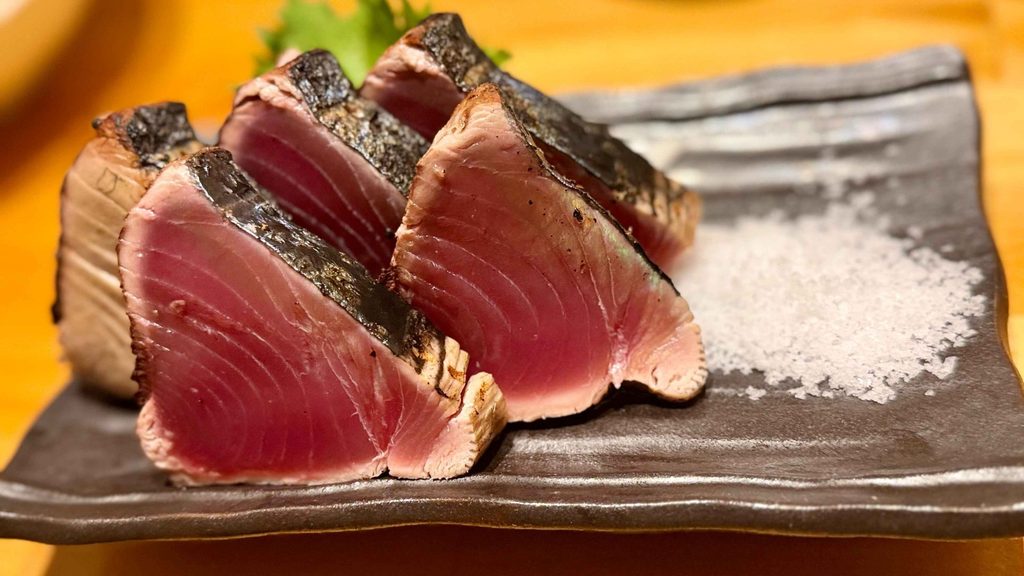
Kochi may well be Shikoku’s best food city and Hirome Market is a foodie paradise. This indoor food hall packed with stalls serving the region’s signature dish, katsuo no tataki, seared bonito that is often flame-torched right in front of you, alongside local sake and countless small plates. Go hungry, grab a shared table and graze your way through it.
Kochi Sunday Market
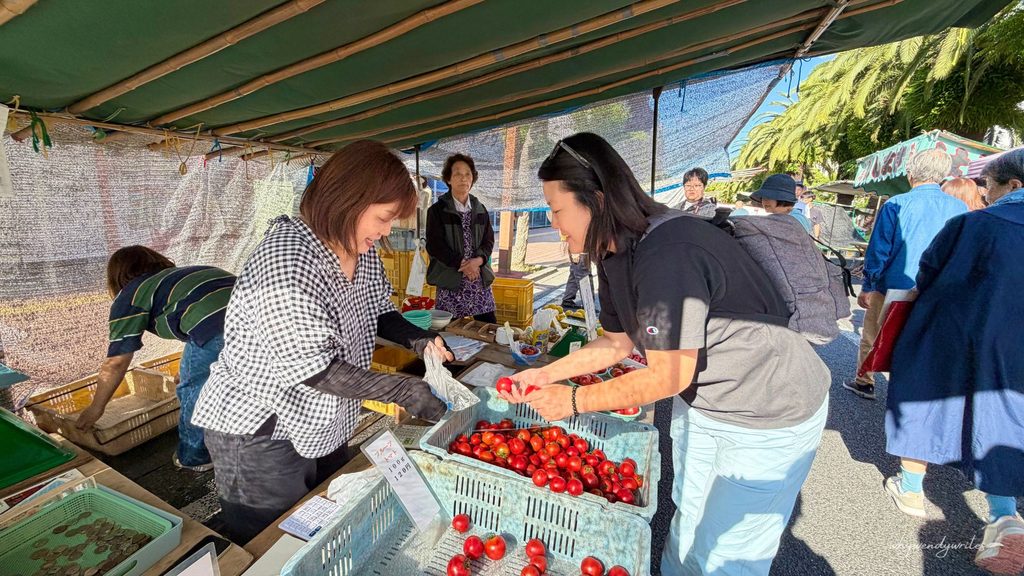
Kochi Sunday Market has been running for over three hundred years and stretches for nearly a kilometre with local produce, crafts and street food. It is one of the longest-running regular markets in Japan, and locals still turn out to do their weekly shopping. Come hungry and unhurried, immerse yourself in the bustling morning atmosphere, and fill both your stomach and your shopping bag.
Niyodo River
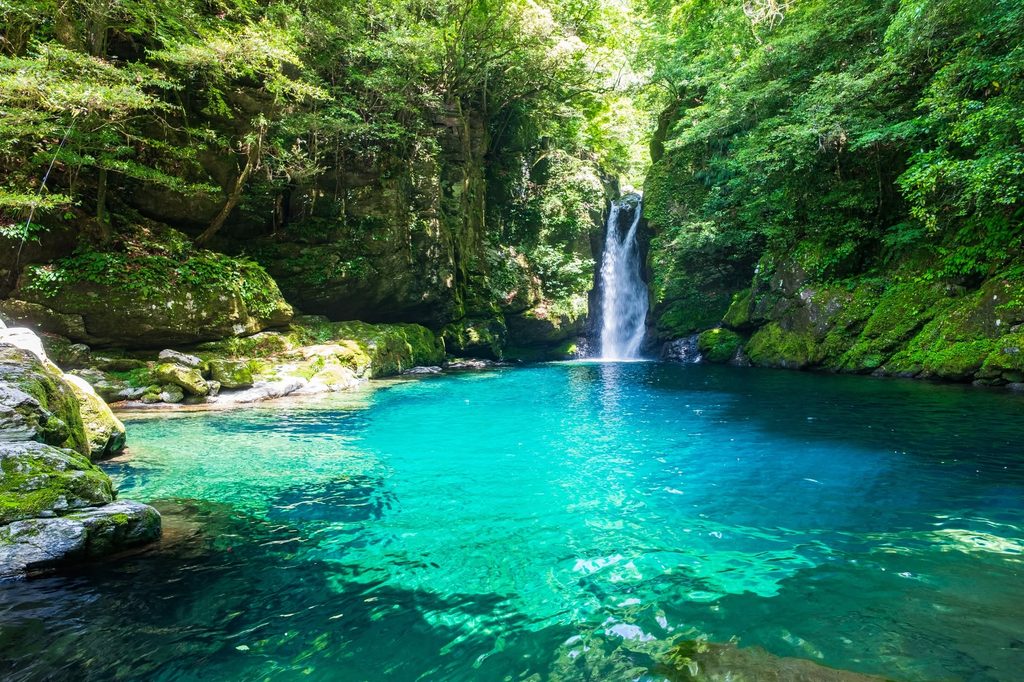
North of the city, Niyodo River is famous for a single, striking thing: its colour. Locals call it Niyodo Blue, a vivid turquoise that comes from the limestone riverbed and has repeatedly ranked it among the cleanest rivers in Japan.
It is a popular spot for canyoning, kayaking and simply swimming in one of its glassy pools. It can be easily combined with a Shimanto River trip.
Shikoku Tosa Toki no Yoake no Monogatari
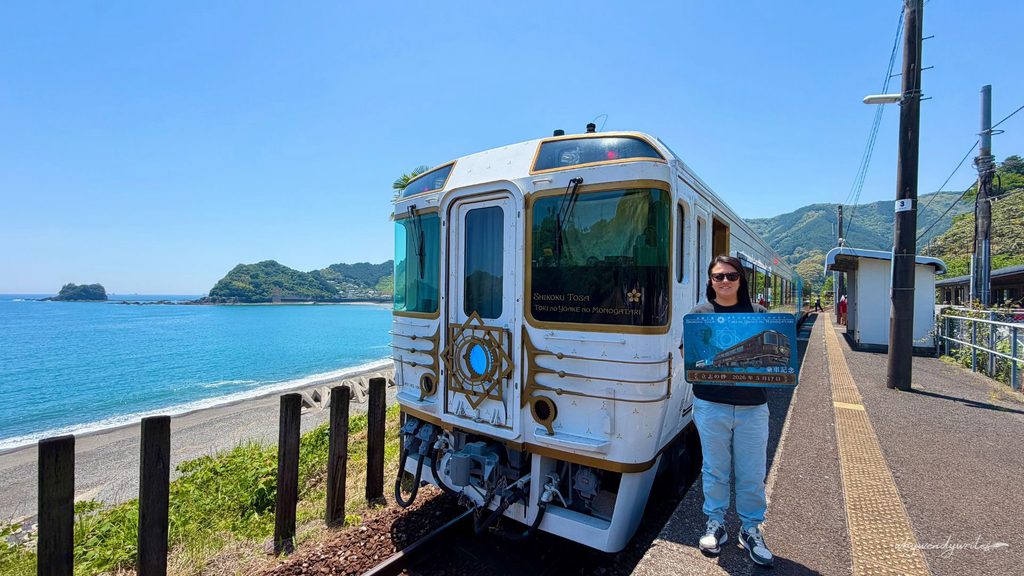
Shikoku Tosa Toki no Yoake no Monogatari is a sightseeing train that runs on the Dosan Line between Kochi Station and Kubokawa Station.
Its name translates roughly as “story of the dawn of a new era,” and its theme traces the life of Kochi-born hero, legendary samurai Sakamoto Ryoma.
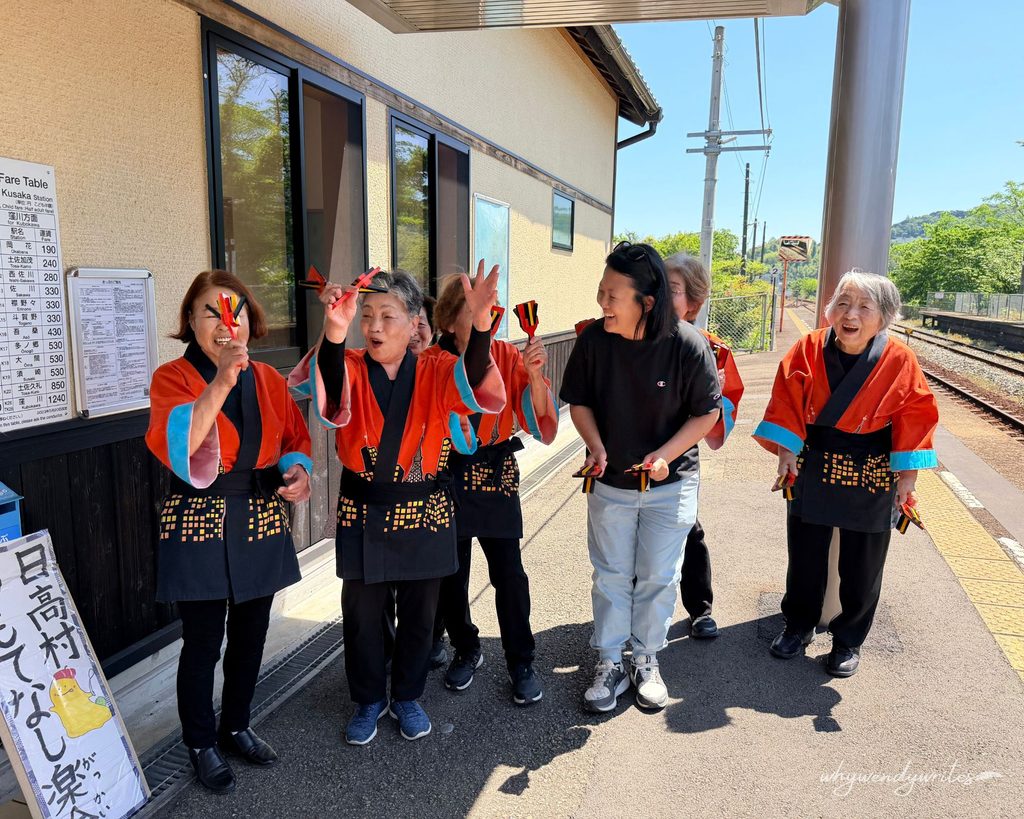
What sets it apart is the sheer level of hospitality. Staff and local volunteers turn out to wave flags at stations along the route, sometimes performing a short dance for passengers as the train pulls in, and small pop-up stalls sell local produce at station stops.
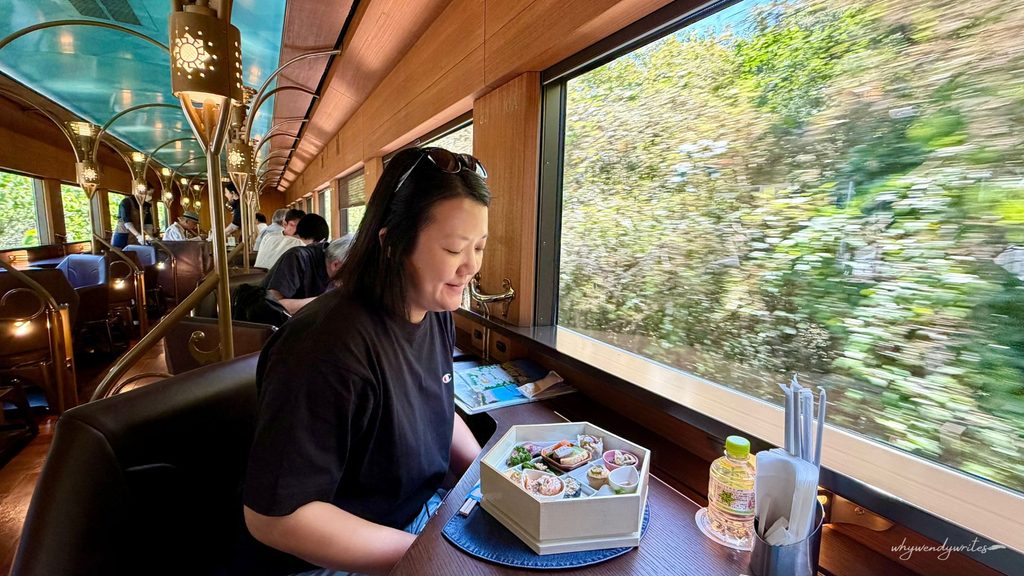
I enjoyed the excellent service, elegant interiors and sumptuous lunch made using locally sourced ingredients, and some of the most stunning coastal scenery in Shikoku sliding past the window. It is the best sightseeing train ride I have ever experienced in Japan. Reservations are recommended. Book your train ticket here.
From Kubokawa station, a connecting local train carries on to Nakamura, so you can turn the ride itself into the start of your Shimanto River trip and let the train do the transfer for you.
Curious what this sightseeing train experience is like? Check out my video below
Shimanto River
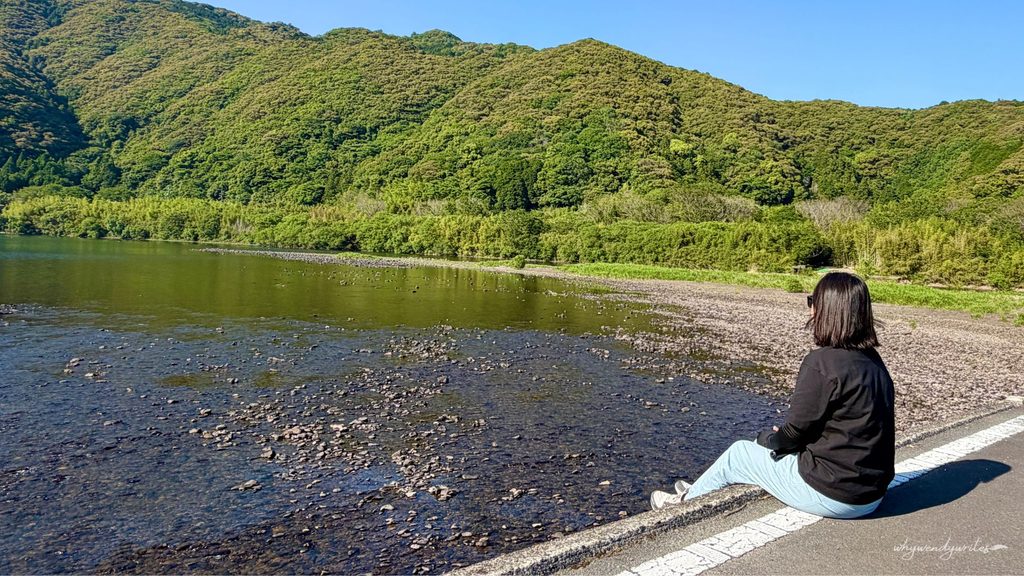
West of Kochi City, the Shimanto River is often called Japan’s last clear stream, since it is the country’s longest river without a single dam along its course.
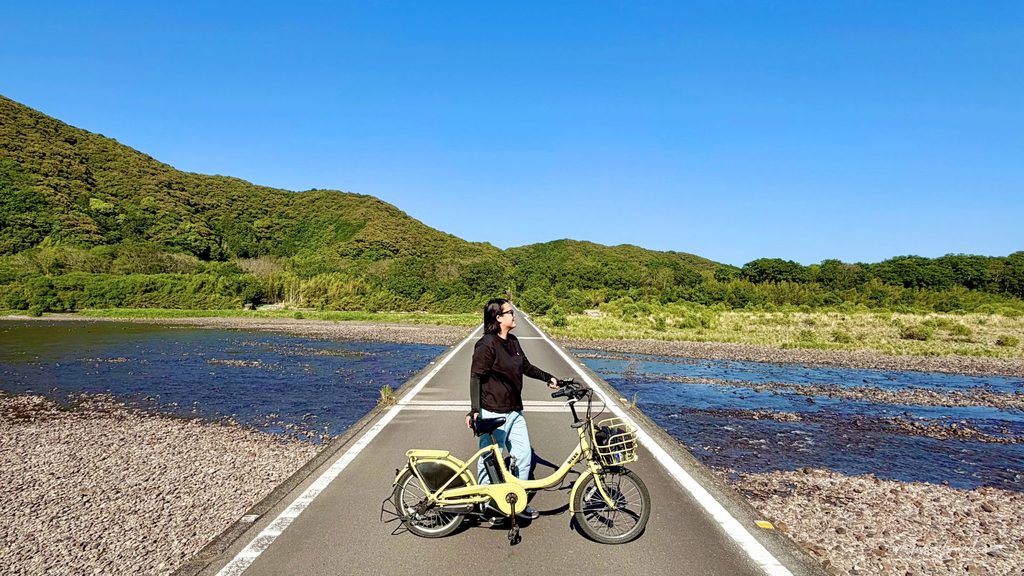
Its most distinctive feature is the 47 chinkabashi, or submersible bridges, that cross the river and its tributaries. Built without guardrails, they are designed to disappear under floodwater rather than being swept away, and crossing one is a must-see attraction.
The best way to enjoy the river is by bicycle, with rentals available from the tourist information centre by Nakamura Station, or aboard a traditional yakatabune pleasure boat, for which reservations are recommended.
Nakamura
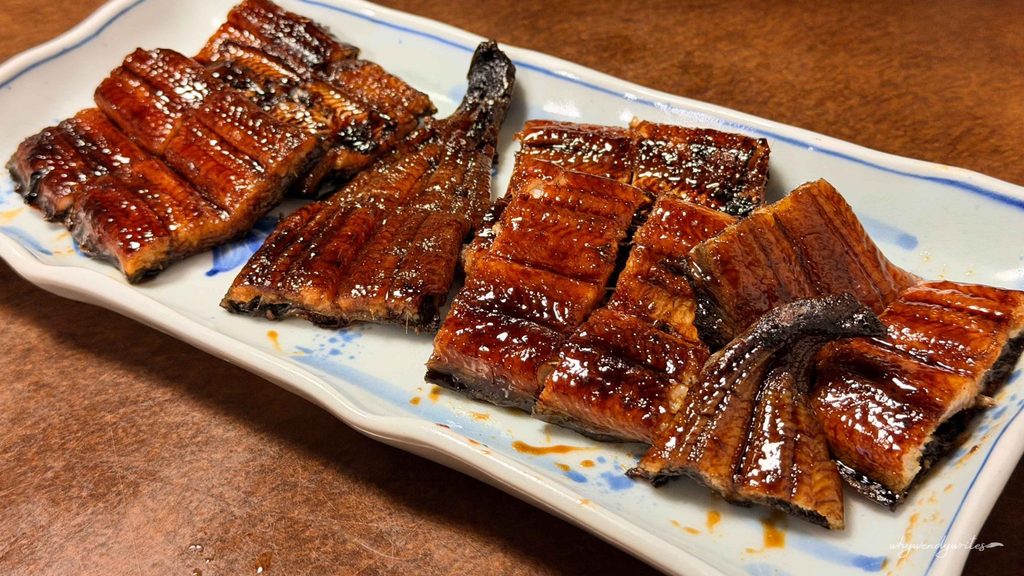
Nakamura, the gateway town to the Shimanto River, is known locally as the Little Kyoto of Tosa. It is worth a night for its food scene alone, with a cluster of excellent izakayas near the station serving the fresh seafood the region is known for, featuring grilled unagi, a local speciality.
Anpanman’s Hometown
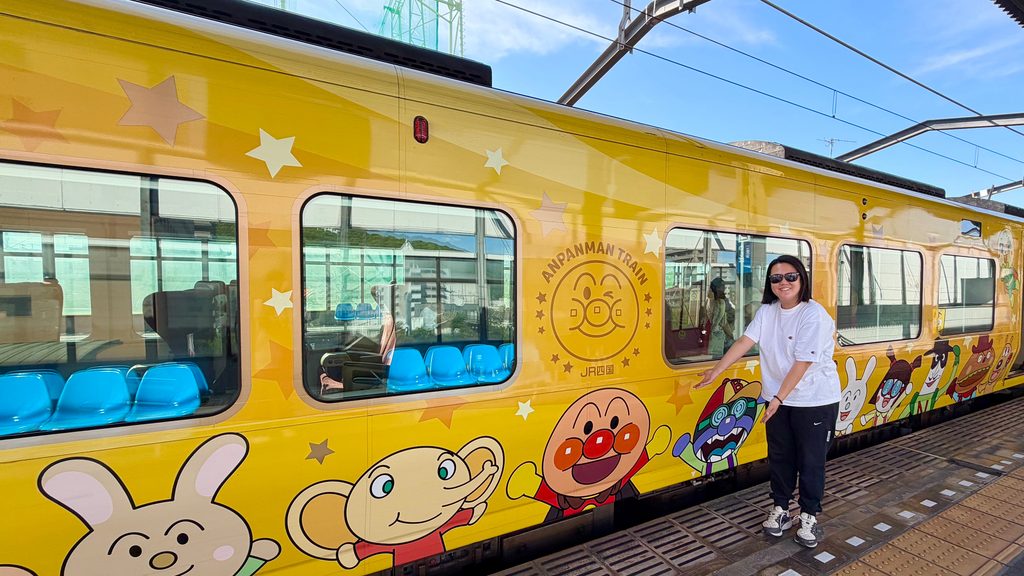
Kochi has one more claim to fame: it is the birthplace of Takashi Yanase, the illustrator who created Anpanman, one of Japan’s best-loved children’s characters.
Yanase grew up in what is now Kami City, where the Yanase Takashi Memorial Hall and Anpanman Museum has become one of the most visited character museums in Japan.
Anpanman is everywhere in Kochi. Spot him on trams around the city, on station signs, and in shops filled with Anpanman souvenirs.
One quintessential Shikoku experience is riding an Anpanman Train. Several differently coloured, themed trains run across the island’s various rail lines, each decorated inside and out with Anpanman and his friends, right down to themed seats and ceiling art. Check out the different Anpanman themed trains, rail routes, and timetable here.
Yuzu
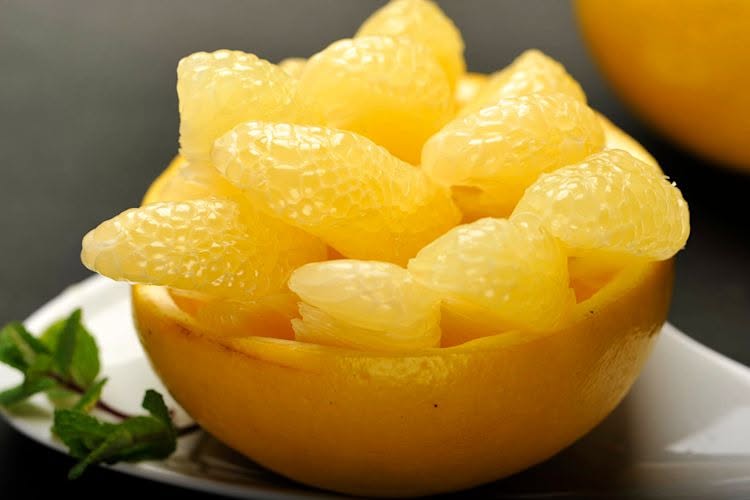
Kochi is Japan’s biggest producer of yuzu, the fragrant, tart citrus prized by chefs across the country. Its forested mountains provide exactly the cool climate yuzu needs. Yuzu turns up throughout Kochi’s cuisine, snacks, and souvenirs. The fresh fruit is easy to find at markets like the Kochi Sunday Market if you want to bring some home.
Road Trip Tip: Kochi’s Nakamura to Ehime’s Uwajima
The drive from Nakamura to Uwajima is one of Shikoku’s most rewarding, tracing wild coastline and quiet fishing villages as you cross into Ehime.
There are plenty of reasons to stop along the way, including the Shimanto River itself, Cape Ashizuri further south for dramatic cliffside views, and, as you near Uwajima, the small fishing and pearl-farming villages scattered along the Uwa Sea.
Places in Kochi I hope to visit next time: I wished I had more days in Kochi so I am already planning a return. Kayaking on the beautiful Niyodo River, Nakatsu Gorge, exploring the Kengo Kuma architecture in Yusuhara and venturing further south towards Cape Ashizuri are all high on my list for next time.
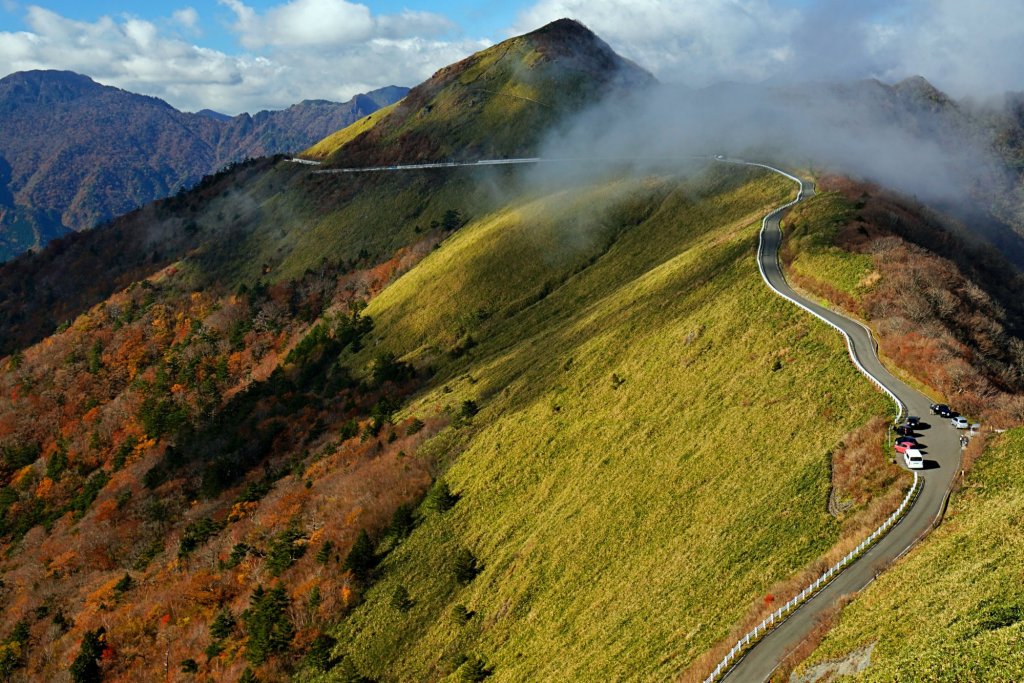
One place I am very curious about and would love to visit next time is the UFO Line. I learnt about this scenic route from the locals during my trip. Tracing the ridge of the Ishizuchi Mountain Range along the Kochi–Ehime border, this 27-kilometre stretch is known as the “Road in the Sky,” a scenic drive dramatic enough to have been featured in many car commercials. The quirky name comes from hikers who have spotted UFO-like shapes in photos taken along the route. Just note that it closes for winter from late November to early April, so time your visit outside that window.
Ehime
Located on the northwestern side of Shikoku, Ehime Prefecture (愛媛県) is known for Matsuyama Castle, Dogo Onsen, the Shimanami Kaido cycling route, and Japan’s largest variety of citrus fruits. Combining historic landmarks, scenic coastal landscapes and unique local cuisine, Ehime is one of the highlights of any trip to Shikoku.
Ehime Prefecture rounds out a Shikoku loop with citrus groves running down to the Seto Inland Sea, three of Japan’s twelve surviving original castles, and a hot spring town with roots stretching back into legend. The prefectural capital is Matsuyama, best known for its Matsuyama Castle and Dogo onsen, one of Japan’s oldest hot springs. Beyond the capital, Uchiko, Ozu, and Uwajima round out a prefecture that rewards slowing down.
Matsuyama City
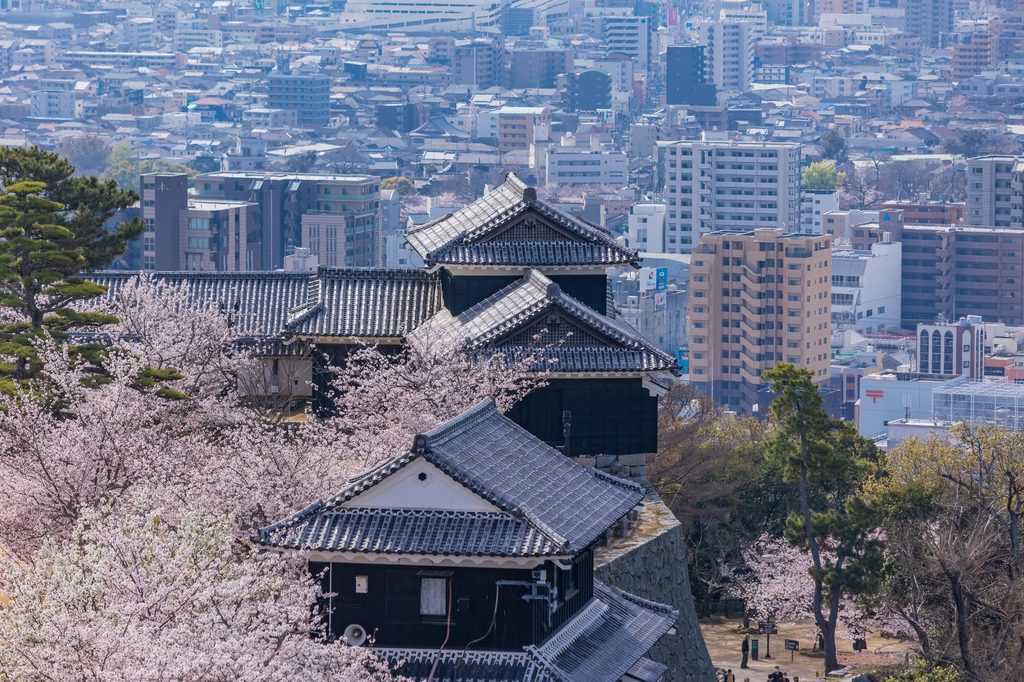
Matsuyama City (松山市) is Shikoku’s largest city, and it wears its history lightly, mixing a genuine feudal-era castle with the relaxed pace of a hot spring town. It is closely associated with the well known Japanese novelist Natsume Soseki and the haiku poet Masaoka Shiki, both of whom shaped how the city sees itself. It makes a comfortable, walkable base for a day or two.
Matsuyama Castle
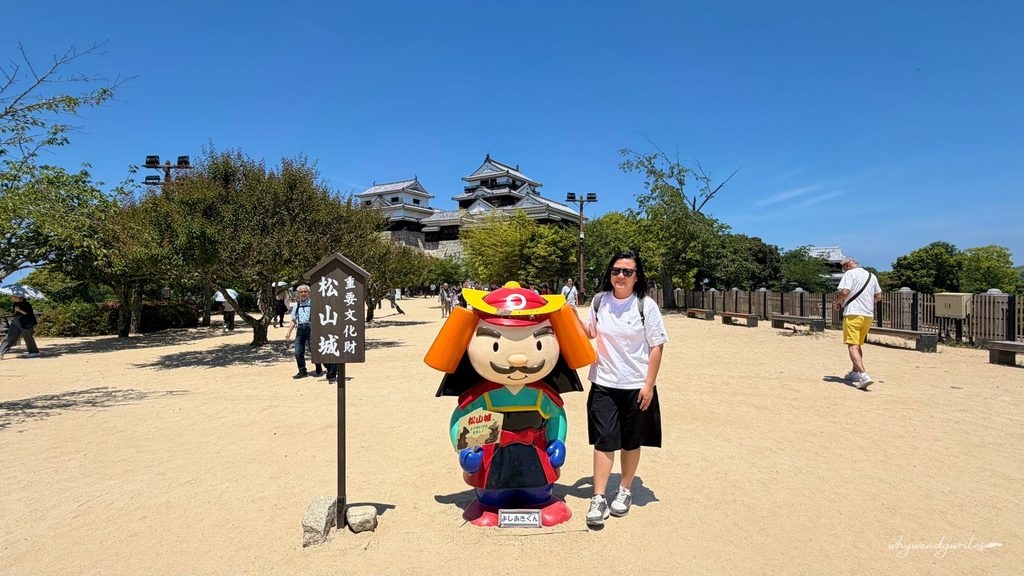
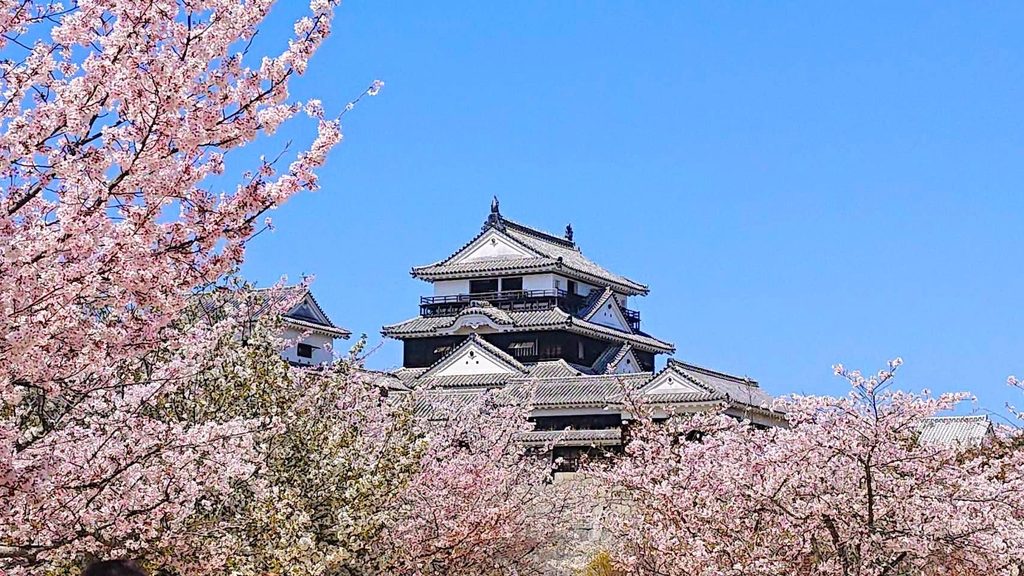
Matsuyama Castle is one of only twelve Japanese castles that still has an original main keep, built in the early seventeenth century. It sits on a hill in the centre of the city and can be reached by ropeway or chairlift, both half the fun, with sweeping views over Matsuyama and out towards the Seto Inland Sea from the top.
Dogo Onsen
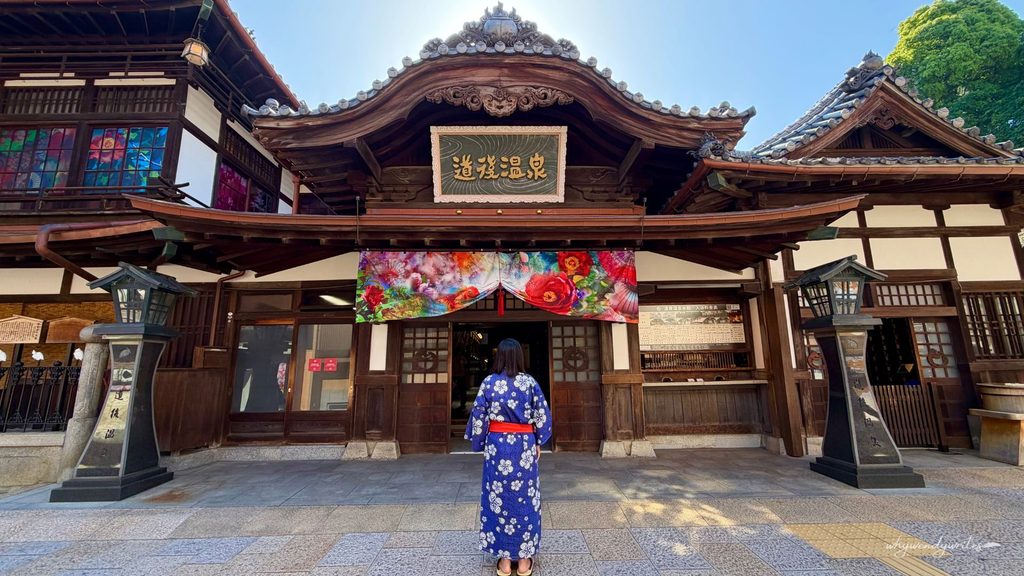
Few places are as closely associated with Ehime as Dogo Onsen. Believed to have been welcoming bathers for over a thousand years, it is often described as one of Japan’s oldest hot springs, and it remains one of the country’s most celebrated onsen destinations.
The iconic wooden Dogo Onsen Honkan, originally built in 1894, is a National Important Cultural Property and remains the symbol of Matsuyama today. Dogo Onsen is also widely said to have inspired the bathhouse in Studio Ghibli’s Spirited Away.
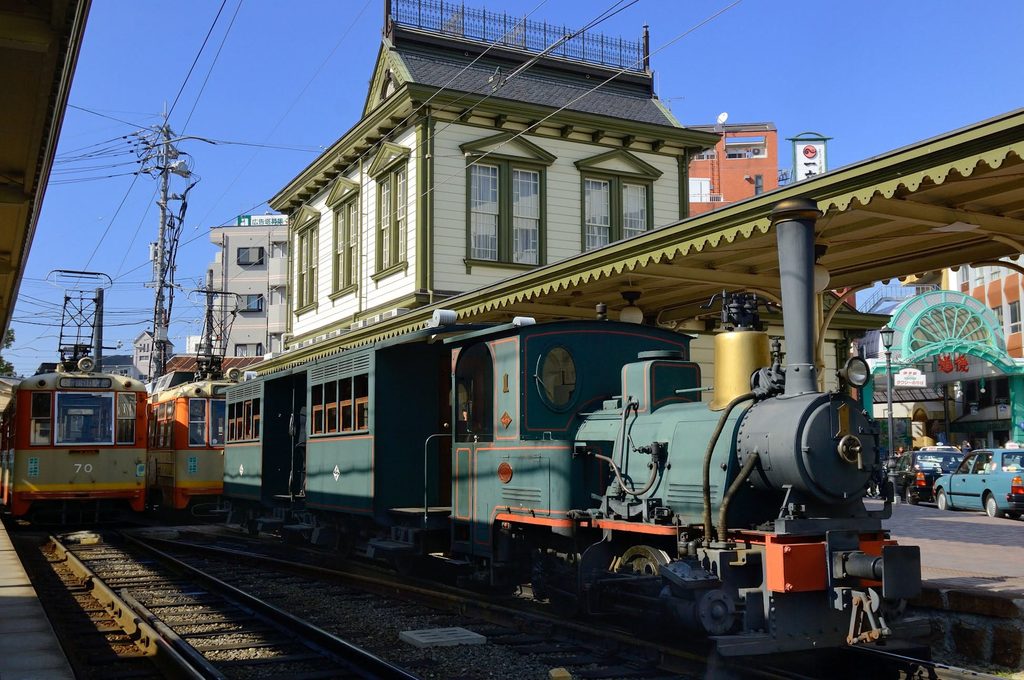
From central Matsuyama, the Botchan train, a retro sightseeing steam locative, named after Natsume Soseki’s novel set in the city, is a charming way to reach Dogo.
Japan’s Citrus Kingdom
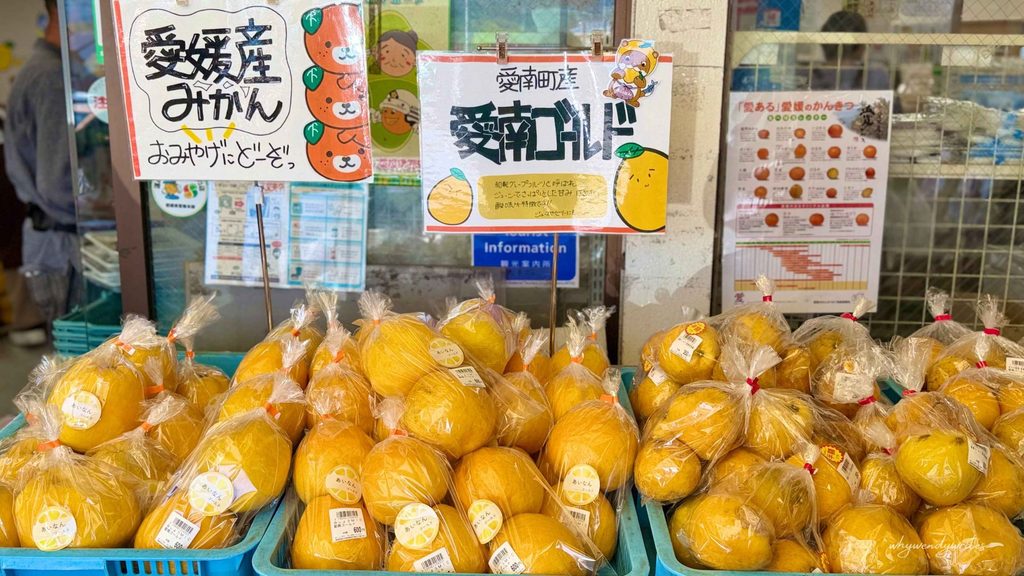
Ehime is widely regarded as Japan’s citrus kingdom, growing more varieties of citrus than anywhere else in the country, over forty in total.
Locals put the high production and exceptional flavours down to what is known as “three suns”. The first is the sun itself, shining down from the southern sky. The second is sunlight bouncing back up off the sea below the terraced groves. The third comes from the stone walls built into the hillsides, which soak up warmth during the day and radiate it back at night. Citrus grown under all three all three conditions are believed to be sweeter and juicier than fruit grown almost anywhere else.
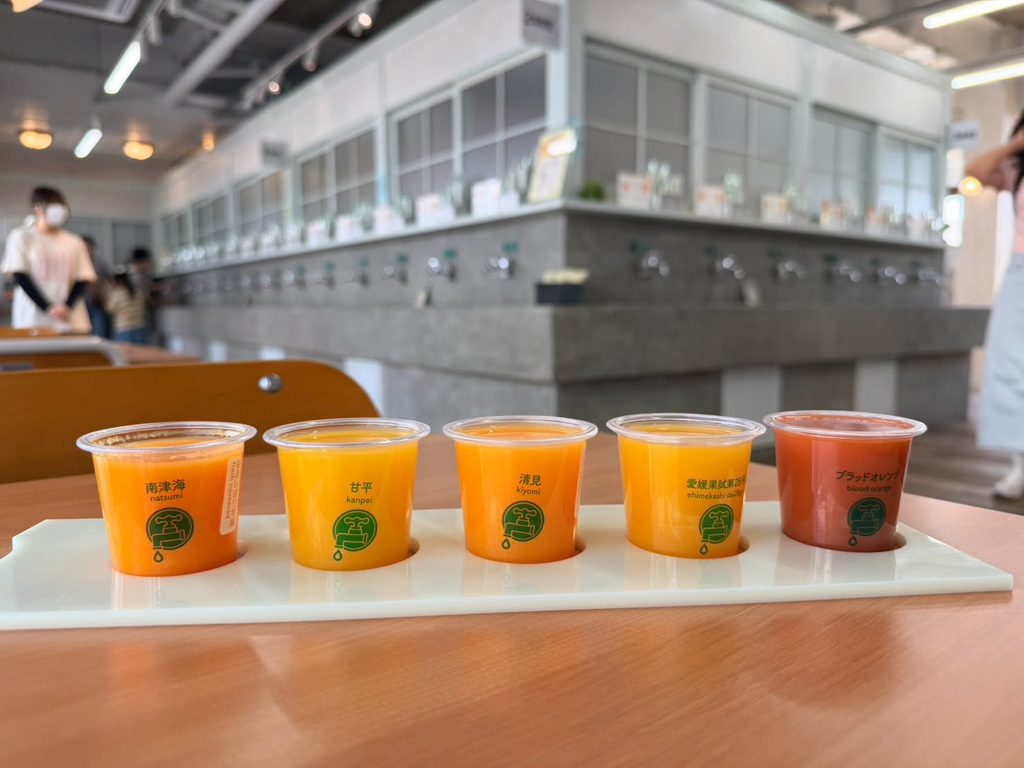
One of most fun experiences in Ehime is trying citrus juice straight from the tap. There are many spots where you pay for a cup, turn a tap, and out flows fresh, 100 percent citrus juice, with the variety on offer changing with the season. Some shops in Matsuyama City has a whole wall of taps pouring a dozen or more different citrus juices side by side, so you can compare a wide variety of juices in a single sitting. I tried 5 types of juice at Ehime School 1970 (Ehime no Gakkou 1970) near the Matsuyama Castle’s ropeway station.
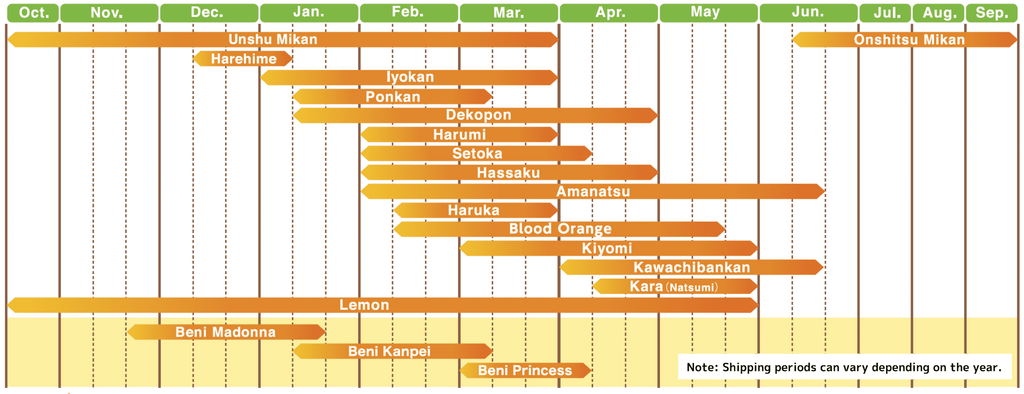
Because Ehime grows such a wide range of citrus fruits, there are different varieties of fruits in season more or less all year round. Whenever you visit, there is a good chance you would find something freshly picked and in season.
Fruit-picking in Uwajima
The hillsides above Uwajima Bay are terraced with citrus groves right down to the water, and several farms here let you pick your own mikan straight from the tree in season. It is a fun way to see where Ehime’s citrus obsession actually comes from, and the views over the bay while you are picking are a bonus.
One of my favourite experiences in Uwajima was spending an hour at Minami Shikoku Farm (南四国ファーム), picking mikan straight from the trees. At ¥1,430 per adult, the experience includes 60 minutes of picking and 2 kg of oranges to take home. Make your fruits-picking reservation here.
Uwajima Castle
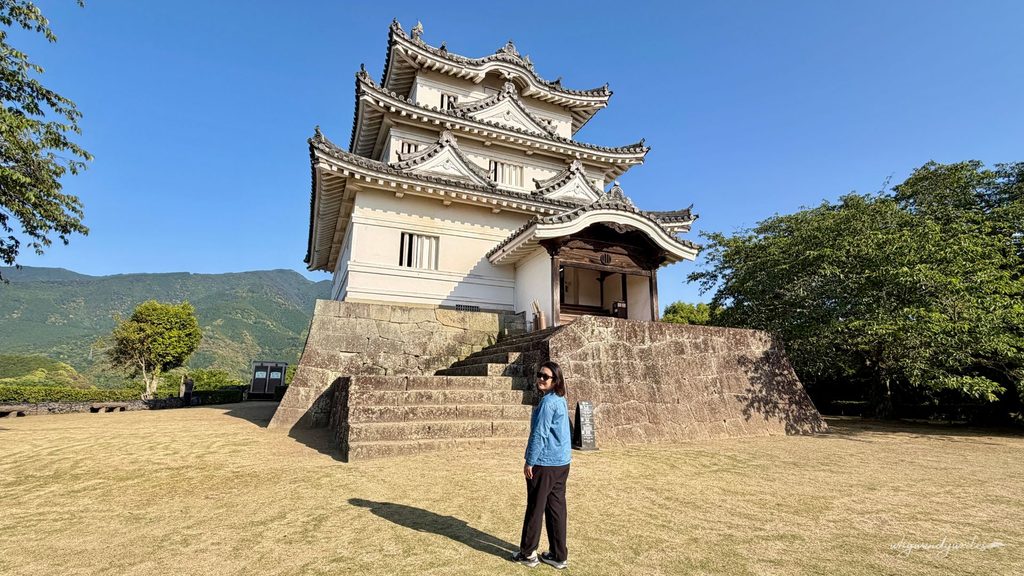
At the southern tip of Ehime, Uwajima is a quieter, more old-fashioned town built around its own original castle. Uwajima Castle is another of Japan’s twelve surviving original keeps,
It is a short but steep climb from the town below, rewarded with views over Uwajima’s harbour and, on a clear day, towards Kyushu in the distance.
Nanrakuen
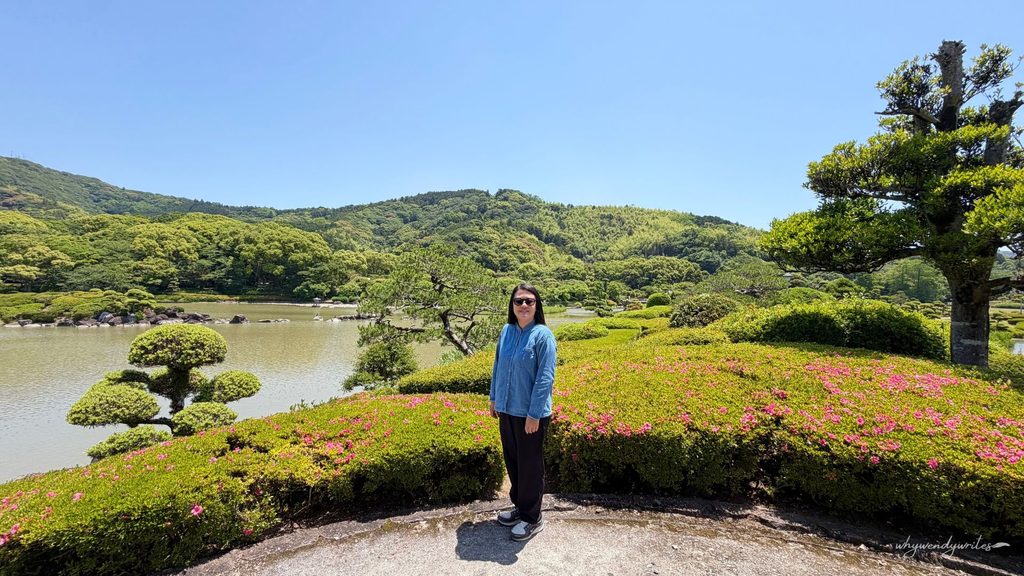
Nanrakuen Garden is the largest traditional Japanese garden in all of Shikoku, built around a large strolling pond. It is known for a long procession of seasonal blooms, from plum blossom in late winter through cherry blossoms to a particularly striking iris festival in late spring.
Tai Meshi
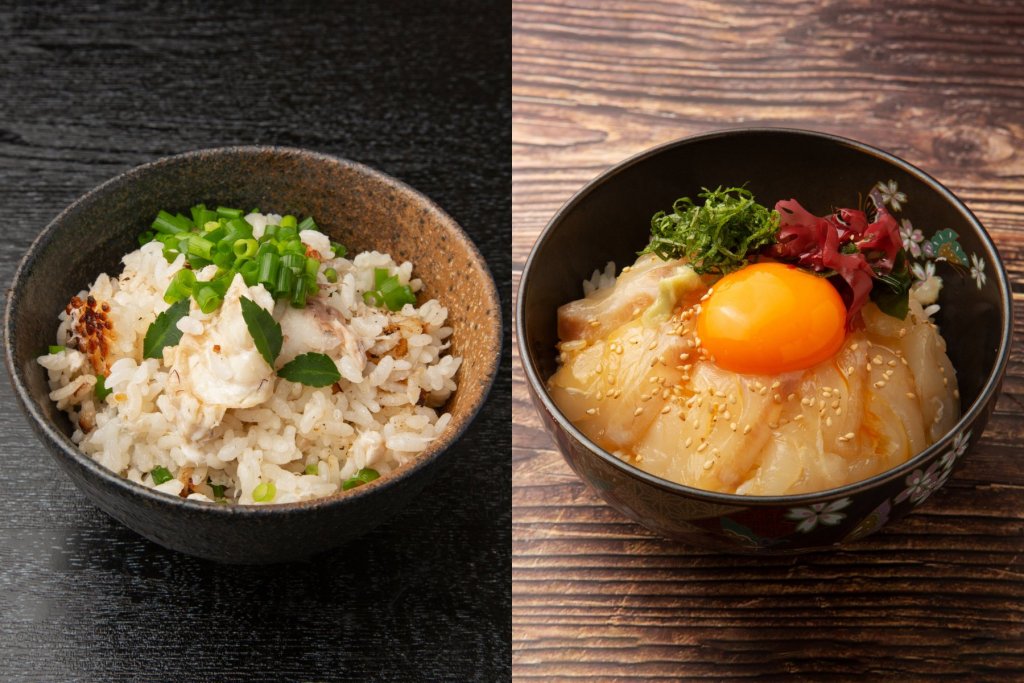
Tai Meshi or sea bream rice, or is Ehime’s signature dish, but Matsuyama and Uwajima make it in almost opposite styles, and trying both is part of the fun.
Matsuyama’s version (see photo, left) cooks the sea bream together with rice in a pot, closer to a savoury kamameshi.
Uwajima’s version (see photo, right) is quite different: raw sea bream sashimi is mixed with a sweet, savoury sauce built on raw egg and soy, then poured over a bowl of hot rice, more like a donburi. Try both versions so you can taste the difference for yourself.
Imabari and Shimanami Kaido
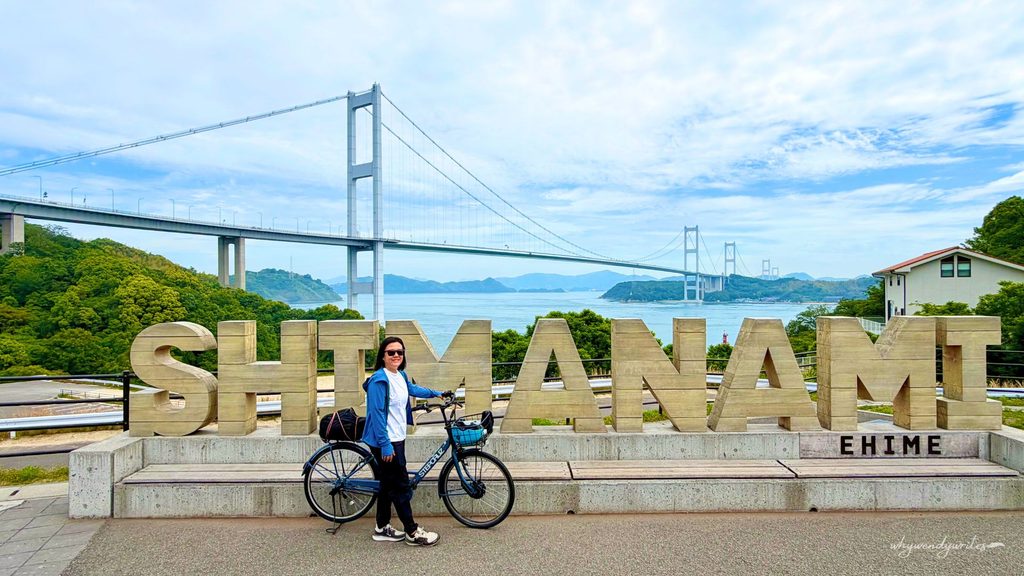
Imabari, on Ehime’s northern coast, is the Shikoku end of the Shimanami Kaido, the celebrated cycling route that hops across six islands and seven bridges in the Seto Inland Sea, covering roughly 70 kilometres to Onomichi in Hiroshima.
I have ridden it twice and I strongly recommend trying this cycling experience over at least two days so you can enjoy exploring the islands. The route is mostly flat and gently rolling, with a dedicated, well-marked cycling path most of the way, so it never feels like hard work, just one gorgeous island view after another.
Imabari is great place to start or finish the ride, since it lets you fold a day or two of exploring Ehime, or the rest of Shikoku, onto either end of the trip.
Ride out from Imabari towards Hiroshima, or arrive here at the end of the cycling expedition and reward yourself with a soak in Dogo Onsen and a bowl of tai meshi.
7-day Shikoku Itinerary
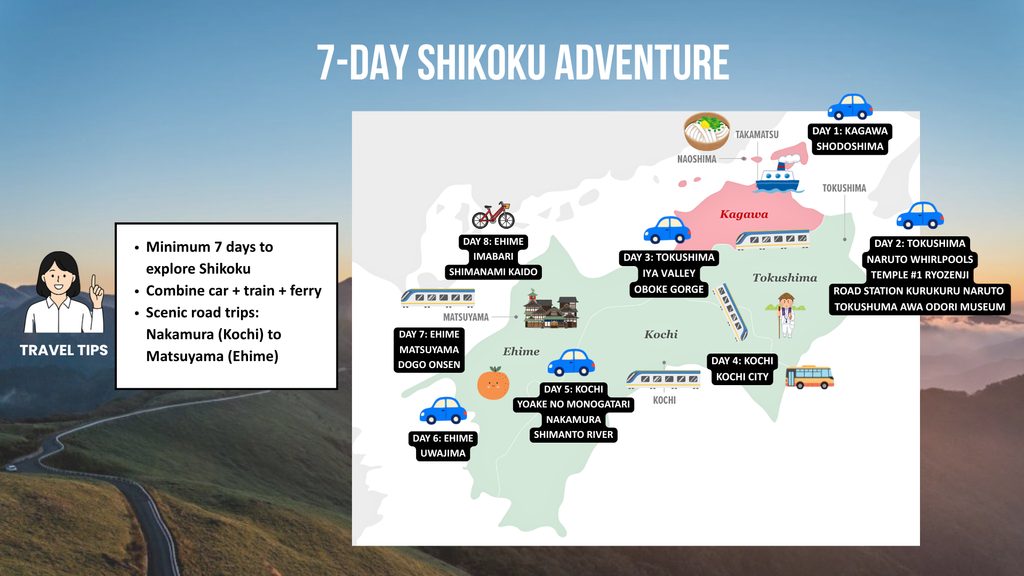
If you are wondering how to actually fit all of this into one trip, here is the exact route I took: a 7-day loop starting in Kagawa, moving into Tokushima, continuing on to Kochi, and finishing the journey clockwise in Ehime. It is a natural flow around the island, and it means you are never backtracking.
Day 1: Kagawa, Shodoshima
I started the trip on Shodoshima, Olive Island. I spent half a day but it was too short. Previously, I spent 2 days 1 night on the island. and I thought it was still too short. We drove to our hotel, AoAo Naruto Resort, and enjoyed an amazing dinner buffet. What a gorgeous hotel with a fantastic view of the Seto Inland Sea.
Day 2: Tokushima, Naruto
We started the morning with a sightseeing boat ride to view Naruto Whirlpools, then paid a visit to Ryozenji, Temple 1 of the Shikoku 88 Temple Pilgrimage. I stopped for lunch and souvenirs at Roadside Station Kurukuru Naruto, then rounded off the day at the Awa Odori Kaikan in Tokushima City to catch a live dance performance.
Day 3: Tokushima, Iya Valley
This was a full day dedicated to Iya Valley: crossing the vine bridges, taking a boat ride through Oboke Gorge, and making the detour to Nagoro Scarecrow Village. If I had a chance to visit Iya Valley in the future, I will spend a few nights to enjoy the hiking trails and just immerse in the nature.
Day 4: Kochi, Kochi City
Into Kochi next, where I spent the day exploring Kochi City on the MY-YU bus loop: Katsurahama Beach, Chikurinji Temple, Harimaya Bridge, and Kochi Castle. If your dates line up with early August, this is also when you might catch Kochi’s Yosakoi Festival in full swing.
Day 5: Kochi, Shimanto River, Nakamura
In the morning, we visited the Kochi City Sunday Market. Then we took the Shikoku Tosa Toki no Yoake no Monogatari sightseeing train out toward Nakamura, then spent the rest of the day on the Shimanto River, cycling along its banks and crossing a few of its submersible bridges.
Day 6: Ehime, Uwajima, Dogo Onsen
Crossing into Ehime, I made my way to Uwajima first, visiting Uwajima Castle and Nanrakuen Garden, before continuing on to soak in Dogo Onsen in the evening.
Day 7: Ehime, Matsuyama
I closed the trip in Matsuyama, climbing up to Matsuyama Castle, riding the retro Botchan Train, and trying fresh citrus juice straight from the tap before heading home.
Honestly, even with 7 days, it still felt rushed. That works out to roughly 1.5 to 2 days per prefecture, which is enough to hit the highlights, but not really enough to slow down and really sit with a place. Realistically, each of Kagawa, Tokushima, Kochi, and Ehime could easily fill up to a week on its own.
Travel Tip: if you have extra days to spare, it’s worth extending the trip to Imabari in Ehime to ride the Shimanami Kaido before you go home. I did this on a separate trip, and it added 2 more days on top of the original 7, bringing the whole Shikoku trip to 9 days.
Want another Shikoku itinerary? Shikoku Tourism has put together a recommended 7-day Shikoku itinerary, which you can download as a PDF itinerary here or watch a YouTube video guide here.
When to visit Shikoku
Shikoku is a destination that can be enjoyed in every season. Each time of year offers something unique, so the best choice depends on your travel style and what you want to experience.
Travel tip: Shikoku during peak seasons like cherry blossom in spring and autumn foliage is just as stunning, if not more, because it is not crowded like other well‑known destinations in Japan. This makes it one of the best places to enjoy Japan’s seasonal beauty without the crowds.
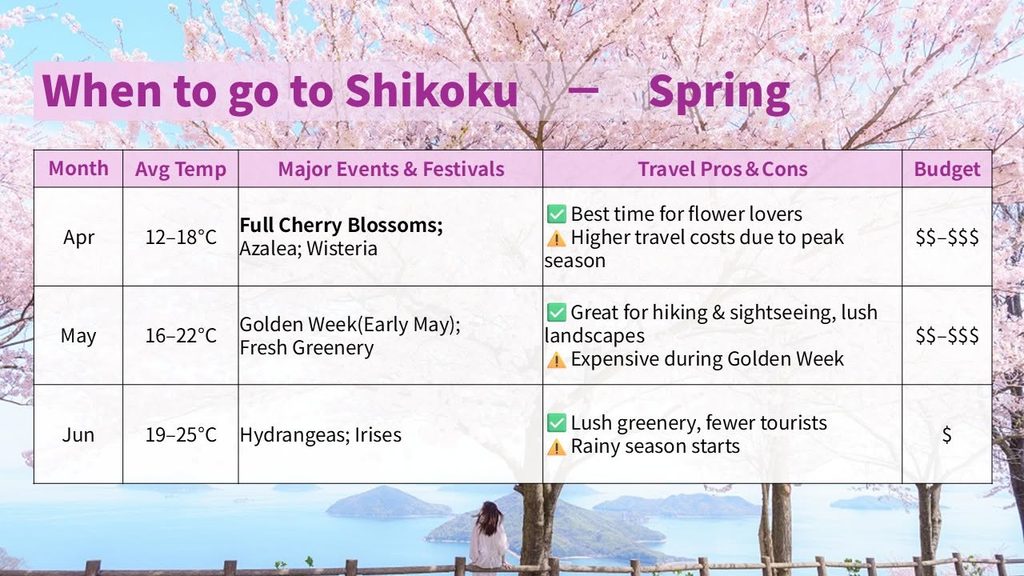
Spring (April to June)
Cherry blossoms, azalea, and wisteria transform the island into a floral paradise. It is the best season for flower lovers, though travel costs can be higher. June is quieter but tends to be rainy.
Summer (July to September)
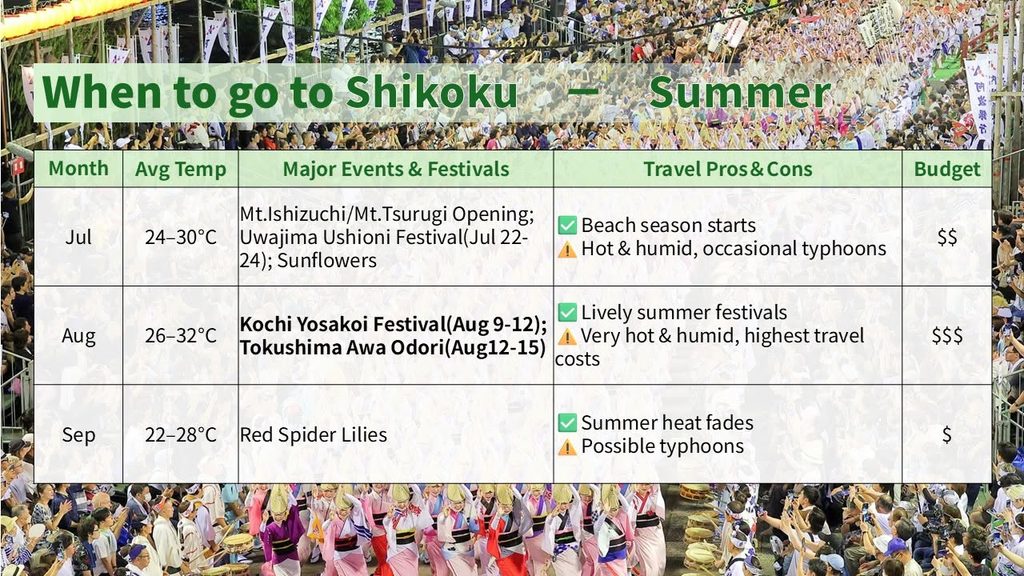
Summer is festival season, and Shikoku hosts some of the top summer festivals in Japan. Tokushima’s Awa Odori is the country’s largest dance festival, Kochi’s Yosakoi Festival fills the streets with vibrant performances, and Takamatsu’s Sanuki Takamatsu Festival lights up the city with parades and fireworks. In August, you can enjoy a true summer festival extravaganza by hopping from one city to another.
Beaches open, rafting is popular, and the atmosphere is lively. Expect hot and humid weather, but unforgettable cultural experiences.
Autumn (October to December)
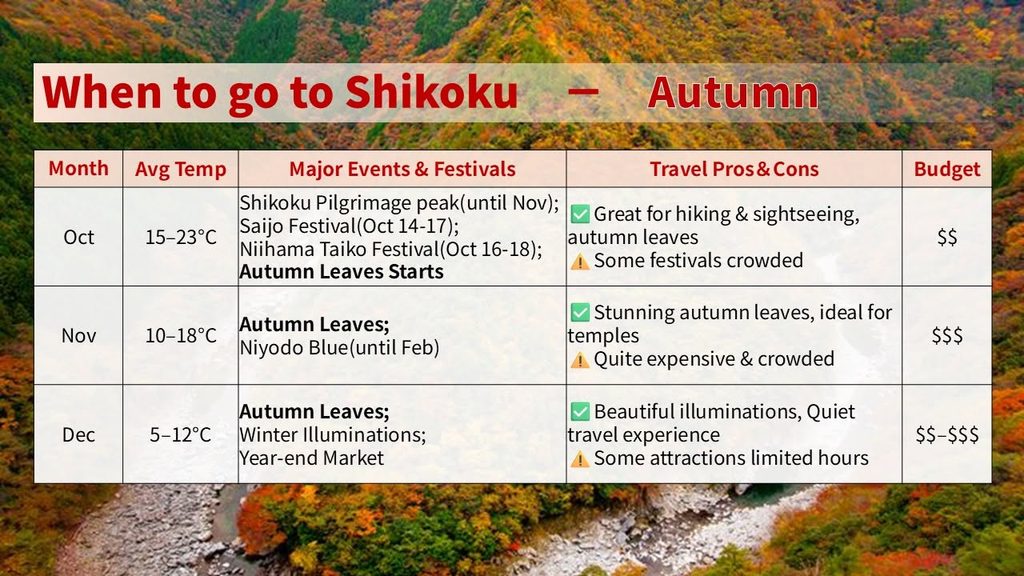
Cool, comfortable weather makes this the perfect time for hiking, outdoor activities, and cycling the Shimanami Kaido. Autumn leaves peak from October to December, and the scenery is breathtaking.
Autumn is an excellent season for the 88 Temple Pilgrimage, with crisp air, fewer rainy days, and brilliant foliage around temple grounds.
Winter (January to March)
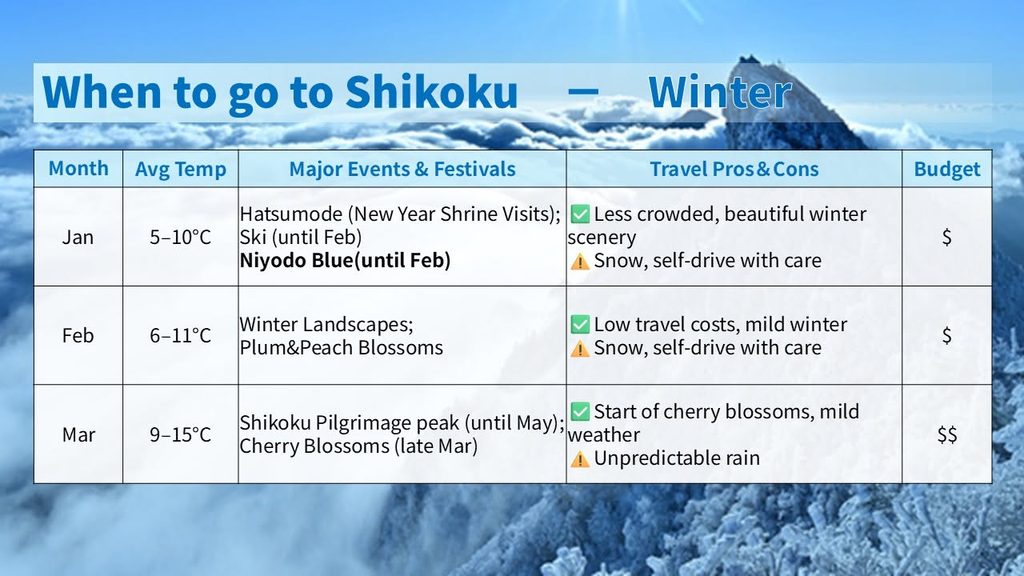
Quiet and budget‑friendly, with beautiful scenery and cozy onsen stays. A highlight is the Niyodo Blue River in Kochi, famous for its clear turquoise water. Snow is rare but possible in mountain areas.
How to get to Shikoku
Shikoku is one of the most accessible regions in Japan, with multiple and convenient connections from across the country. I love how I can plan a trip from Shikoku from different regions of Japan including Osaka, Kyoto, Kobe, Okayama, Hiroshima, or even Kyushu.
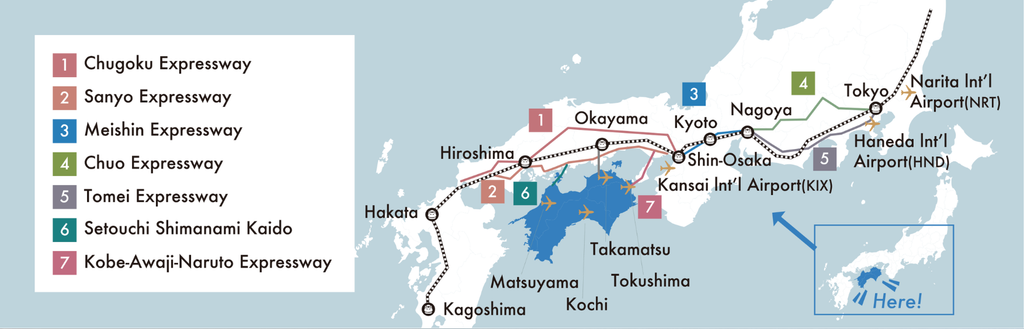
There are many flexible options to suit every traveller. Getting to Shikoku feels like a “choose your own adventure” journey, with multiple transport choices depending on your style and budget. I have summarised the main transoportatio modes below. Visit Shikoku Tourism website for more travel information.
By Air
Each prefecture has its own regional airport, making domestic flights simple and frequent:
- Takamatsu Airport (Kagawa)
- Tokushima Airport
- Kochi Ryoma Airport
- Matsuyama Airport (Ehime)
Flights connect Shikoku to major cities such as Tokyo, Osaka, Nagoya, and Fukuoka, with some international routes from Shanghai, Seoul, and Taiwan.
By Train
Via Okayama
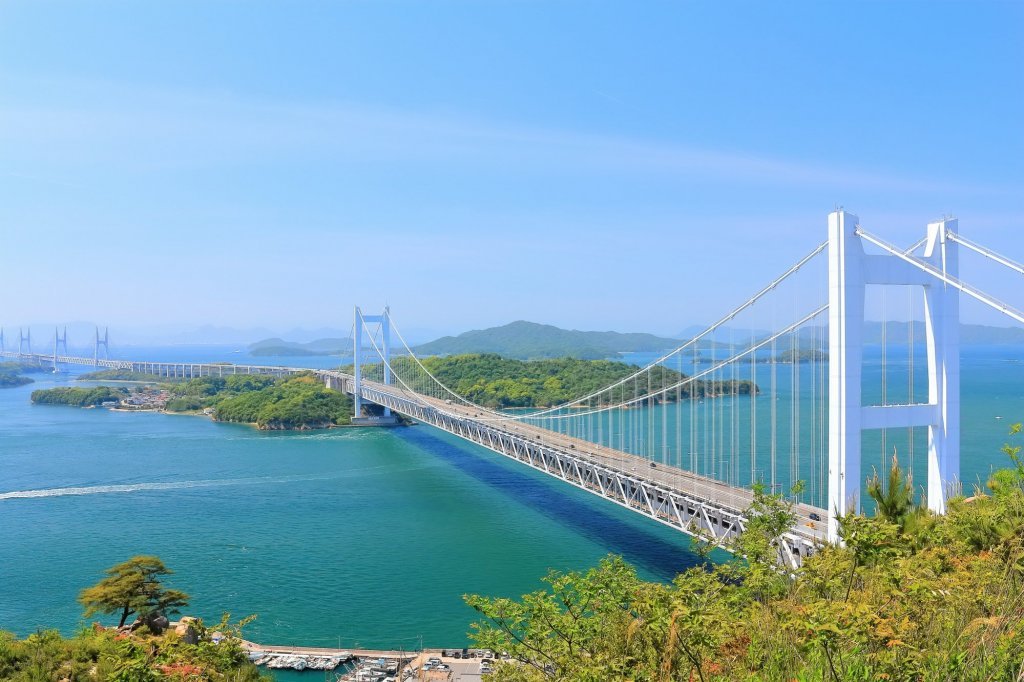
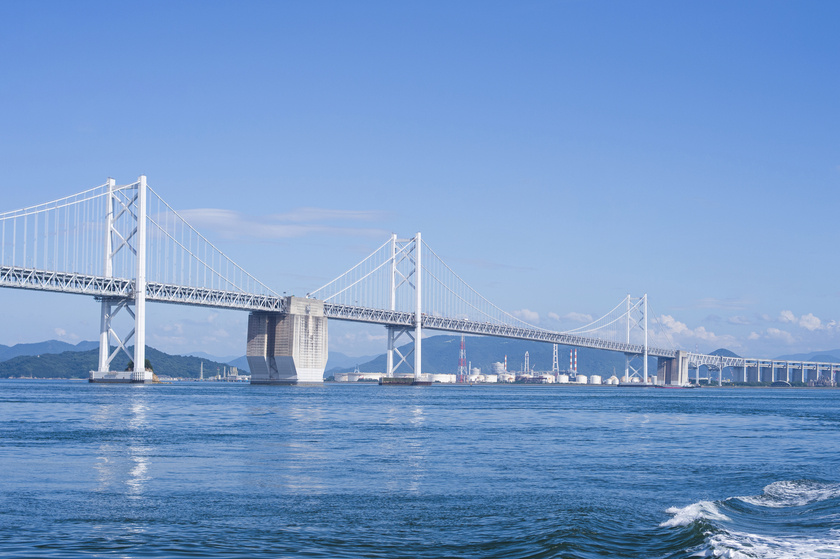
The Marine Liner from Okayama Station is the most convenient rail link, crossing the Great Seto Bridge with breathtaking views of the Seto Inland Sea.
From the bridge crossing, you enter Kagawa, Shikoku’s northern gateway. A short local train transfer brings you directly to Takamatsu, the prefectural capital. Shikoku’s major cities are well connected by rail, making train travel straightforward.
Fun Fact: The Great Seto Bridge is a 13‑kilometre architectural and engineering masterpiece that spans the Seto Inland Sea. It combines three structural styles: cable‑stayed, suspension, and truss. Together they form one of the longest bridge systems in the world. The bridge carries both road traffic and the JR Marine Liner train, making it a vital link between Honshu and Shikoku. Crossing it is not only practical but also unforgettable, with sweeping views of the sea and its scattered islands.
By Bus

Intercity coaches and night buses are one of the most affordable ways to reach Shikoku. They connect the island with major regions such as Tokyo, Osaka, Kyoto, and Kobe, making them a good choice for budget‑conscious travellers or those who enjoy slow travel.
- Tokyo to Shikoku: Around 12 hours by night bus, with services arriving in Takamatsu, Matsuyama, and other major cities.
- Osaka to Shikoku: About 5 hours, with frequent departures to Takamatsu and Tokushima.
- Kyoto and Kobe to Shikoku: Similar timings to Osaka, with direct routes available.
Buses are comfortable, with reclining seats, rest stops along the way, and overnight services that save on accommodation. They are slower than trains or flights but offer a convenient and economical way to access Shikoku from Kansai and beyond.
By Ferry
Ferries connect Shikoku with different regions in Japan, offering scenic slow travel and stunning Seto Inland Sea views. They are a great option if you want a relaxed journey or to combine your trip with coastal sightseeing.
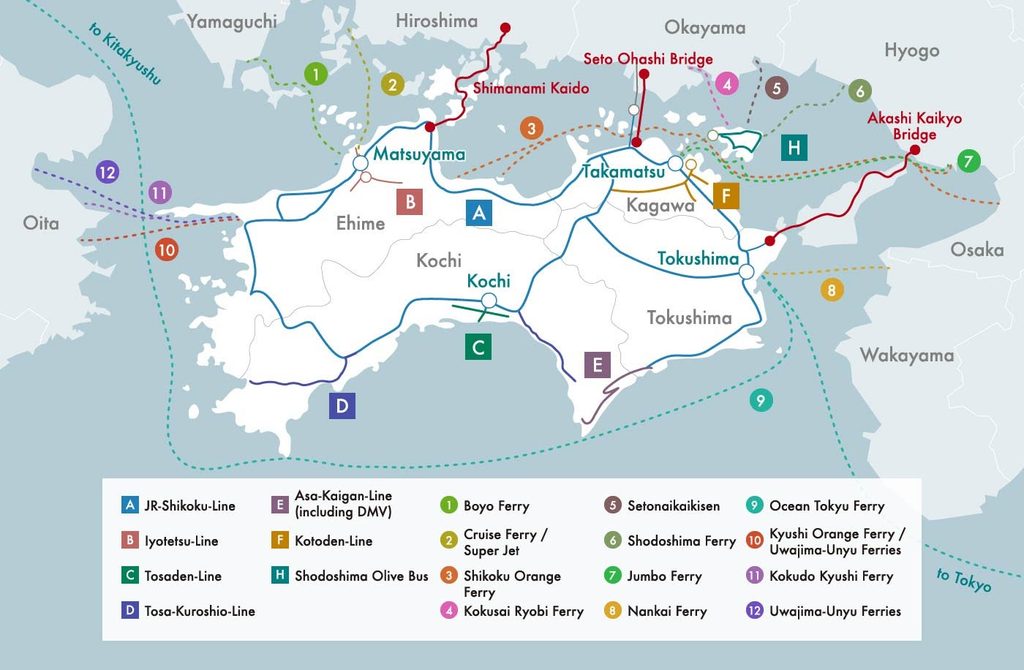
- Hiroshima–Matsuyama
- Operator: Setonaikai Kisen (with Ishizaki Kisen partnership)
- Ports: Hiroshima Port and Kure Port → Matsuyama Port (Ehime)
- Options:
- SuperJet hydrofoil: ~1 hr 5 min (fastest crossing)
- Cruise ferry: ~2 hr 40 min (slower, scenic option)
- Highlight: Convenient for day trips, with spectacular Seto Inland Sea views
- Osaka–Toyo (Ehime)
- Operator: Orange Ferry
- Duration: ~8 hours, overnight service
- Facilities: Private cabins, restaurant, and a large public bath
- Highlight: Marketed as a “moving hotel,” perfect for travellers who want to sleep en route and arrive refreshed
- Kokura (Kitakyushu)–Matsuyama
- Operator: Uwajima‑Unyu Ferry
- Duration: ~7 hours, overnight service
- Highlight: Budget‑friendly night ferry, ideal for travellers coming from Kyushu
- Beppu–Yawatahama (Ehime)
- Operator: Uwajima‑Unyu Ferry
- Duration: ~2 hr 30 min
- Highlight: Perfect after enjoying Beppu’s famous hot springs, then crossing directly into Shikoku
Getting around Shikoku
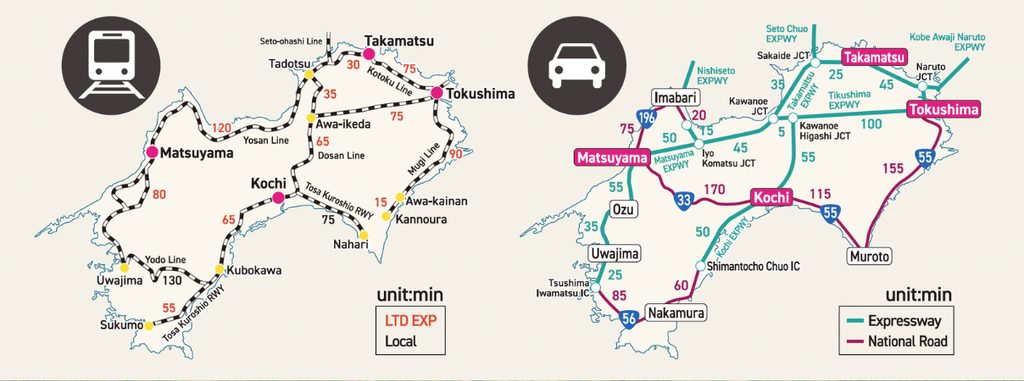
Once you arrive on the Shikoku main island, exploring Shikoku is straightforward thanks to a comprehensive offering of transportation options: trains, buses, ferries, and scenic driving routes.
I recommend combining train travel with rental car for self drive rather than choosing one or the other. Use the train to get between the major cities, which saves time and energy, then pick up a rental car when you want to explore further.
This works particularly well in Shikoku because some of the places I enjoyed most were in the countryside, away from the main train lines. Having a car makes it much easier to reach rural villages, mountain valleys, scenic coastal roads, smaller towns and hidden spots that can be difficult or time-consuming to reach by public transport.
You do not even have to rent a car for the whole trip. You could take the train into an area, pick up a car at a major station, spend a day or two exploring, then return the car and continue by train. I found this a much more relaxed way to travel around Shikoku.
Rental Car
If you are comfortable driving overseas, I think Shikoku is a great place for a self-drive trip. Japan has clear road signs and drives on the left, so Singaporean drivers will already be familiar with that. Outside the main cities, roads are generally quieter too, which makes driving through the countryside quite enjoyable.
A rental car also gives you the freedom to stop whenever you want. You can take a scenic detour, stop at a small roadside restaurant or viewpoint, or spend more time in a village that catches your eye.
For me, this is where having a car really makes a difference. Places such as Iya Valley in Tokushima, the Kochi countryside around the Shimanto River, and Uwajima and other areas in Ehime are much easier to explore at your own pace by car.

Planning to rent a car for your Japan adventure? Here is a little saving for you. Use my exclusive TOCOO! code ZG9OZS to get ¥1,000 off car rentals over ¥10,000, at any TOCOO! rental outlet.
Train
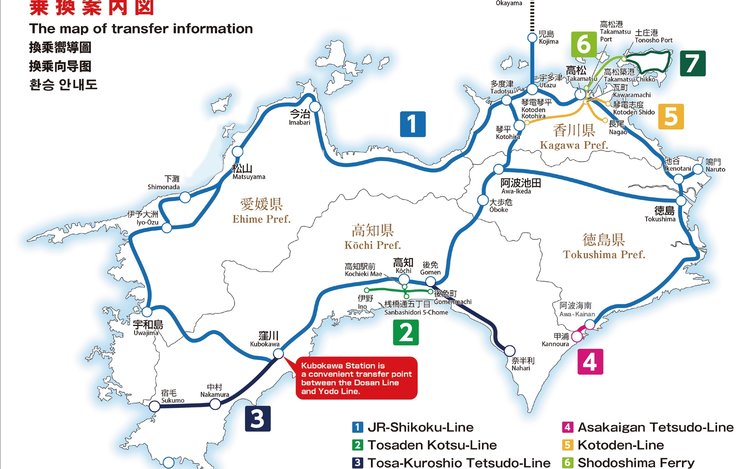
The All Shikoku Rail Pass is the easiest and best‑value way to explore all four prefectures—Kagawa, Tokushima, Kochi, Ehime, and even Shodoshima. It offers unlimited travel on JR Shikoku trains, the Tosa Kuroshio Railway, and selected private railways and trams, as well as a free passenger ferry ride between Takamatsu and Tonosho.
The pass even covers the train to Kojima station in Okayama Prefecture. But it does not cover the train ride from Kojima to Okayama train station.
Now available as a digital ticket on Klook. Simply activate it in the app and show your QR code at the station. Fast, simple, and perfect for travellers on the go.
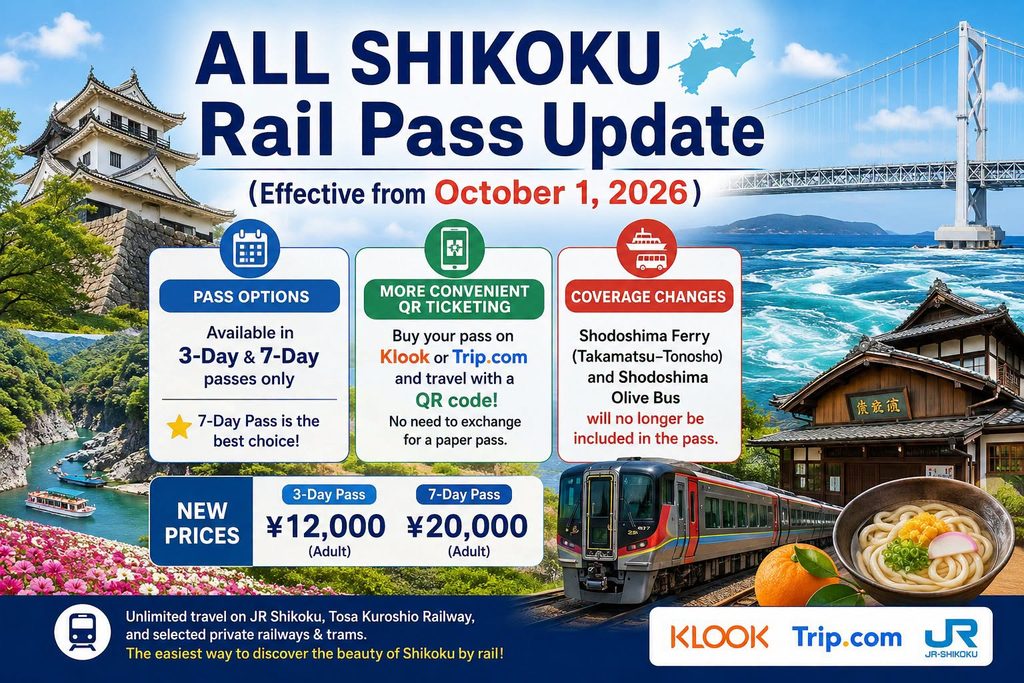
Travel tip: The Okayama–Shikoku crossing via the spectacular Seto Ohashi Bridge is partially covered by the JR Shikoku Rail Pass. When travelling between Shikoku and Okayama, you can take the JR train as far as Kojima Station, which is covered by the pass, then purchase a separate local train ticket for the short onward journey to Okayama Station. This makes the route particularly convenient for travellers arriving from major cities such as Osaka and Kyoto. And if you have time, consider stopping in Kojima, a charming town famous for its denim and one of Japan’s best-known denim-producing areas.
Klook.comUse my special Klook promo code WENDYKLOOK to enjoy 5% any Klook purchases (no min. spend; capped at USD $10).
Sightseeing Trains
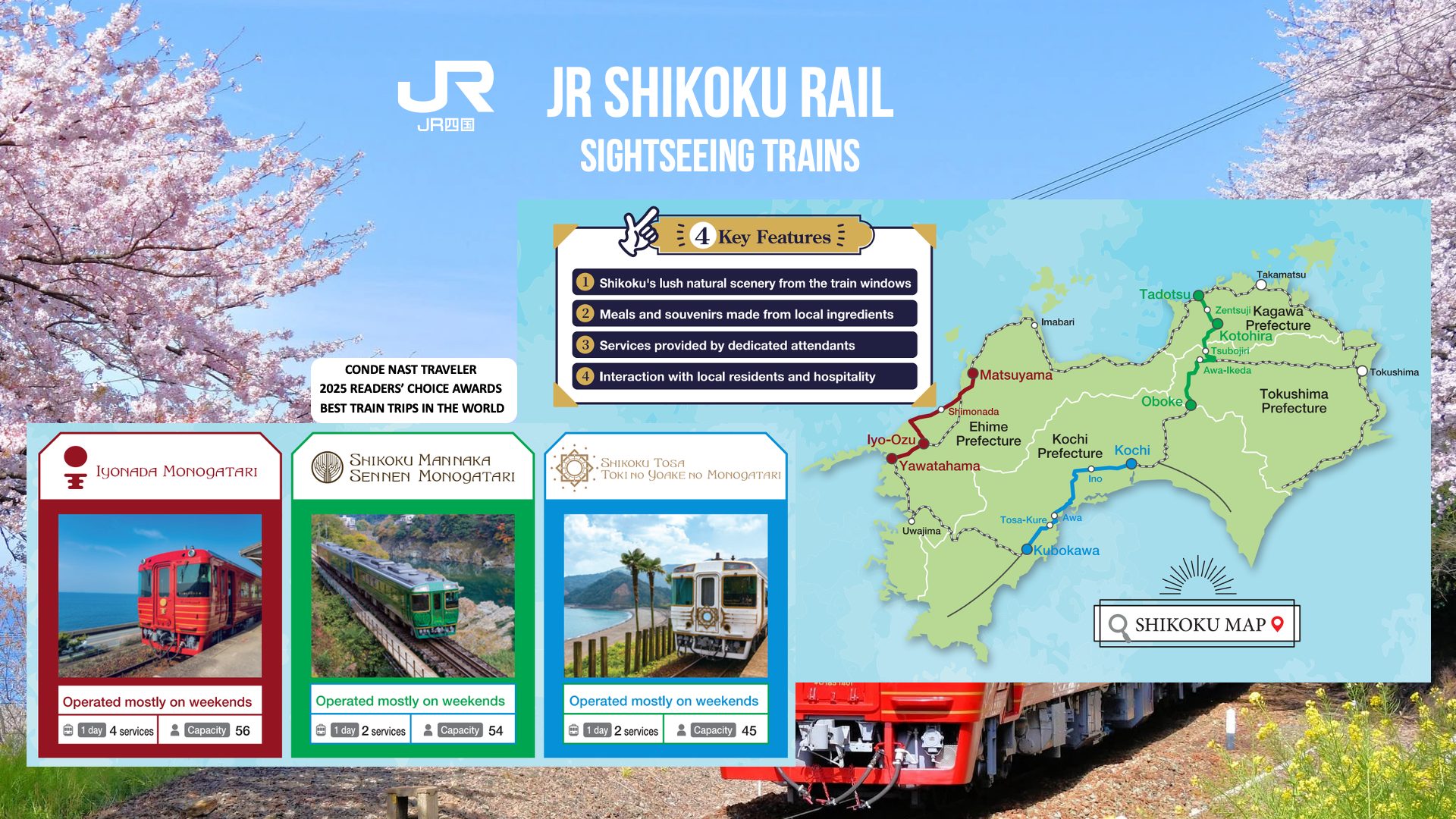
In addition to the Shikoku Tosa Toki no Yoake no Monogatari sightseeing train that I introduced in the Kochi section, JR Shikoku runs a small fleet of sightseeing trains, each designed to turn the journey itself into part of the destination. If slow, scenic train travel is part of what draws you to Japan, Shikoku’s sightseeing trains are well worth building into your itinerary. Expect lush window views, meals and souvenirs made from local ingredients, dedicated onboard attendants, and genuine interaction with local residents along the route.
The three main ones to know:
- Iyonada Monogatari: This train operates between Matsuyama Station and Iyo-Ōzu and Yawatahama stations in Ehime Prefecture. Enjoy a relaxing break with gorgeous sea views, meals made with a focus on local ingredients, and the warm hospitality of the locals.
- Shikoku Mannaka Sennen Monogatari: This scenic train route goes through the heart of Shikoku between Tadotsu and Oboke, past the Sanuki Plains and Yoshino River. It was voted as one of the best train trips in the world in Conde Nast Traveler’s 2025 Readers’ Choice Awards.
- Shikoku Tosa Toki no Yoake no Monogatari: This sightseeing train traces the life of Sakamoto Ryoma, which I covered earlier. The train runs along the trails passed by Ryoma when he rushed to escape at the end of the Edo period, from the castle town of Kochi to the pastoral countryside, along the coast of the blue Pacific Ocean and the steep mountains.
Each of these sightseeing trains comes with reserved seating and a curated meal course, so you have to book the train rides separately from your regular rail travel. For the latest schedules, fares, and reservation details, check out the Shikoku Railway Trip website to plan your train trips and you can book your train ticket here.
Anpanman Trains
Bonus: Ride the colourful Anpanman Train around Shikoku!
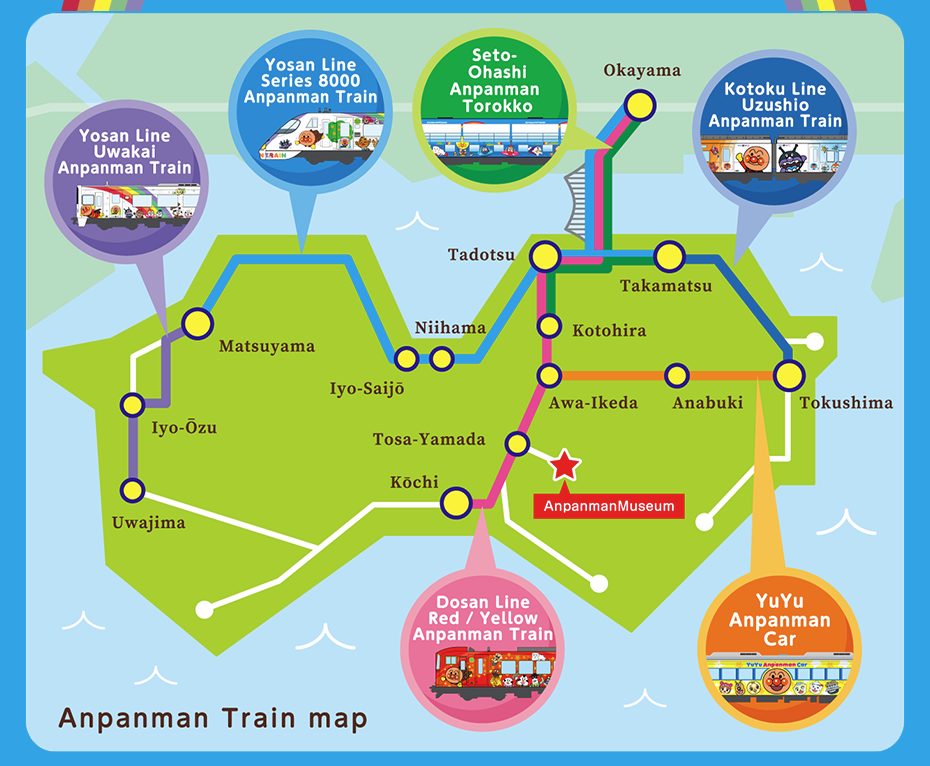
One of the most fun ways to travel around Shikoku is on the colourful Anpanman Trains, inspired by the beloved cartoon character created by Kochi-born manga artist Takashi Yanase.
Several beautifully decorated Anpanman trains operate on different routes across Shikoku, each with its own colours, characters and designs. The JR Shikoku Rail Pass covers travel on these trains, although an additional fee may be required for reserved seats or special seating areas on selected services.
What makes the experience even more special is that it is uniquely Shikoku. While you can find themed trains elsewhere in Japan, the Anpanman Trains are deeply connected to the region through their creator’s roots in Kochi Prefecture. Riding these cheerful trains through the mountains, countryside and coastline of Shikoku is an experience you cannot quite replicate anywhere else in Japan.
I particularly enjoyed spotting the different Anpanman train designs as I travelled through the four prefectures. Many stations also have commemorative stamps, so collecting train photos and stamps became a fun side quest during my Shikoku trip.
Travel Video
Want to experience Shikoku before you travel? On 29 August 2026, I hosted a travel seminar introducing Shikoku and its four prefectures: Kagawa, Tokushima, Kochi, and Ehime, at the Japan Rail Cafe x Shikoku Travel Event in Singapore. If you would rather watch than read, check out the video below for a quick guide to Shikoku before you go!
If you find this travel guide useful, please support me and buy me a coffee ☕! With your kind contribution, I can sustain my website and share more travel guides and tips with you!
I strongly believe in empowering travellers to know better, travel better! I value privacy and transparency. The article contains affiliate links so I may be compensated to run the website and continue to create content if you make a purchase at no extra cost to you.