Too much food. Too little time.
That was exactly how I felt during my final months living in Okinawa.
When most travellers think about Japan, they imagine sushi in Tokyo, ramen in Fukuoka or street food in Osaka. Okinawa, however, is a world of its own. Once the independent Ryukyu Kingdom, the islands developed a unique food culture influenced by China, Southeast Asia, mainland Japan and later the United States.
The result is one of the most fascinating culinary destinations in Japan.
I lived in Okinawa for two years and spent much of that time eating my way across the island. I hunted down bowls of Okinawa soba in century-old wooden houses, made regular detours for tempura on tiny fishing islands and happily queued for burgers that rival anything I’ve tasted in America.
Years later, these are still the foods I dream about.
If you are wondering what to eat in Okinawa, start with these ten dishes. They are the foods I recommend to every friend visiting the islands.
Save this guide before your trip. Your stomach will thank you later.
Save the Google Map of this food list!
Goya Champuru
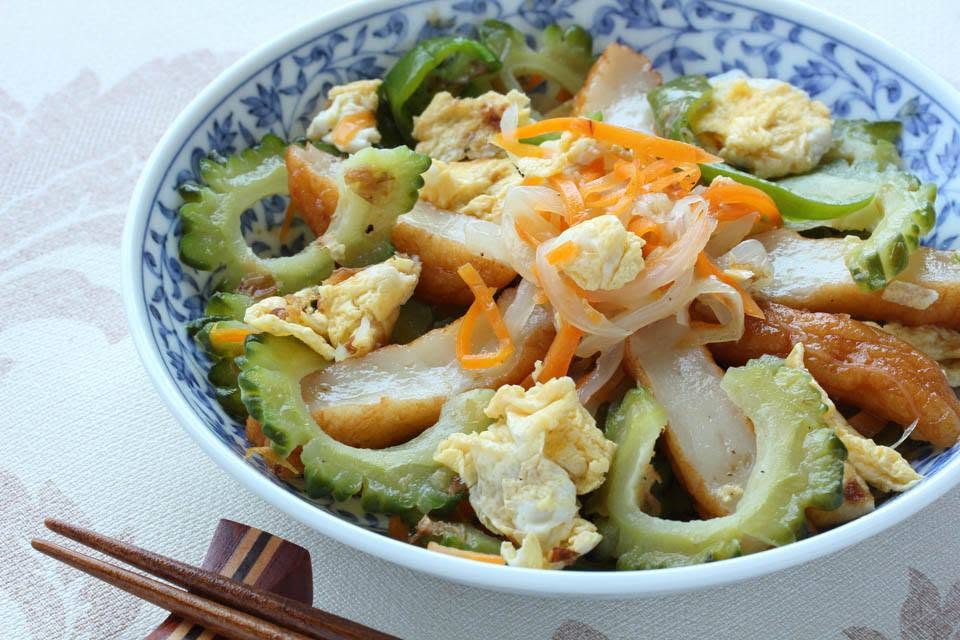
Champuru means “mixed” in the Okinawan language, and this beloved stir-fry combines bitter melon (goya), tofu, egg and pork into a surprisingly addictive dish that can be found across the islands.
After living in Okinawa for two years, I found myself craving it regularly. Today, it is one of the dishes I miss most.
Goya is packed with nutrients and is often associated with Okinawa’s reputation as one of the world’s Blue Zones, where people enjoy exceptionally long lives. Simple, healthy and deeply local, goya champuru is the dish every first-time visitor should try.
But champuru is not just one dish. It is a whole style of Okinawan home cooking, and once you know the family you will start spotting it on every menu:
- Yasai Champuru (vegetable champuru): A lighter stir-fry made with cabbage, carrot, bean sprouts and whatever vegetables are in season, instead of goya. A gentle place to start if the mild bitterness of goya scares you off.
- Tofu Champuru: Built around soft Okinawan island tofu or shima tofu, which is denser and richer than the tofu you might be used to. Stir-fried with egg and vegetables, it is comforting, filling and usually one of the cheapest things on the menu.
- Somen Champuru: Stir-fried somen noodles with egg, spam or pork and vegetables. This hearty and homely dish is one of my personal favourites.
- Fu Champuru: Made with fu, a dried wheat-gluten cake. On its own it looks a bit like a spongy biscuit, but once it is soaked in water or dashi it turns soft and almost custardy and soaks up whatever it is cooked with. It came from Okinawa’s Buddhist food traditions as a protein substitute, and it became a proper comfort food in its own right. Order it if you want something that tastes substantial and flavourful.
Try two or three of these in the same trip and you will get a real feel for how varied Okinawan home cooking can be.
Okinawa Soba
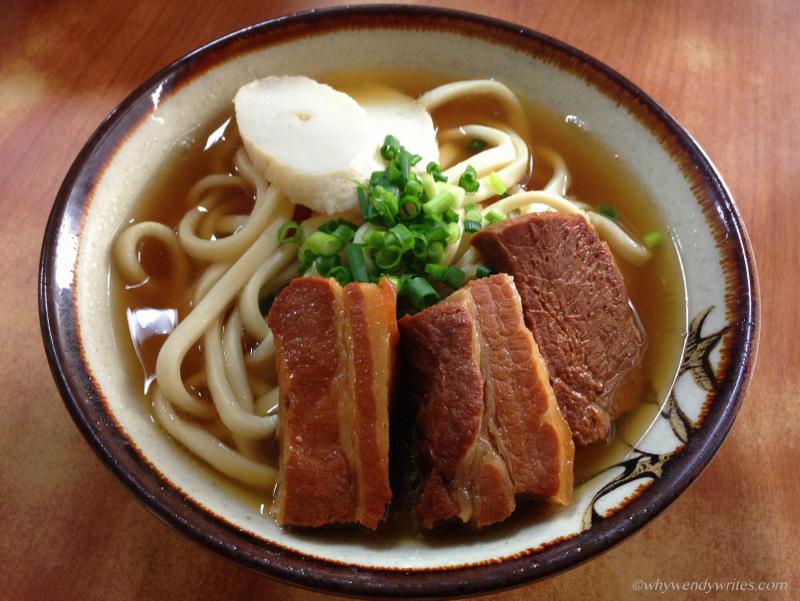
If you only eat one traditional Okinawan dish, make it Okinawa soba. Despite its name, Okinawa soba is made from wheat noodles rather than buckwheat.
Served in a rich pork-based broth and topped with slow-cooked pork belly, it is comfort food at its finest. Every local has their favourite Okinawa soba shop. Every bowl tells a different story, but they all capture the heart of Okinawan cooking.
Some of my favourite places to enjoy authentic Okinawa soba.
- Shimujo (しむじょう), housed in a traditional Okinawan home in Shuri, Naha, and still one of the loveliest places on the island to sit and eat a bowl of soba.
- Kishimoto Shokudo (きしもと食堂) in Motobu, one of Okinawa’s oldest soba shops, with a second Yaedake branch (八重岳店) nearby. Miyazato Soba (宮里そば) in Nago.
- Yanbaru Soba (山原そば) near Motobu.
Jushi
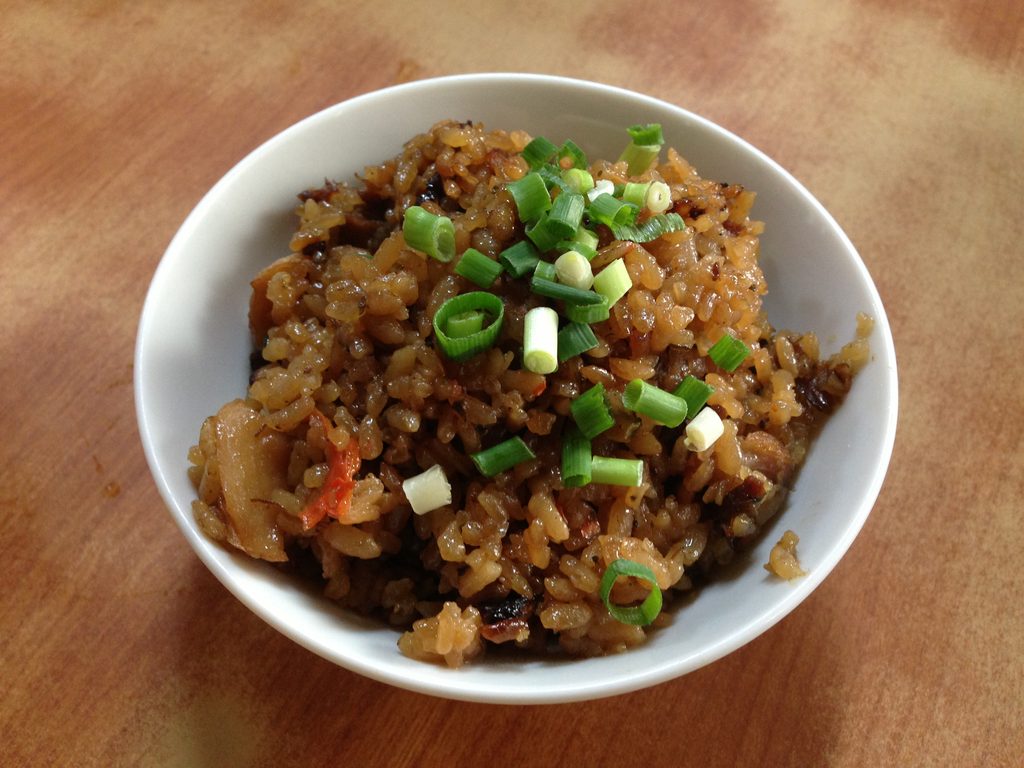
Jushi is the dish I always tell people to order if they want to understand Okinawan home cooking in one bowl.
It is also called Okinawan seasoned rice. It is rice cooked together with pork, kombu, carrot and sometimes shiitake mushroom, all simmered in a light pork or bonito broth until the rice soaks up all of that flavour. Some versions come out closer to a soft, brothy rice porridge, called yashi-jushi, while others are drier and closer to a pilaf.
It is the kind of dish Okinawan families cook at home rather than something you will find dressed up in a fancy restaurant, which is exactly why it is worth seeking out. In fact, it is usually served with Okinawa soba, as a standard set at most soba shops across the island, rather than ordered as a dish on its own. It also shows up as part of a home-style set meal at any local shokudo.
Chanpon
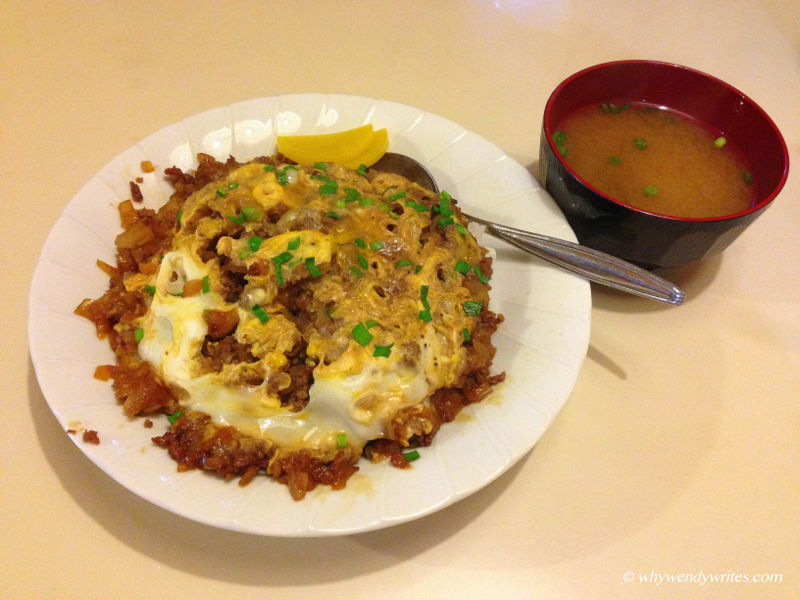
This is one you will rarely see in mainstream food guides, and that is exactly why it belongs on this list. My final meal before leaving Okinawa was at Mikasa Shokudo in Matsuyama, Naha. It is still open, still busy past midnight, and still run by the same Okinawan aunties who have been cooking there for decades.
Misaka Shokudo (三笠) is a traditional eatery that opens 24 hours. It’s the perfect place to start your discovery of Okinawan cuisine. Watching the mighty ladies run the kitchen and create every single dish from their heart is pure enjoyment.
Unlike Nagasaki’s noodle dish of the same name, Okinawan chanpon is a generous serving of rice topped with stir-fried vegetables, minced meat and egg.
Simple. Affordable. Delicious. Watching the Okinawan aunties run the kitchen is part of the experience. If you want to eat where locals eat, this is where to start.
- Misaka Shokudo (Matsuyama branch) (三笠 松山店)
- Address: 1-12-20 Matsuyama, Naha
Taco Rice
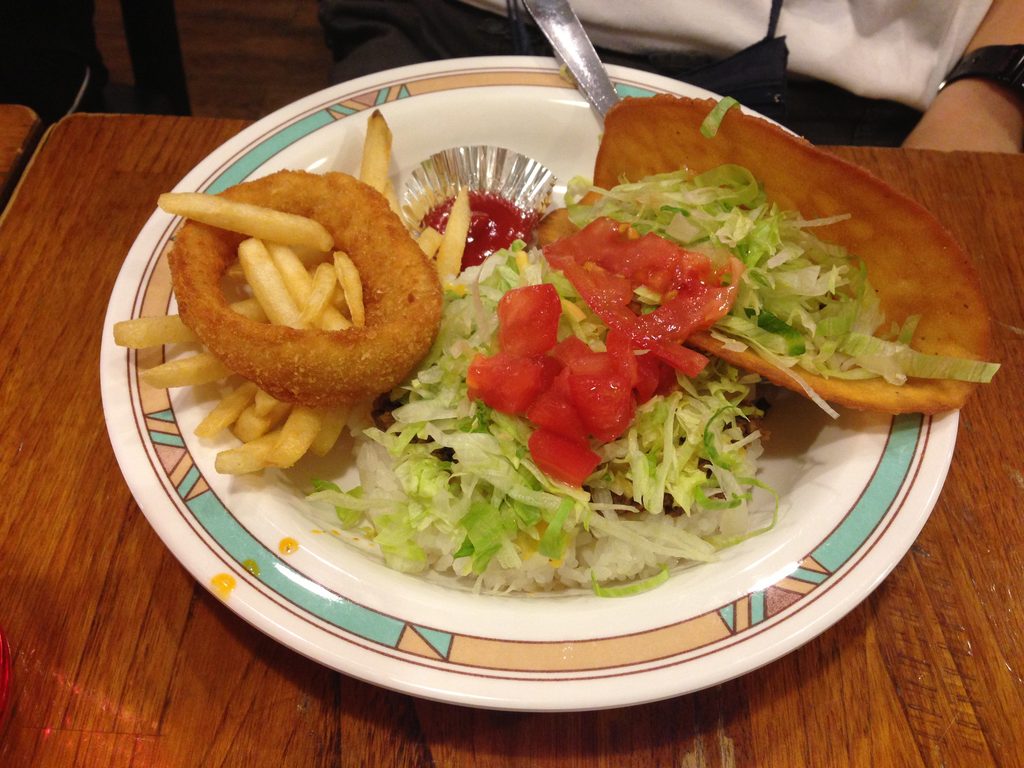
Few dishes reflect Okinawa’s unique history better than taco rice. Seasoned taco meat, lettuce, cheese and salsa are served over rice rather than wrapped in a tortilla. It sounds unusual, but one bite explains why it became an island favourite.
Taco rice was created in 1984 by Matsuzo Gibo at his restaurant Parlor Senri in Kin Town, close to the U.S. military base at Camp Hansen. The story goes that he wanted to give his young American customers a filling meal without the cost of a full taco. Parlor Senri closed in 2015, but his family kept the recipe going through King Tacos.
The good news is King Tacos is still very much alive and now has branches all over the island, including Kin, Ginowan, Uruma and Nagata. My favourite remains the original Kin honten, the shop that helped popularise taco rice across Okinawa.
King Tacos is not the only name worth knowing, though. Over in Uruma, near Camp Courtney, Casa Tacos (also written Casa de Tacos) has been serving taco rice, tacos and burritos to the local and military community for well over 25 years, and it is still open and going strong. It is a good option if you are already up around the Kaichu Road side of the island and do not want to backtrack to Kin.
A lunch
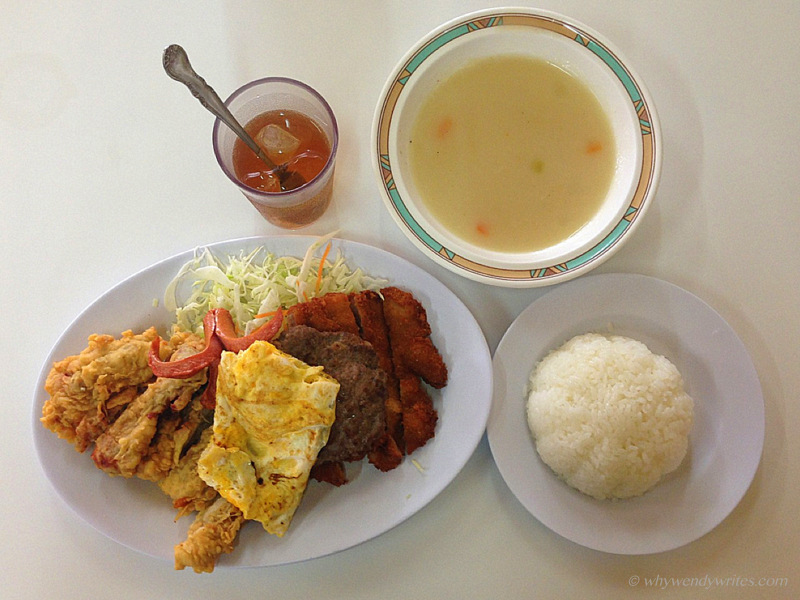
No dish tells Okinawa’s post-war story better than A Lunch. A Lunch is a unique Okinawa-America hybrid dish.
. A Lunch is said to have started in Koza, now Okinawa City, back in 1956, at a place called New York Restaurant, opened by a chef who had actually trained in New York. The A, B, C style menu ranking, with A Lunch as the biggest and most expensive option, became a whole genre of its own around the city’s diners in the decades that followed, right as Okinawa’s postwar economy and its American military presence were both shaping local tastes.
Think hamburg steak, fried pork, sausages, eggs and various sides all piled onto a single plate. A Lunch is not for the faint-hearted as the plate is packed with so much meat. I could not even finish a plate after a marathon. There are also other versions like B and C Lunch with different variations of fried-goodness.
A Lunch is gloriously excessive and uniquely Okinawan. Try it at Ruby Shokudo (軽食の店ルビー) in Tomari, Naha, or Highway Drive-In (ハイウェイドライブイン) in Okinawa City. Both are still open and still serving A Lunch the way they always have.
Captain Kangaroo’s burger
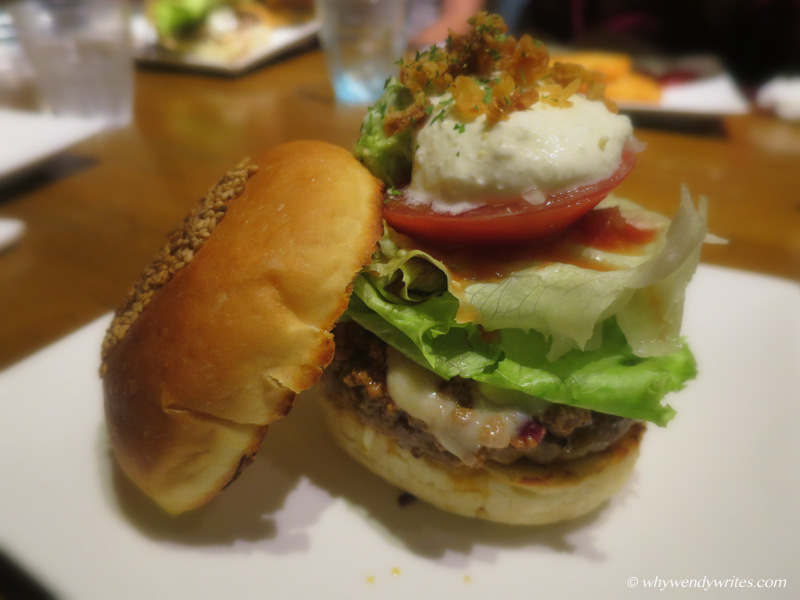
Even my American burger-loving friend said that this is the best burger he has ever tasted. Let’s just say if we don’t eat a burger from Captain Kangaroo when we are in the north of Okinawa, the entire trip will feel like a wasted one. The burger to order is the legendary Sparkly Burger.
If you are heading to Churaumi Aquarium, make time for a stop. The queue can be long. The burger is worth it.
- Captain Kangaroo Hamburger
- Address: 930-1 Sakimotobu, Motobu, Kunigami District, Okinawa 905-0225, Japan
Ishigaki beef
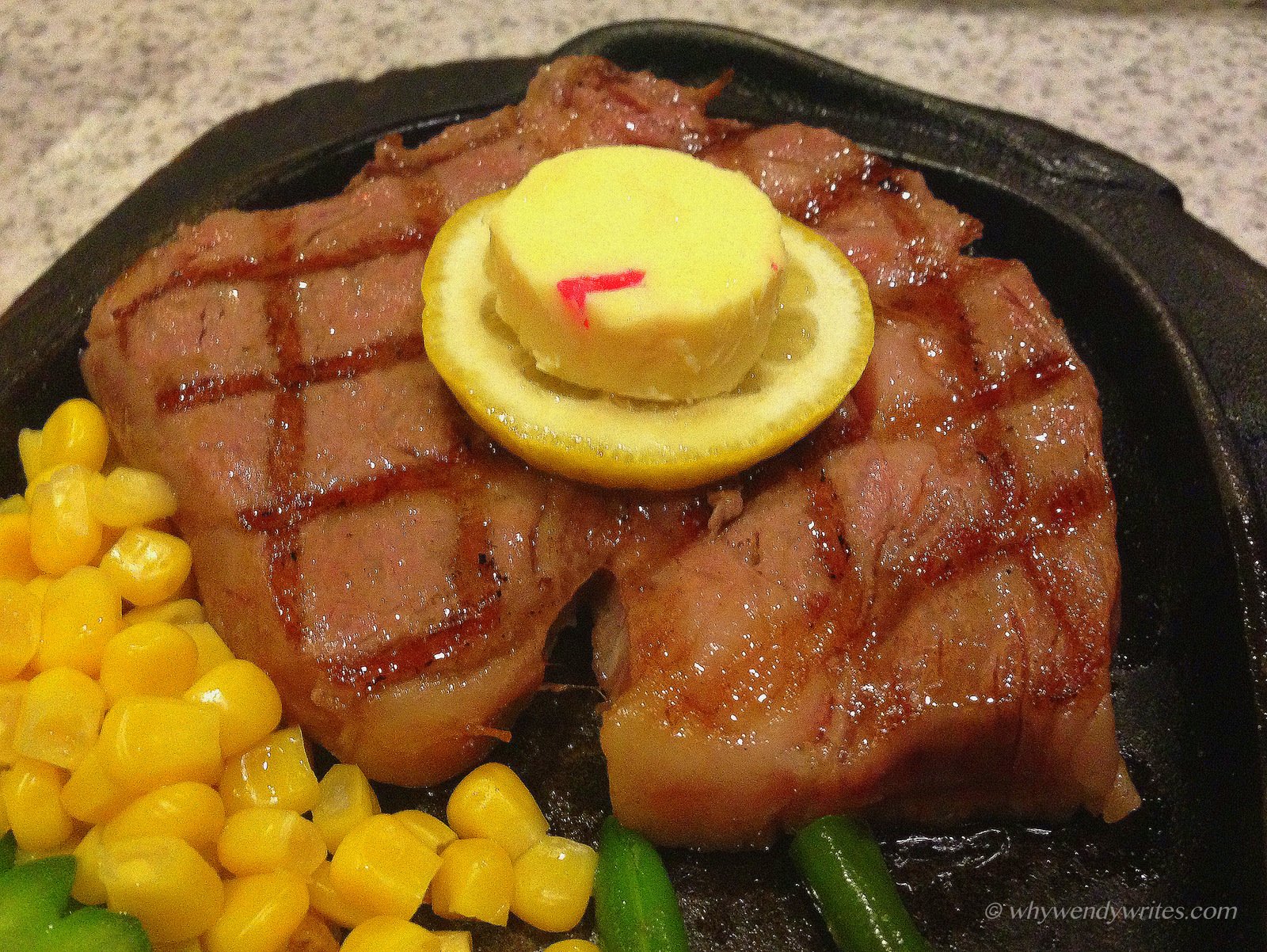
Everyone knows Kobe beef. Far fewer travellers know about Ishigaki beef.
Many premium wagyu cattle begin life on Ishigaki Island before being raised elsewhere in Japan. That makes Okinawa one of the best places to enjoy exceptional wagyu at the source.
The marbling is spectacular, the flavour rich and buttery. For meat lovers, this belongs near the top of any Okinawa food bucket list
Some famous establishments that serve the legendary Ishigaki beef:
- Steak House 88 (Various branches all around Okinawa)
- Ishigaki’s Kinjo Beef (焼肉金城 浜崎店/石垣島きたうち牧場)
Address: 2-3-24, Hamasaki Town, Ishigaki City
Okinawan Tempura
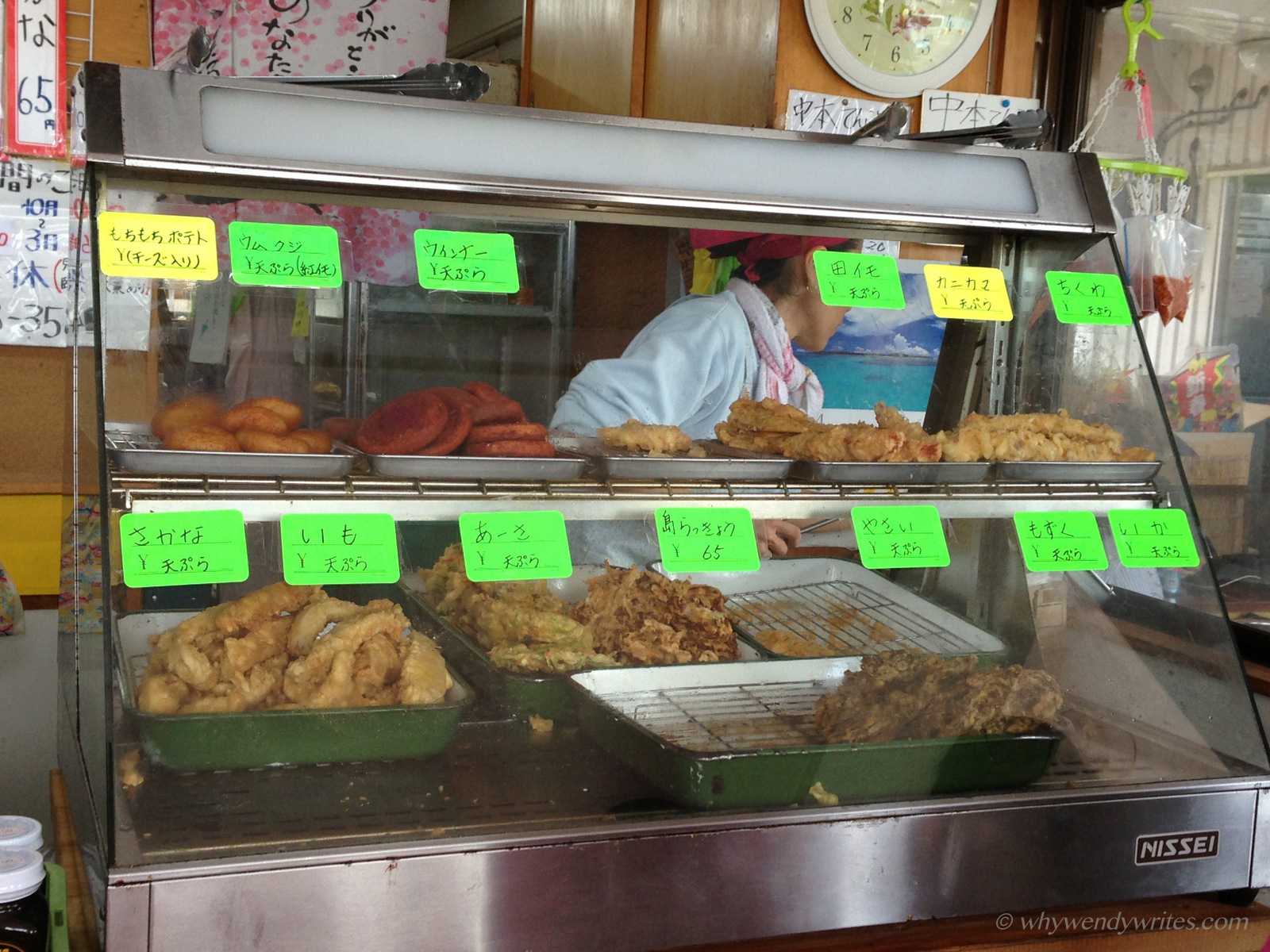
Forget everything you know about Japanese tempura. Okinawan tempura is thicker, heartier and often eaten as a snack rather than part of a formal meal
Visit the small island of Ojima, Ou Island (奧武島) and try the best tempura in Okinawa! Okinawa tempura is very different from the tempura from mainland Japan. They taste more hearty and I love munching on them as snacks. There is no need to dip them in any sauce as the ingredients are just so flavourful. Some of my favourites: Mozuku (seaweed) and beni imo (sweet potato) tempura.
Grab a bag of freshly fried tempura and stroll along the coast.
- Nakamoto Tempura Shop (中本てんぷら店). Address: Ou-9 Tamagusuku, Nanjo
- Ooshiro Tempura Shop (大城てんぷら店). Address: Ou-193 Tamagusuku, Nanjo
Jimami Tofu
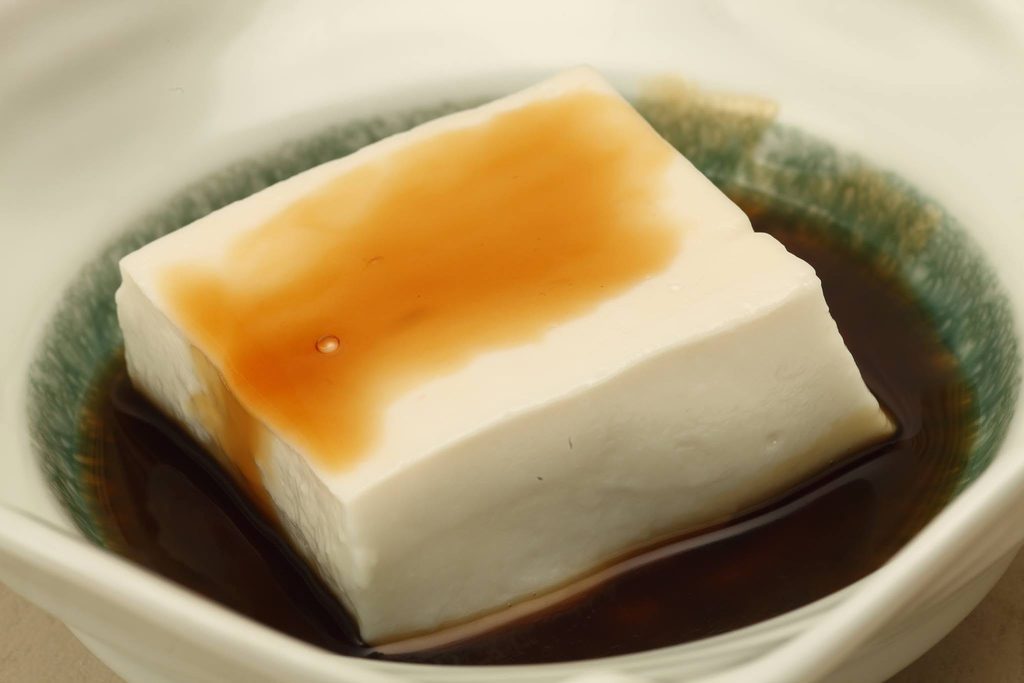
Do not let the name fool you. Jimami tofu has nothing to do with soybean tofu at all.
It is made from ground peanuts, kudzu starch and water, cooked down slowly until it sets into something closer to a silky peanut pudding than anything you would call tofu. The texture is soft, almost jelly-like, and it is usually served chilled with a little soy sauce or a drizzle of black sugar syrup on top.
It sounds like it should be a dessert, and in some ways it eats like one, but you will usually find it served as a small starter alongside your soba or a set meal. It is one of those dishes that quietly wins people over. Nobody expects to love it, and almost everyone does.
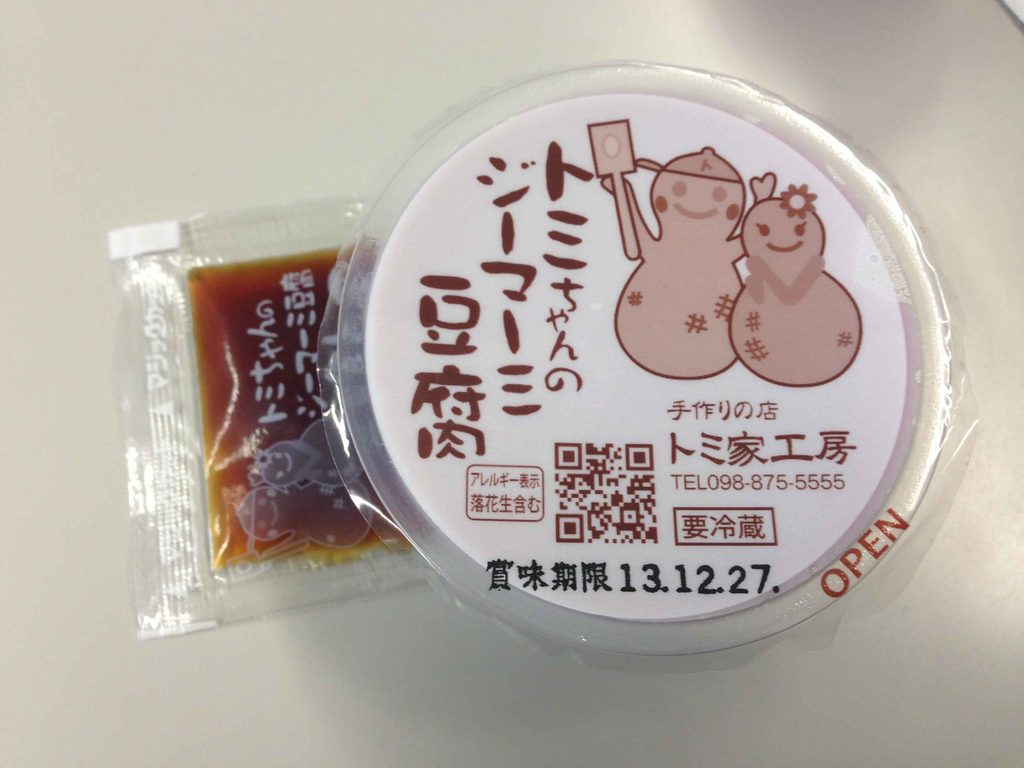
You will also find it pre-packed in supermarkets, convenience stores and souvenir shops all over the island, usually as small individual cups with a little sachet of sauce on the side. These are genuinely great for a quick craving or to bring home as a gift, but they are not quite the same thing. Freshly made jimami tofu, still a little warm or freshly chilled from a restaurant, has a richer peanut flavour and a softer, silkier texture that the packaged versions do not quite match.
This is truly the Okinawan food I miss most as it is difficult to find it outside the islands.
Zenzai
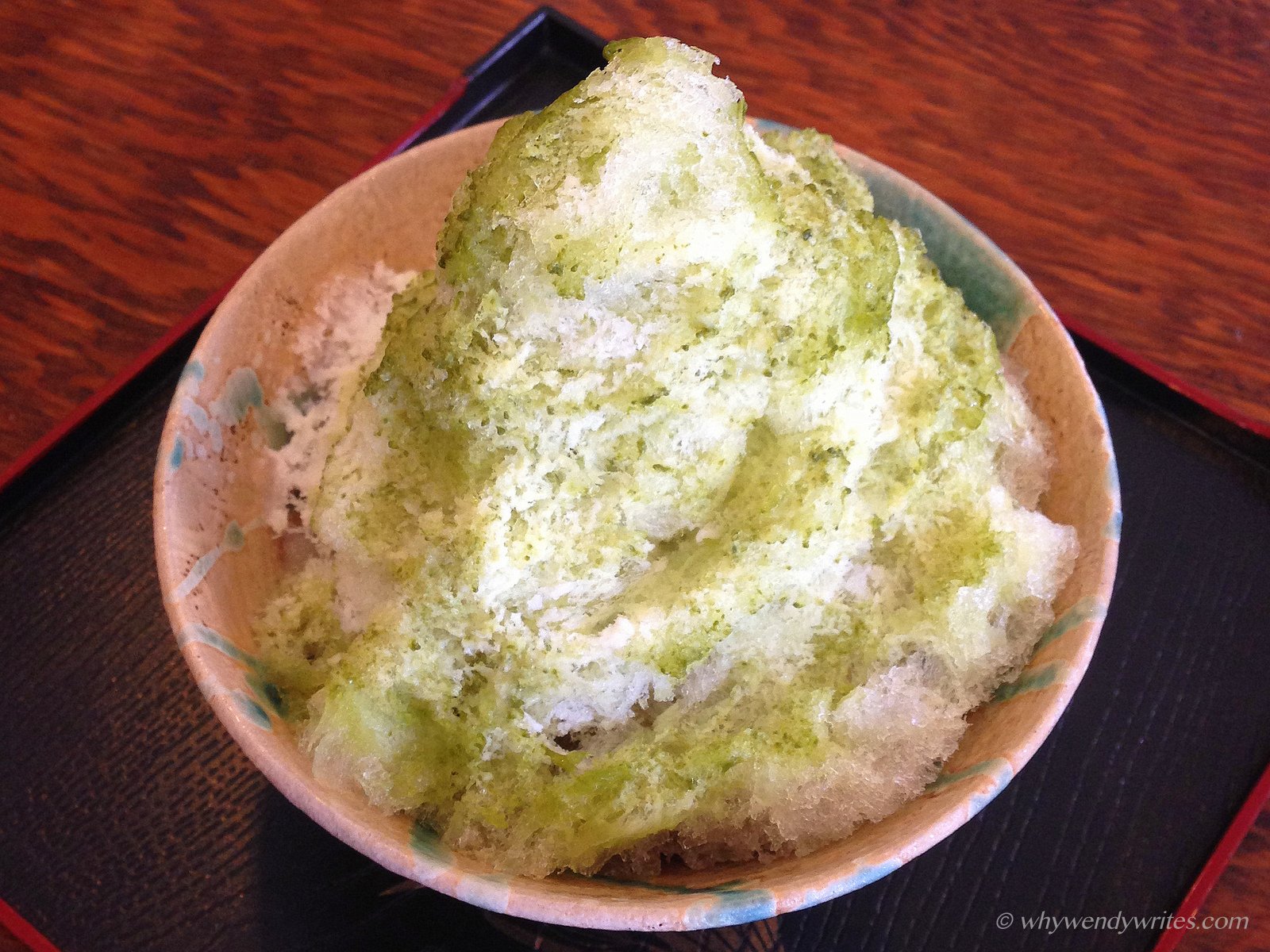
Mainland Japan serves zenzai hot. Okinawa serves it cold. This mountain of shaved ice topped with sweet red beans and mochi is the perfect antidote to Okinawa’s tropical heat.
Think of it as Okinawa’s answer to ice kachang. After a hot day exploring the island, few desserts are more satisfying.
- Tsurukamedo Zenzai (鶴亀堂ぜんざい). Address: 248-1 Zamiki, Nakagami-gun, Yomitan
- Higashi Shokudo (ひがし食堂): Address: 2-7-1 Agarie, Nago
Blue Seal Ice Cream
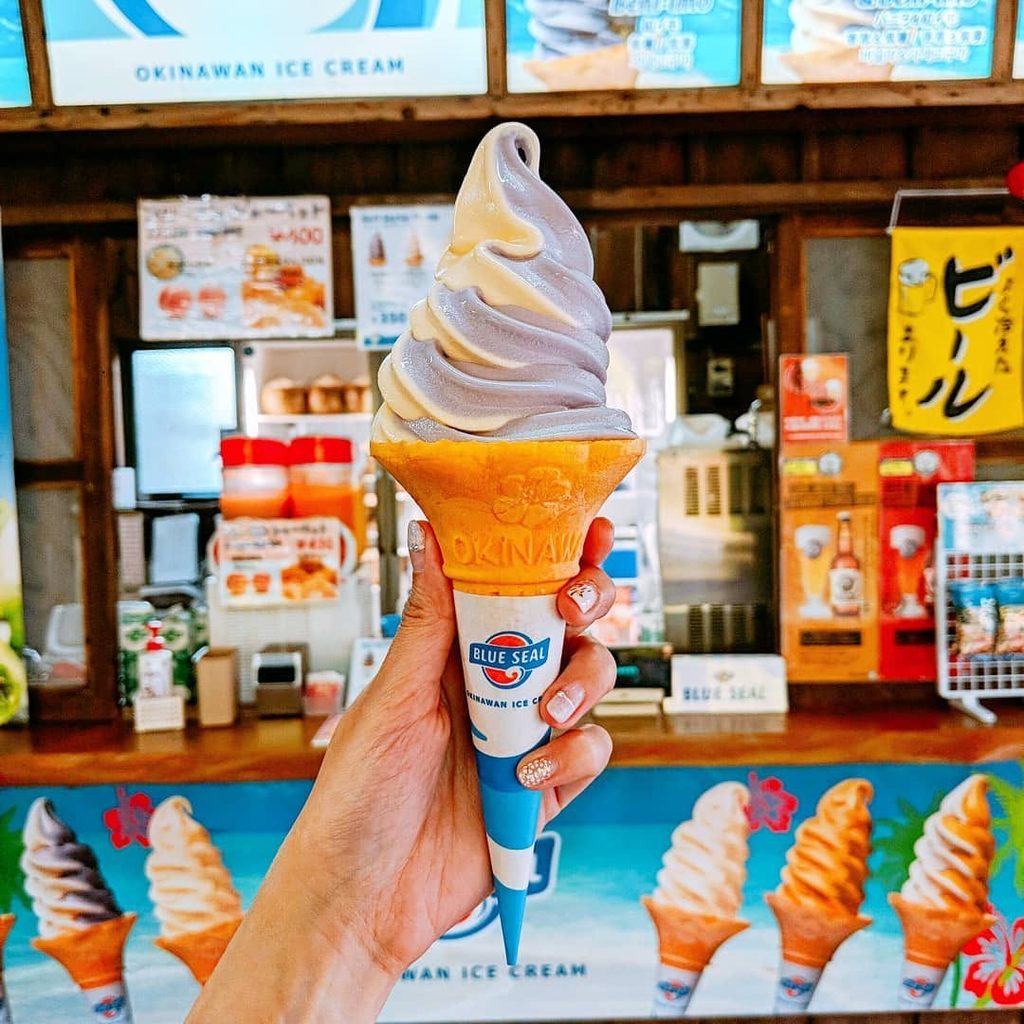
No Okinawa food bucket list is complete without Blue Seal. You’ll see the iconic blue and orange logo everywhere from roadside shops to shopping malls. I am always looking for a Blue Seal shop, whenever I am in Japan.
Blue Seal began in Okinawa in 1948 serving American military personnel before becoming available to local residents in 1963. Today it is one of Okinawa’s most beloved food brands and proudly carries the slogan “Born in America, Raised in Okinawa.”
While classic flavours are available, the real fun comes from trying Okinawan favourites: beni imo, Shikuwasa Citrus, sugarcane, Ryukyu milk tea.
Beni Imo
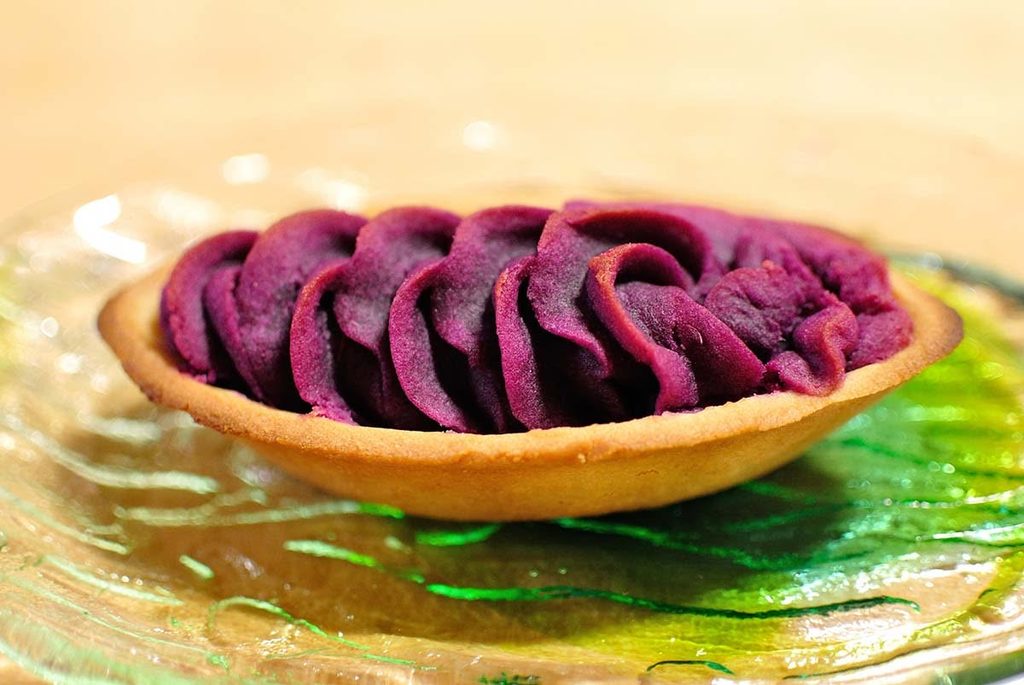
If Okinawa has one signature ingredient, it is beni imo, the vivid purple sweet potato grown across the islands.
The most famous thing made with it is the Beni Imo Tart from Okashigoten, a purple sweet potato paste piped onto a buttery tart base, sold in the shape of a little potato leaf. It has been made since 1986 and has become the classic Okinawa souvenir, the kind of thing you will see stacked at the airport and in every gift shop on the island. You can also visit one of the Okashigoten stores, including the flagship in Onna Village with its bright red Shuri Castle style gate, and watch the tarts being made.
But beni imo shows up everywhere once you start looking for it: in soft serve ice cream, in bread, in cheesecake, in chips, even in beer. If you see something purple on a menu in Okinawa, there is a good chance beni imo is behind it, and it is almost always worth trying.
Sataandagi
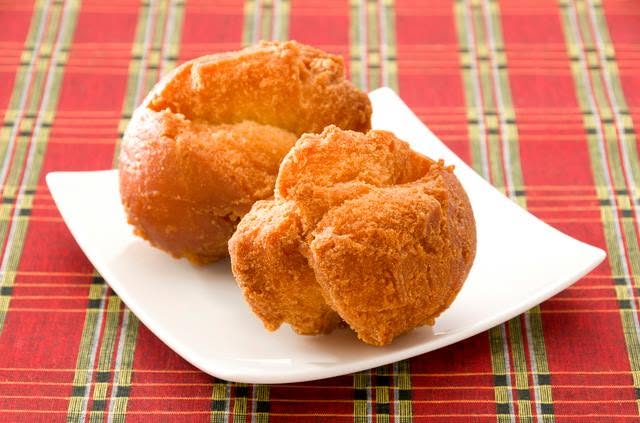
Sataandagi are Okinawa’s answer to the doughnut.
These are deep-fried balls of sweetened dough, cracked open on the outside and soft and dense on the inside. They are less sweet and have a harder texture than a Western doughnut and have almost no glaze or topping, so the flavour is all about that crisp, nutty fried shell and the fluffy inside.
You will find them everywhere, from roadside stalls to convenience stores to proper bakeries, and they are best eaten warm, ideally within minutes of coming out of the fryer. They also travel well if you want to pick some up as a snack for the road.
Alcoholic Drinks: Orion Beer and Awamori
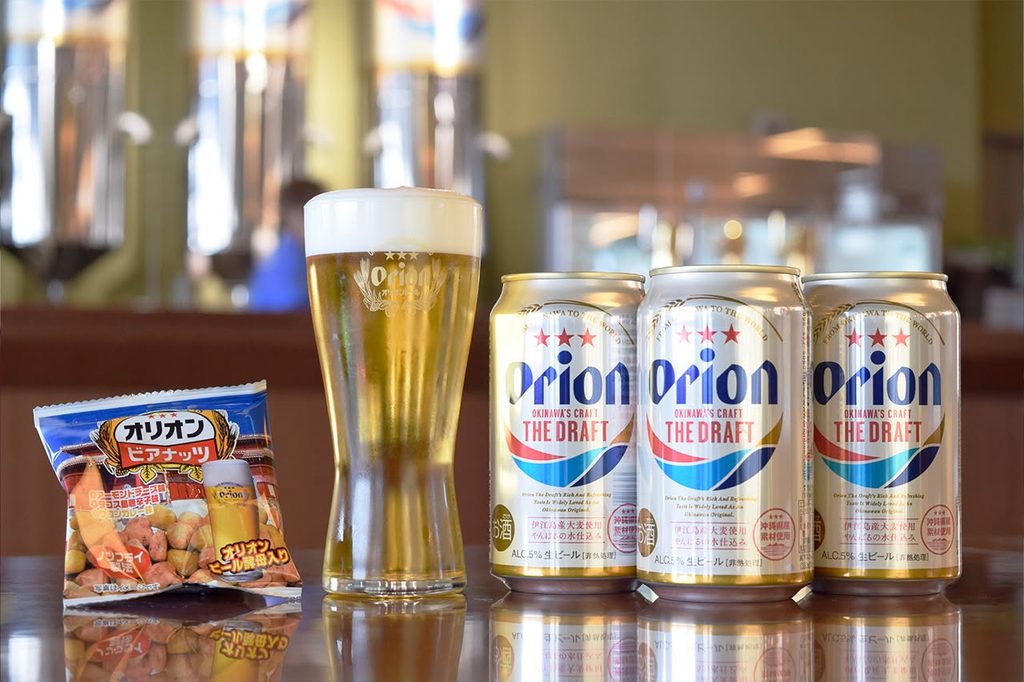
You cannot talk about eating in Okinawa without talking about drinking in Okinawa, and that comes down to two things: Orion beer and awamori.
Orion is Okinawa’s own beer, brewed on the island since 1957, and it is everywhere, on every menu, in every convenience store fridge and at every barbecue. It is a light, easy drinking lager, made for hot weather and long meals, and locals will tell you it simply tastes better on the island than it does anywhere else in Japan. Order the draft version wherever you can.
Awamori is Okinawa’s traditional distilled spirit, and it predates sake by centuries. It is made from Thai long grain rice fermented with black koji, then distilled, and it is a completely different drink from mainland Japanese shochu or sake, both in method and in flavour. It is usually served on the rocks or mixed with water, and older, aged bottles, called kusu, are especially prized and can be smoother and more complex the longer they have sat.
If you want the full experience, ask for a taste of both at any izakaya and let the staff recommend one to match what you are eating.
I hope my list will provide gastronomical-directions for hungry and lost souls! So what are you waiting for? Go and eat!
Klook.comUse my special Klook promo code WENDYKLOOK to enjoy 5% any Klook purchases (no min. spend; capped at USD $10).
If you find this travel guide useful, please support me and buy me a coffee ☕! With your kind contribution, I can sustain my website and share more travel guides and tips with you!
I strongly believe in empowering travellers to know better, travel better! I value privacy and transparency. The article contains affiliate links so I may be compensated to run the website and continue to create content if you make a purchase at no extra cost to you.